

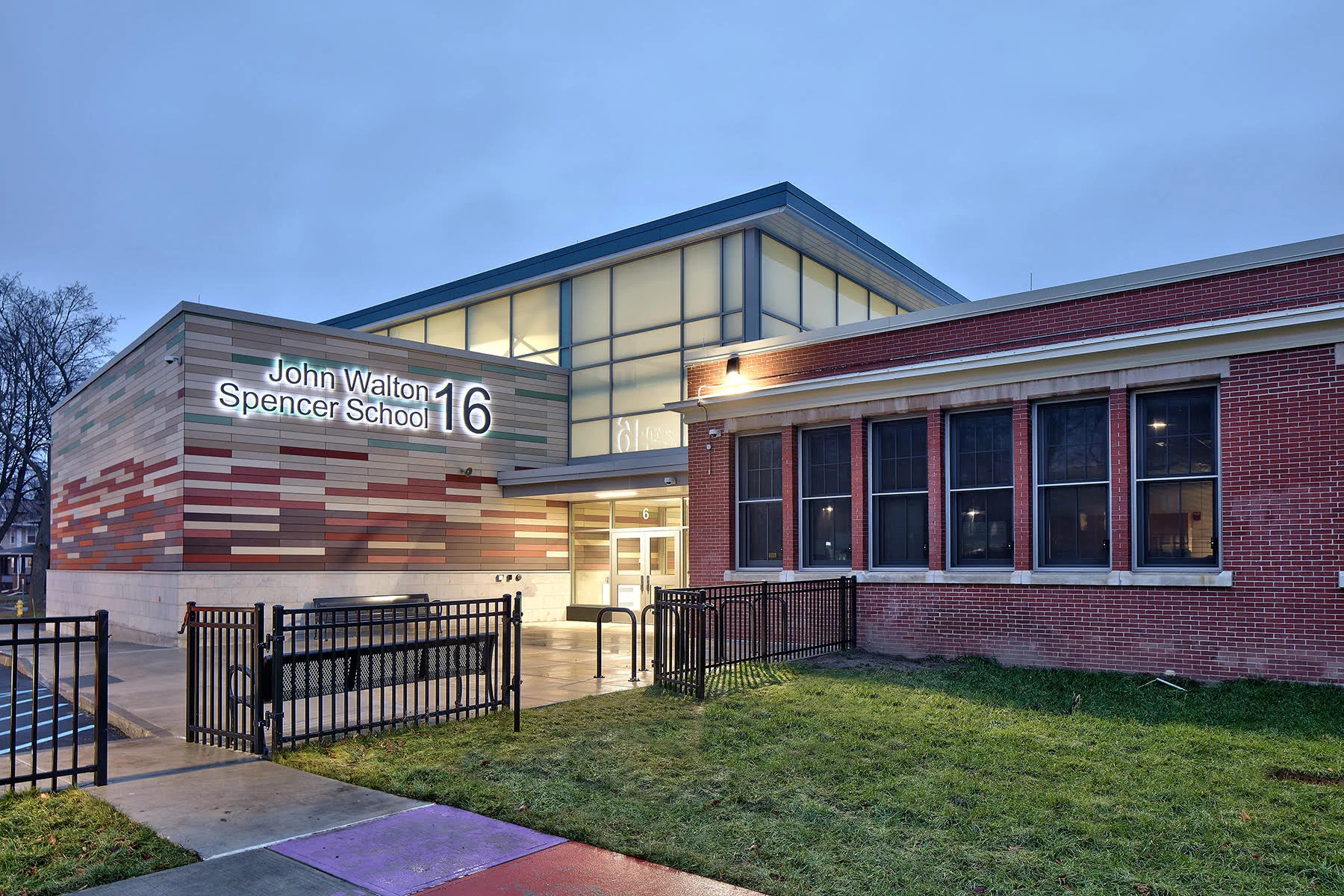
An uncle of mine taught middle-school science for most of three decades, and the part of contract season he talked about years later was never the bargaining table. It was the morning after a bad session, when he still had to stand in front of 13-year-olds and teach cell division. Nobody in the building, he said, could stop wondering what their health plan would cost in January.
Rochester teachers are living inside that stretch now. On Tuesday night (Sept 15), the Rochester Teachers Association's Representative Assembly voted unanimously to declare impasse with the Rochester City School District. The union's contract with the district had expired on June 30, 2026. RTA President Adam Urbanski said the district "remains unresponsive to virtually all RTA proposals," and the dispute moved to the state's Public Employment Relations Board.
The word impasse sounds like a wall, but under New York law it opens onto a fixed sequence of steps. Every public school district and teachers' union in the state shares that sequence, from Buffalo to Long Island. Knowing it tells a teacher what can happen next, what cannot, and how long the wait is likely to run.
What impasse means under the Taylor Law
New York's Taylor Law, the 1967 statute that gives public employees the right to organize and bargain, lays out the impasse machinery in Civil Service Law Section 209. The statute says an impasse "may be deemed to exist" when the parties have not reached agreement at least 120 days before the end of the employer's fiscal year. For a school district, that fiscal year closes on June 30. Either side, or both, can ask PERB for help once talks stall, and in Rochester the district said it expected the board's involvement to move talks toward a resolution.
Declaring impasse is a procedural filing that changes who sits in the room. It does not end negotiations or trigger a strike, and it does not let either side write the contract alone. A nervous faculty lounge often assumes the opposite in the first week.
The disputed issues in Rochester show up in nearly every district contract fight across the state. The union has pressed for smaller classes, more student services, stronger school safety, and salaries that can compete with nearby districts. It is also resisting health-benefit concessions and a longer school day and year without added pay. The district, which said it sought to open talks in October 2025, told reporters that teachers "deserve a contract that recognizes the importance of their work."
Step one is a mediator, and the mediator has no power to decide
Section 209 directs PERB to appoint a mediator drawn from a list of qualified neutrals the board keeps. With no authority to impose terms, the mediator shuttles between rooms, tests proposals privately, and looks for a trade each side can sell to its own members or its own board. What gets said in mediation stays confidential, so a quiet month in Rochester is not evidence that nothing is happening.
Many New York teacher disputes that reach PERB settle at this stage, sometimes after only a handful of sessions spread over several months. Mediation is the last step where both sides still fully control the outcome. For a classroom teacher, the practical signal is a union membership meeting or a board executive session on negotiations, since any tentative agreement goes back to both for ratification.
Fact-finding produces a public report that neither side must accept
If mediation fails, PERB can appoint a fact-finding board of up to three members. In school cases it is usually a single neutral who holds a hearing, reads briefs from both sides, and writes recommendations on every open issue. Under the statute those findings become public if the dispute is still unresolved, pulling a closed negotiation into the view of parents and taxpayers.
The Southern Tier offers a recent model of how long that road can run. In Vestal, the teachers' contract expired on June 30, 2024, and the union and district met with a PERB mediator that September. The fact-finder, Michael Whelan, was not appointed until October 10, 2025. His report in PERB case M2024-019 landed on January 20, 2026, more than 18 months after the old contract ran out.
Whelan recommended 4 percent annual raises through 2028, a figure the two sides had largely agreed on already. The fights that kept them apart were narrower, including retiree health contributions, union release time, and four added staff meetings a year that he paired with a $300 salary bump.
Those recommendations are advisory. For most public employers, Section 209 sends the fact-finder's report to the legislative body, which must hold a public hearing and can then act. School districts are carved out of that hearing requirement, and a board of education has no legal authority to impose a settlement on its teachers. Both sides return to the table holding a document that tells everyone what a neutral thought was fair.
When fact-finding does not close the gap, PERB can send in a conciliator, sometimes called a super-conciliator, for one more round of mediation. By then the fact-finder's report sits on the public record and shapes expectations on both sides.
Your current contract keeps working while the new one stalls
Teachers in Rochester did not lose their contract on July 1, even though it expired. A provision known as the Triborough Amendment, written into Civil Service Law Section 209-a, bars a public employer from refusing to continue all terms of an expired agreement until a new one is negotiated. Salary schedules, health coverage, grievance procedures, and work rules carry forward as written.
That protection carries one exception in the same sentence, falling away for a union that has engaged in a strike. Rochester's expired deal was itself a stopgap. The board approved a one-year extension in July 2025 with a 4 percent raise and a $2,500 retention incentive for teachers employed through September 15, 2026.
The rights that protect an individual teacher keep running during an impasse as well. Tenure timelines, which we laid out in our guide to the New York tenure clock and the notice a district owes a probationary teacher, do not pause during a salary fight. Neither do the limits on using a reassignment as hidden discipline, the subject of our report on how a counseling memo turned a teacher transfer into a disciplinary case.
The line New York teachers cannot cross
The Taylor Law gives public employees collective bargaining and a neutral impasse process, and in exchange they give up the right to strike. Section 210 states that no public employee or union "shall engage in a strike." It also presumes that an employee absent without permission on a strike day took part in the strike.
The penalties land on paychecks and on the union itself. A teacher found to have struck loses an amount equal to twice the daily rate of pay for each day out, the deduction teachers call two-for-one. A union found in violation can lose its dues deduction rights for a period PERB sets, weighing how willful the strike was and how much it hurt the public.
New York teacher fights therefore tend to play out through informational picketing, packed board meetings, and work-to-rule campaigns in which teachers do exactly what the contract requires and no more. Each of those tactics stays on the legal side of Section 210 while making the community feel the dispute.
What Rochester families and teachers elsewhere should watch
The next public marker in Rochester will likely be a tentative agreement sent to members and the board for ratification, or a request that PERB move the case to fact-finding. The RTA says the district holds more than $312 million in reserves inside a budget topping $1.1 billion. A dispute over what a district can afford is exactly the kind of question a fact-finder is asked to settle on paper.
For teachers in any New York district heading toward their own expiration date, the Rochester calendar is a useful guide. Formal bargaining started only in June, the contract expired at the end of that month, and the union declared impasse eleven weeks later. My uncle kept teaching the lesson plan and kept the old contract in his desk drawer, because under the Taylor Law it stays in force until both sides sign a new one.



Comments (0)
No comments yet — be the first to share your thoughts.
Leave a comment