
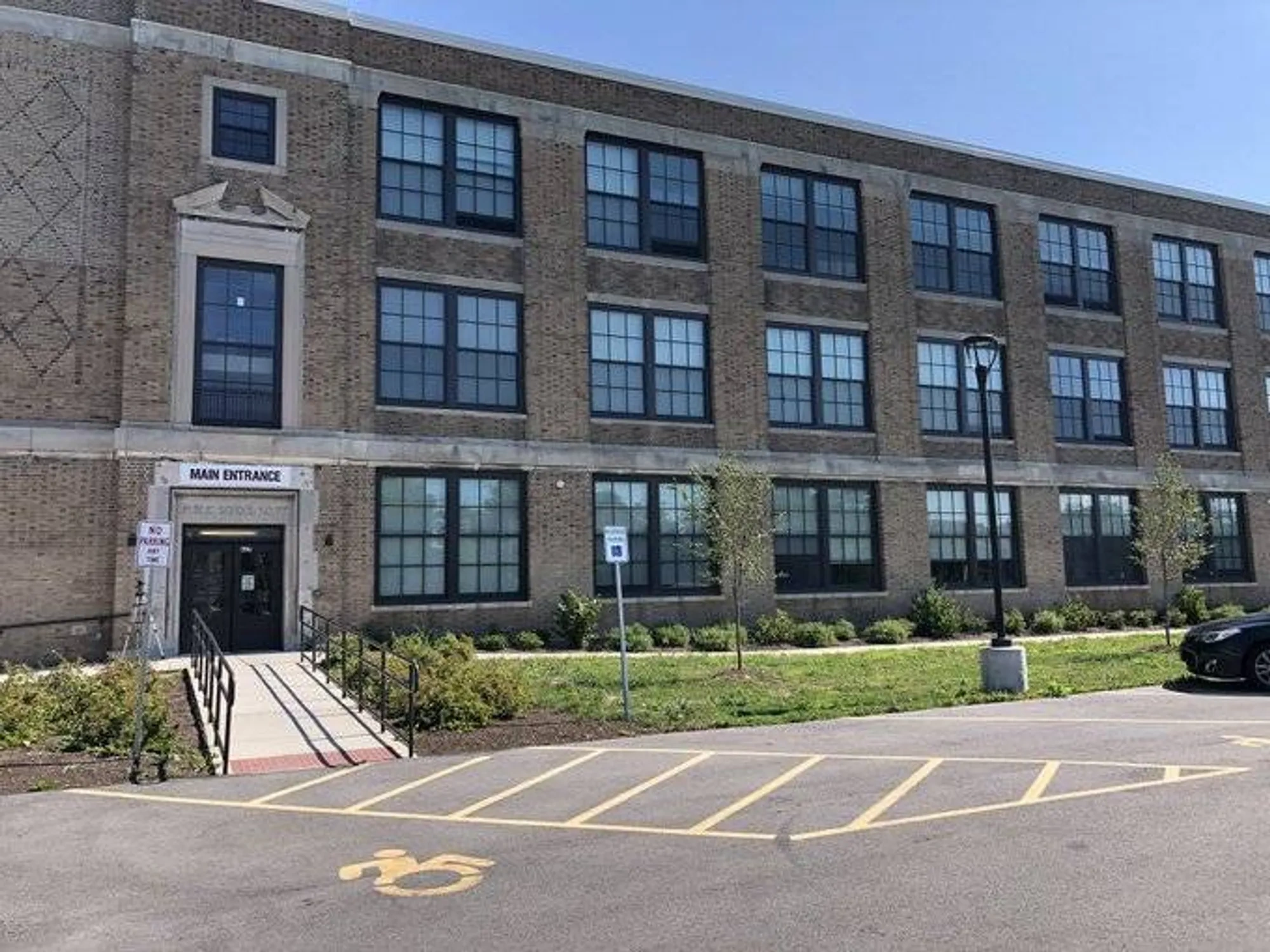
The most consequential decision in New York education right now is being made without a vote. Sometime in the coming months, State Education Commissioner Betty Rosa will decide whether to place a monitor over the Buffalo Public Schools, New York's second-largest school district. Rosa, who has already sent an advisor, does not need the Legislature's permission, and on a recent visit to Buffalo, she gestured that she was leaning toward the monitor.
On Wednesday, Assemblymember Jon Rivera introduced and filed a bill that would do it by statute instead. The Legislature is in recess until January 2027, which means his bill cannot move for four months.
What is actually happening
Rivera, who represents the 149th District covering parts of Buffalo and Lackawanna, filed Assembly Bill A11634, which would install a Buffalo Public Schools state monitor: a non-voting member of the school board, sitting ex officio, with authority to review the district's fiscal and academic decisions, build long-term improvement plans, verify that the district is meeting state requirements, and step in when board actions conflict with state law or an approved financial plan. It is oversight with a seat at the table rather than a hand on the wheel.
Buffalo's superintendent Pascal Mubenga resigned in July amid sexual harassment allegations. Separate misconduct claims were raised against board member Muki Hawkins, and an outside investigation announced at Monday's board meeting found no substantiated evidence against him. "I'm very happy that the truth prevailed," Hawkins told BTPM. Interim Superintendent Dr. Ebony Prophet-Bullock has said the district welcomes state support.
Rivera's argument is about the money. New York sends more than a billion dollars a year to Buffalo's schools and he wants that investment to arrive attached to answers. When a district is dealing with financial instability, internal conflict and misconduct allegations at once, he told Spectrum News, "the status quo is no longer acceptable."
Why a family should care!
The issue underneath this is not about Buffalo, It's about what happens to any district when things go wrong, and how much of that gets decided by voters. Under receivership in New York, a persistently struggling school can be handed to a receiver with power to override the district on staffing, scheduling and program design. Twenty-nine schools are currently under that regime. We have written before about how receivership works and what it does to a school community, and the true is that it is disruptive by design.
A monitor is the lighter instrument. Nobody gets removed. The board keeps voting, but the monitor reads everything, and in practice districts start pre-clearing decisions with someone whose name never appeared on a ballot. That is the trade: less upheaval, less accountability to voters. Reasonable people land in different places on whether it is worth it, and Buffalo is about to become the case everyone cites.
What makes this New York school district oversight question urgent statewide is that the fiscal pressure behind it is not local. State Comptroller Thomas DiNapoli reported Thursday that the share of school districts planning to exceed the property tax cap has doubled in two years, from 2.4 percent for fiscal years ending in 2024 to 4.9 percent for those ending in 2026. School districts are still the most restrained group in the state, and they are absorbing that pressure while enrollment keeps falling and spending keeps climbing. Cities are at 45 percent, villages 35.5 percent, fire districts 31.5 percent. But a doubling is a doubling, and a property tax cap override is what a board does when the funding stops working.
Commissioner Betty Rosa holds real authority here regardless of what Rivera's bill does. If she appoints a monitor, it happens. If she does not, the bill sits until January at the earliest. The pressure the bill creates is public, not procedural, and that appears to be the point.
What else moved in New York education this week
42,000 SUNY workers ratified a five-year contract
United University Professions members approved a roughly $3.5 billion agreement on Friday, with 97.7 percent of those voting in favor. It carries a 4.5 percent raise effective in October, the largest single-year increase members have seen since the late 1980s, and 19.3 percent in total wage growth across the contract. The adjunct minimum per course rises to $7,000 by the end of the term, longevity raises come with retroactive adjustments, and geographic pay extends to Ulster County for the first time.
The provision worth watching is unrelated to money. The UUP contract ratification includes grievable language on artificial intelligence requiring that humans remain responsible for work and evaluations, which makes it one of the first bargaining units in the country to write AI accountability into an enforceable contract. Union leadership says other unions have already asked to borrow the text.
SUNY graduate workers stopped paying fees
Governor Hochul announced Friday that mandatory fees for more than 7,500 graduate student workers at SUNY State-operated campuses are eliminated, completing a phase-out funded through state budgets since 2023 and 2024. Those fees averaged about $2,000 a year, charged against stipends of roughly $20,000. The SUNY graduate student fees change is small money at the state level and enormous money at the household level, which is generally the shape of the education policies that matter most and get covered least.
A federal deadline lands September 21
The U.S. Department of Education published a proposed federal accreditation rule in the Federal Register on Thursday that would rewrite how the government recognizes accrediting agencies. Accreditation is the gate that lets a college accept federal financial aid, so this reaches more than $100 billion a year nationally, and it reaches every SUNY campus, every CUNY campus and every private college in New York.
The proposal would make it easier for new accreditors to enter the field, add First Amendment compliance and research misconduct monitoring to accreditor duties, remove standards tied to immutable characteristics, and require clearer explanation of transfer credit policies. Under Secretary Nicholas Kent framed the current system as one that has produced "inflated tuition, administrative bloat, and ideology-driven mandates."
The public comment deadline is September 21, 2026, through regulations.gov under Docket ID ED-2025-OPE-1042. That is a 30-day window, and it is one of the few places on this page where a parent or a student can put something on the record. If the rule is finalized before November, it could take effect July 1, 2027.
The thread running through all of it
Four stories, one week, and they line up in an uncomfortable direction. A district that may lose some self-governance. Districts across the state edging toward tax cap overrides they have historically avoided. A union writing protections into a contract because it does not expect them to arrive from anywhere else. A federal rule rewriting the accreditation system on a 30-day comment clock.
In each case, decisions with long consequences are being made by people who are not on any ballot you will see in November, on timelines shorter than a school year. That is not a scandal. It is how modern governance works. But it does change what informed participation looks like: less voting, more reading, and a lot more attention to comment deadlines. Household budgets absorb the results either way, which is why we keep returning to the question of what budget decisions look like from inside a classroom rather than from a spreadsheet.
Buffalo will get an answer on the monitor before the Legislature returns. Watch for it in the fall, and watch what other districts say when it comes.



Comments (0)
No comments yet — be the first to share your thoughts.
Leave a comment