
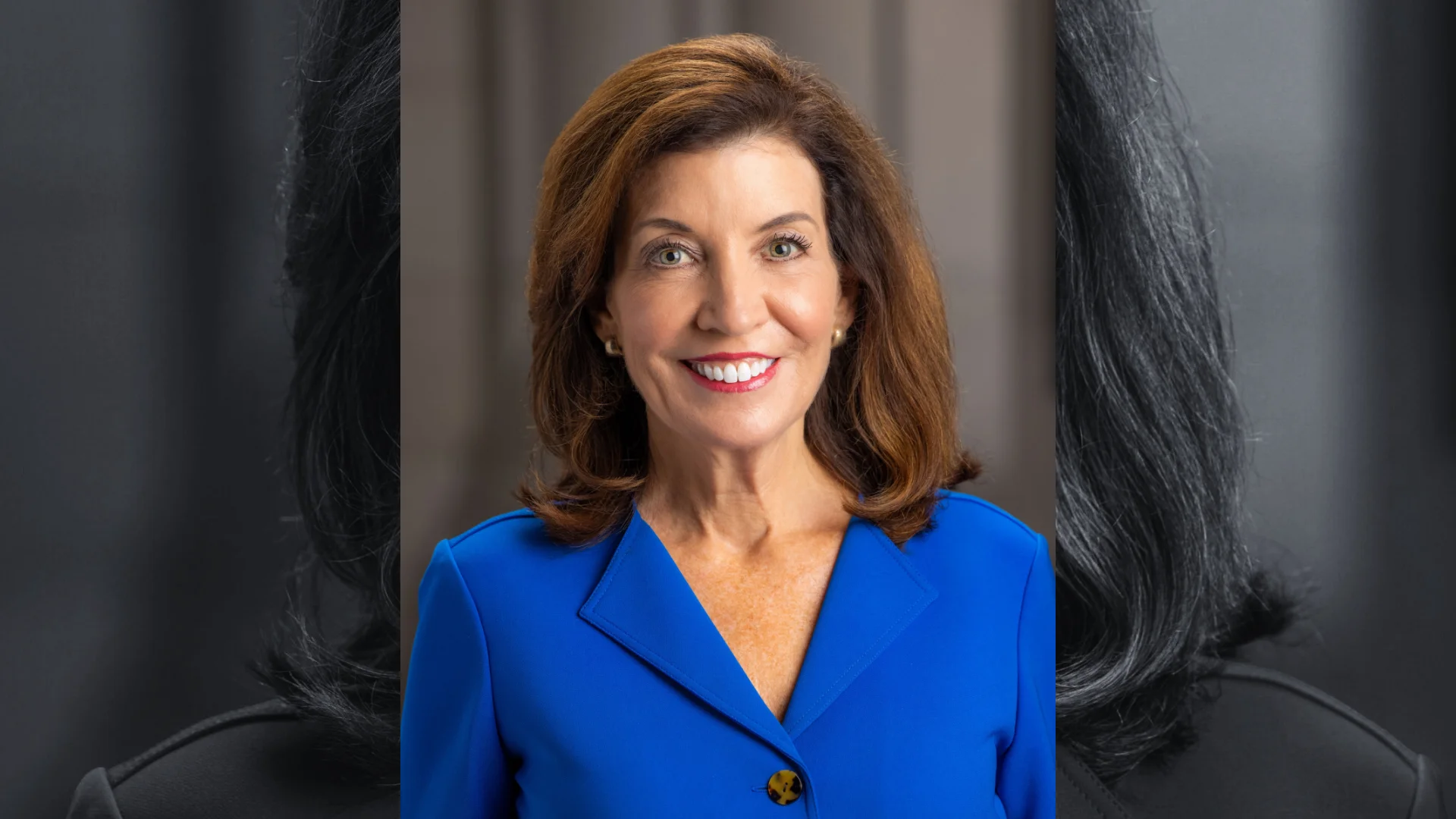
Five months after her office first called itself supportive, Gov. Kathy Hochul put New York into the federal scholarship tax credit on Friday (Oct. 9). She chose a program written by congressional Republicans over the objections of the state's two largest teachers unions and the Democratic leaders of both legislative chambers. The decision arrived as a written statement from Albany, eight days after the U.S. Treasury released the proposed rules she had said she was waiting to read.
For families, the change works like this. Beginning January 1, a taxpayer can give up to $1,700 to an approved scholarship organization and take a dollar-for-dollar federal tax credit for the gift. Children in households earning up to 300 percent of area median income can receive the scholarships. The money can pay private school tuition and, under the proposed federal rules, tutoring and some district fees for students who stay in public schools. No state or local tax dollars move through the program, and that was the line Hochul drew most firmly on Friday.
New York "would participate in the federal scholarship tax credit program if, and only if," states the annoucement, "all schools and students, including those in our public schools, could benefit." The governor pointed to "business leaders, who have committed to use this program to support public school students and their academic needs," though she named no company or executive. She also promised the program would bring money to New York families "without taking a single dollar from public schools or our state or local budgets."
The statement leaned on her budget record, citing the state's work "increasing school funding by more than $10 billion and fully funding Foundation Aid for the first time." It closed on a sentence aimed at the educators who spent the summer lobbying her: "My commitment to public education has not changed, and it never will." Chalkbeat, which reported the decision Friday, quoted Hochul putting the reasoning more bluntly: "I'm not going to leave money on the table when it could help our kids."
The credit was created in the federal budget law President Donald Trump signed in July 2025, and each state decides whether to join. It was built mainly to widen private school choice, yet its scholarship rules also reach tutoring and other costs for children who remain in public schools, which is the opening Hochul cited on Friday. In mid-September, unions and civil rights groups had publicly urged her to reverse course, and 15 Democratic members of the state's congressional delegation had pressed her in a letter of their own.
The road to Friday began in May, when Hochul spokesperson Emma Wallner said the governor was "supportive of the federal tax credit scholarship." Her office said then that it would review the program for poison pills that could hurt New York's schools. That review stretched through the summer and into the fall while 30 other states signed on. When the Treasury's proposed rules finally appeared on October 1, our report on the Treasury rules found New York families still waiting on her answer, with a January 1 deadline approaching.
The opposition had been loud and organized. On October 1, NYSUT President Melinda Person said the rules confirmed what the union had warned about, calling the program "a one-way door into a federally designed voucher program." By October 8, according to a NYSUT statement, Senate Majority Leader Andrea Stewart-Cousins and Assembly Speaker Carl Heastie had both come out against participation. State Comptroller Thomas DiNapoli had warned the governor in an August letter about risks to rural and underserved students and to district budgets. NYSUT counts more than 80 organizations in the coalition that asked her to say no.
After Friday's announcement, United Federation of Teachers President Michael Mulgrew answered with a statement of his own: "Gov. Hochul will bear the responsibility, but our students, educators, and families will bear the price." Union officials had said before the decision that opting in would not cost Hochul their support in her reelection campaign. She faces voters on Tuesday, November 3.
On the other side stood Democrats for Education Reform and the state's religious school networks, including the New York State Catholic Conference, whose bishops issued a statement welcoming the decision. Hochul is the second Democratic governor to opt in voluntarily, after Colorado's Jared Polis. The IRS list of participating states, last updated September 16, showed 30 states committed. In three of them, Kentucky, North Carolina and Kansas, Republican legislatures overrode Democratic governors' vetoes to get there.
What Hochul did not get on Friday is control over how the money moves. As Chalkbeat noted, a state that opts in cannot choose which groups receive donations or stop those groups from turning away students on the basis of religion or LGBTQ status. It also cannot restrict scholarships to low-income children beyond the federal income line. The proposed rules let states review annual third-party audits of the scholarship-granting organizations on their lists, but they bar states from writing tighter standards of their own.
The decision also lands on a constitutional question this site examined in September. Article XI, Section 3 of the New York Constitution bars the state from using public money to aid religious schools, directly or indirectly. Our analysis of the opt-in traced how the federal design steps around that bar. The credit runs on private donations and flows through the federal tax code, so no state appropriation is involved, and that is the legal premise beneath both the governor's statement and the program's supporters.
The calendar from here is tight. The Treasury is taking written comments on its proposed rules through Tuesday, December 1, and will hold a public hearing on Tuesday, December 15, at 10 a.m. Eastern. A state's formal election to participate in 2027 is due by Friday, January 1, the same day donations can begin. New York must then give the IRS its list of approved scholarship organizations by Monday, February 15.
Friday's statement announced the decision, but neither the statement nor the reporting around it said whether the state had already filed its formal election. The IRS tracker had not yet added New York to its list. Until the organization list exists, a New York family has nowhere specific to apply and a donor has no New York group to give to.
The proposed rules allow scholarships to cover tutoring and certain district fees, such as field trips, for public school students. The governor's statement rests heavily on business pledges to steer donations in that direction. How many dollars arrive, through which organizations, and for which districts outside New York City will depend on who registers as a scholarship organization this winter and who chooses to give.
A family in Buffalo, Binghamton or the Bronx earning under the federal income line will qualify on paper in exactly the same way. Whether an organization near them is offering anything will not be visible until the state's list reaches the IRS in February. The Treasury rules themselves remain in draft form until the December comment period and hearing are finished.
The governor set her own test in writing, promising that public school students will benefit and that business leaders will help make sure of it. The first public evidence of whether that promise holds will be the list of scholarship organizations New York files with the IRS by February 15, 2027.


Comments (0)
No comments yet — be the first to share your thoughts.
Leave a comment