

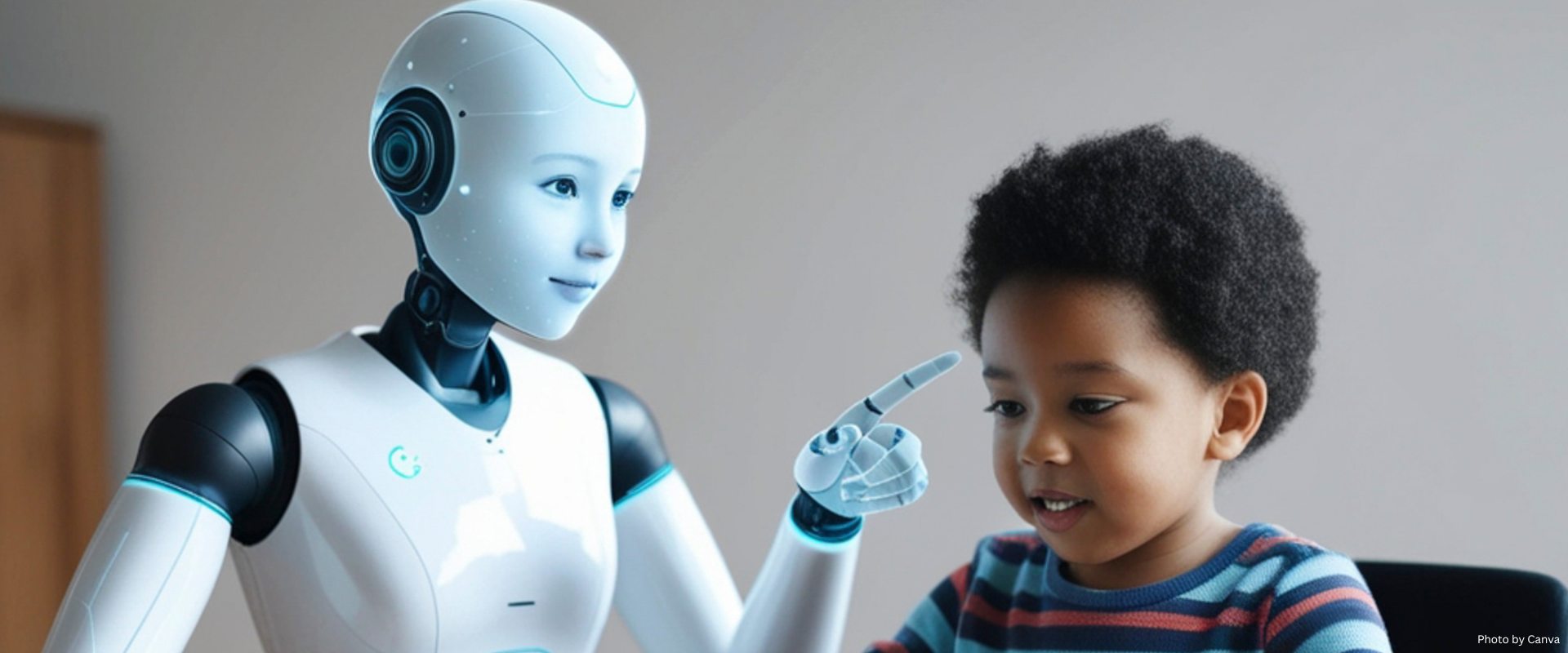
In a historic display of digital-age activism, NYC parents and educators are demanding a two-year moratorium on student-facing AI tools. The core argument suggests that the rush to integrate generative technology outpaces our understanding of its impact on student development, data privacy, and the fundamental cognitive skills required for critical thinking. While the DOE views AI as an inevitability, the "Great Pause" movement asserts that the risks of cognitive flatlining and data exploitation are too high to ignore without rigorous, independent testing and a return to human-centric pedagogical values.
The atmosphere at the recent Panel for Educational Policy (PEP) meeting was less like a standard administrative briefing and more like a digital-age town hall on the brink of a revolution. For over five hours, the air in the room was thick with a singular, echoing demand: Stop. Not forever, but for now. The withdrawal of the proposed AI-focused high school in Lower Manhattan wasn't just a scheduling change; it was a white flag raised in the face of a parent-led movement that is gaining unprecedented momentum.
The petition, which garnered nearly 2,000 signatures in record time, represents a significant shift in the educational landscape. This isn't just a group of resisters afraid of the "robot apocalypse." Instead, this is a sophisticated collective of parents, neuropsychologists, and veteran educators who are raising the alarm on the long-term cognitive effects of outsourcing thought to an algorithm. As we navigate the 2026-2027 academic year, the question isn't whether AI exists, but whether we have invited a Trojan Horse into the classroom.
Building Intellectual Stamina
At the heart of the moratorium movement is a concept that sounds like something out of a sci-fi novel but has very real biological implications: cognitive flatlining. Experts testifying at the PEP meeting argued that the middle and high school years are critical windows for developing executive function and neural pathways associated with deep synthesis. When a student uses AI to summarize a complex text or structure an essay, they aren't just "saving time." They are potentially bypassing the "productive struggle" required to build intellectual stamina.
If the brain is a muscle, the argument goes, then generative AI is the equivalent of a motorized exoskeleton that does the walking for you. You might get to your destination faster, but your legs will eventually weaken. Dr. Sarah Jenkins, a developmental psychologist who spoke at the panel, noted that the process of "getting stuck" on a math problem or struggling to find the right word in an essay is actually when the most significant learning occurs. By removing the friction of learning, we may be inadvertently lowering the ceiling of a child's potential.
Student Data Privacy
Beyond the biological concerns lies the murky world of data ethics. The "Great Pause" advocates are rightfully skeptical of how student data is being harvested and utilized by third-party tech giants. Current NYC DOE AI guidelines emphasize that AI should be used for administrative tasks, but the line between a "teacher tool" and a "student-facing interface" is becoming increasingly blurred.
Parents are asking the hard questions that Silicon Valley often tries to dance around. Where does the data go once a student interacts with a chatbot? Is this data being used to train future iterations of commercial models? How can a school system guarantee algorithmic transparency when the companies themselves often cannot explain why an AI arrived at a specific conclusion?
The reality is that many of these tools are "black boxes." We see the input and the output, but the logic in between is proprietary and hidden. For a public school system responsible for the safety of over a million children, "trust us" is no longer an acceptable data policy. The demand for a moratorium is, in many ways, a demand for a "Digital Bill of Rights" that treats student data as a protected asset rather than a commodity to be traded for "innovation."
The Equity Gap in the AI Era
One of the most poignant moments of the marathon panel involved the discussion of educational equity. There is a growing concern that AI will create a two-tiered system. In one tier, affluent students receive high-touch, human-centric instruction where AI is a peripheral tool used for high-level data analysis. In the other, under-resourced schools might lean on AI as a "cost-saving" measure, effectively replacing human tutors and mentors with digital substitutes.
The educational community in NYC has long fought against the "digital divide," but the AI era presents a new challenge: the "human divide." We run the risk of creating a world where wealthy children are taught by humans to lead, while lower-income children are taught by machines to follow prompts. The moratorium seeks to ensure that the city doesn't accidentally automate the very students who need the most personalized, human attention.
The Case for "Slow Education"
In our rush to be "future-ready," we have forgotten that some of the most important aspects of education are intentionally slow. Socratic seminars, peer-to-peer debates, and hands-on laboratory experiments cannot be replicated by a Large Language Model (LLM). The proponents of the moratorium are calling for a return to "Slow Education," a movement that prioritizes deep understanding over rapid output.
There is a certain irony in the fact that many of the tech executives developing these tools in Silicon Valley send their own children to "tech-free" Waldorf schools. If the creators of the technology are wary of its impact on their children’s development, why is the NYC DOE so eager to roll it out to the masses without a pilot program that measures psychological well-being alongside academic gains?
The Road Forward
A two-year pause isn't a call for ignorance; it’s a call for research. Advocates are proposing that during this time, the DOE should:
Fund Independent Research: Commission studies that are not funded by EdTech companies to look at the impact of AI on long-term memory retention and empathy.
Establish Human-First Pedagogy: Re-center the curriculum on interpersonal skills and offline critical thinking.
Audit Existing Tools: Conduct a thorough security audit of every AI-enabled platform currently used in NYC schools to ensure compliance with the Student Data Privacy Act.
Teacher Training: Instead of teaching teachers how to use AI to grade papers, teach them how to identify AI-generated content and foster environments where students don't feel the need to cheat.
The Temporary Victory
The cancellation of the AI-focused high school proposal is being hailed as the first major victory for the "human-first" movement. The plan, which would have converted a historic building into a hub for "AI-integrated learning," was criticized for being a solution in search of a problem. Critics pointed out that the city should focus on fixing crumbling infrastructure and reducing class sizes before investing millions in a niche "tech school" that might be obsolete by the time the first class graduates.
This victory has emboldened parents across all five boroughs. It showed that the Panel for Educational Policy is not just a rubber stamp for the Mayor’s office, but a body that can be moved by the collective voice of the people it serves.
The Human Element is Non-Negotiable
We are at a crossroads where "innovation" is often used as a synonym for "speed." But in education, speed is rarely the goal. The goal is depth, character, and the ability to think independently in an increasingly automated world. The parents demanding this moratorium aren't trying to stop progress; they are trying to ensure that progress doesn't come at the expense of the very thing that makes us human: our ability to learn, fail, and grow without the help of a prompt.
The next two years will be a defining period for the NYC school system. Will we be the pioneers of a new, machine-led educational paradigm, or will we be the guardians of the human mind? For the parents at the PEP meeting, the answer is clear. They are choosing the children over the chips.
As this debate continues to unfold in the halls of Tweed Courthouse, The Standard NY will remain your primary source for updates, ensuring that the voices of parents and educators are heard above the hum of the servers. After all, the most important "intelligence" in our schools isn't artificial, it's the students who deserve an education that respects their humanity.



Comments (0)
No comments yet — be the first to share your thoughts.
Leave a comment