


How Poor Indoor Air Quality Is Silently Harming Our Children
Parents in New York fight hard for quality schools, clean playgrounds, and safer streets. But there is a threat to child health that rarely makes it onto that list because it does not announce itself. It does not make the evening news. It just sits in the air of the living room, the classroom, and the daycare center, and according to a working paper from Harvard's Center on the Developing Child, indoor air quality is one of the most serious and overlooked risks to early childhood health and development.
The scale of the exposure is the part most families never think about. The U.S. Environmental Protection Agency estimates that Americans spend roughly 90 percent of their time indoors, and that indoor concentrations of some pollutants run two to five times higher than what is outside, occasionally spiking past a hundred times higher. That means the room where a toddler naps or a classroom where a kindergartner spends the day can carry a heavier pollutant load than the sidewalk outside it, and a parent would have no way to see it happening.
Young children are not just more exposed. They are more vulnerable to that exposure. Compared with adults, they breathe faster and inhale more air relative to their body size, and their respiratory, immune, and neurological systems are still under construction. That combination makes early childhood a period of heightened sensitivity to mold spores, formaldehyde off-gassing from furniture, harsh cleaning products, and the synthetic fragrance in products marketed as air fresheners. A growing body of pediatric research, including work reviewed by the Harvard Center on the Developing Child, has linked early exposure to volatile organic compounds, the chemical class found in paints, glues, and many household products, to elevated risk for respiratory illness and, in some studies, behavioral and developmental effects in young children. The concern is not limited to a cough. Researchers are increasingly describing it as a long-term question of brain development.
A Statewide Health Gap, Not Just a City One
The households absorbing the worst of this exposure tend to be the same ones already carrying the heaviest housing burden. Leaky pipes, aging HVAC systems, pest pressure, and overcrowding are common features of older housing stock, and that pattern shows up from the South Bronx to Buffalo's East Side, from Rochester's northeast neighborhoods to overcrowded units on Long Island. This is a statewide equity problem, not a five-borough one, and it tracks the same lines as New York's broader asthma disparities: Black and Latino children make up a disproportionate share of New York City's asthma hospitalizations, according to reporting on Associated Press data, and researchers have repeatedly traced that gap back to housing quality and environmental exposure rather than anything biological.
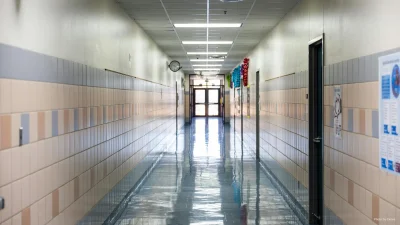
School buildings carry their own version of the problem, and building age is the common thread statewide. Faulty school ventilation, worn carpet, and deferred HVAC maintenance can turn an older classroom into a hotspot for airborne irritants regardless of which region of the state that classroom is in. The EPA's IAQ Tools for Schools program, which includes a free mobile app for building assessments, gives administrators a concrete framework for identifying hazards and fixing them, and it gives parents something specific to ask their district about instead of a vague complaint. Districts already juggling wildfire smoke advisories and canceled outdoor recess, the same disruption this publication tracked across summer programs statewide this month, have an obvious incentive to get the inside of the building right too, since moving kids indoors only protects them if that indoor air is worth breathing.
What Parents Can Actually Do This Week
The Harvard working paper organizes the practical response into three categories, and each one translates into something a parent can do without waiting on a landlord or a school board. Protection means adding a HEPA air purifier, particularly in a child's bedroom, switching to fragrance-free, non-toxic cleaning products, and cutting out indoor smoking, incense, and regularly burned candles. Adaptation means working with the home ventilation already available: cracking a window when weather allows, running exhaust fans during cooking and showering, and vacuuming with a HEPA-filtered vacuum at least twice a week. Prevention means being deliberate about low-emission materials entering the home in the first place, favoring furniture and finishes built to that standard and avoiding VOC-heavy paints, glues, and synthetic fragrance products, especially during a renovation.
None of those three steps require a special credential or a large budget, which is precisely the point. A family does not need to wait for a landlord's response or a legislative session to start closing this gap tonight.
Advocacy Belongs in the Parenting Conversation
In communities already carrying the weight of underfunded infrastructure, this cannot stay a fringe concern. Air shapes brain development, respiratory health, and long-term life outcomes, and it does that quietly, without the drama of a headline. Parents, caregivers, and educators do not need to wait for a crisis to start asking pointed questions: What is the school's HVAC maintenance schedule? Are air purifiers actually present in the classroom, not just budgeted for? Is a child coughing more after a day at daycare than before it? Politeness is not a strategy here.
Clean air is not a luxury add-on to good parenting. It belongs in the same child health advocacy conversation as nutrition, safety, and school quality, because it shapes all three.


Comments (0)
No comments yet — be the first to share your thoughts.
Leave a comment