

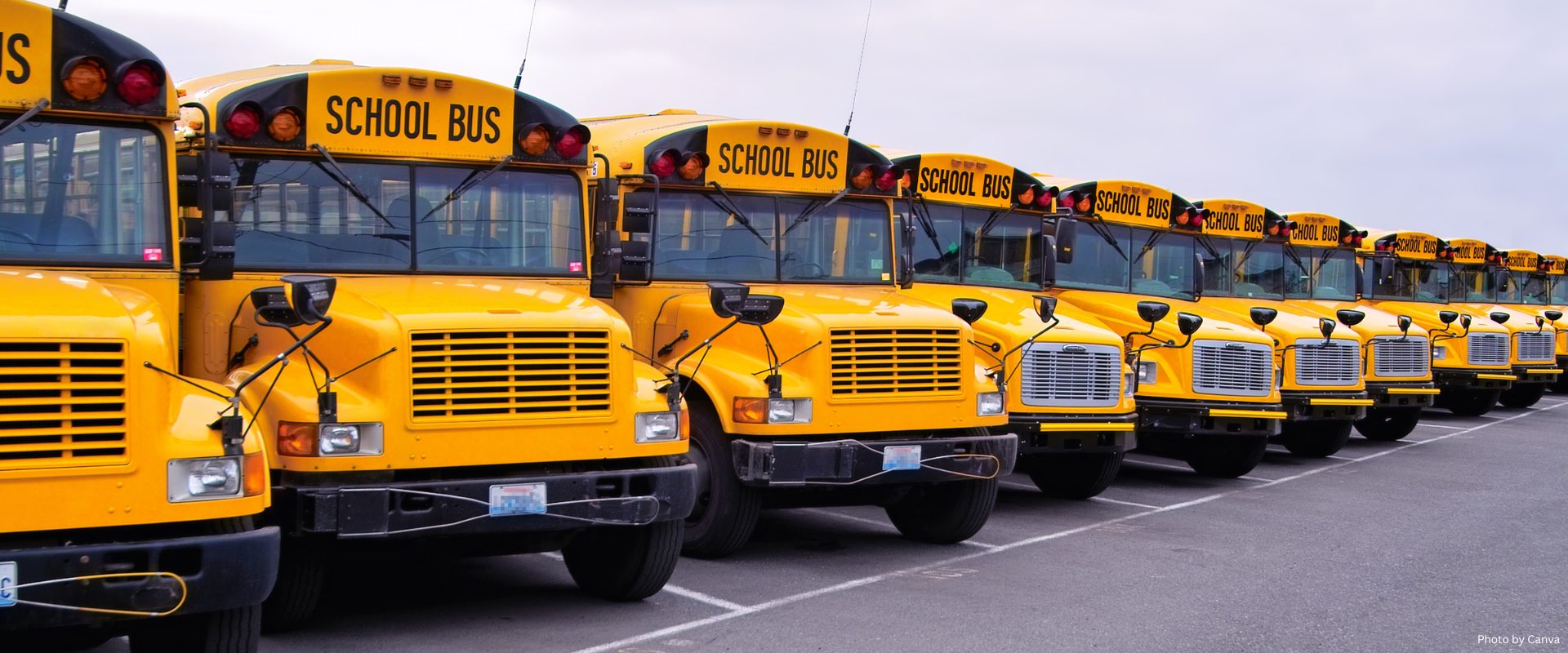
From a citywide driver shortage to a looming electric bus mandate, the way New York students get to school is under more pressure than ever — and parents are the ones absorbing the fallout.
Every school morning, across the five boroughs and beyond, hundreds of thousands of New York families run the same mental calculation: Is the bus coming today? Will it be on time? Is my child safe? For too many parents, the answer has become a source of daily anxiety rather than simple reassurance. New York's school transportation system, one of the largest in the nation, is in the middle of a compounding crisis driven by driver shortages, runaway costs, aging technology, and a mandated transition to electric buses that is as necessary as it is complicated.
The numbers tell a stark story. The New York City Department of Education currently relies on 52 private bus vendors to transport more than 150,000 students each day. In the 2023-24 school year alone, those families filed over 150,000 service complaints. Yet the city failed to collect $42.6 million in penalties it was owed from vendors who violated basic GPS tracking requirements. That is not a typo. Millions of dollars in accountability measures, simply left on the table.
The Driver Shortage
The school bus driver shortage did not begin with the pandemic, but it got dramatically worse because of it. Nationally, bus driver employment remains roughly 9.5% below 2019 levels, according to the Economic Policy Institute, even after modest hiring gains in recent years. In New York City specifically, officials acknowledged before the City Council in 2024 that the school system was approximately 300 bus drivers short — not enough to cover all needed routes or to provide adequate backup when drivers call out sick.
The root causes are straightforward, even if the solutions are not. Bus drivers are chronically underpaid relative to other driving professions. According to research cited by the National Education Association, transportation staff have been "severely underpaid" for far too long, often working without benefits — making it nearly impossible to recruit and retain qualified candidates, especially in a high cost-of-living metro area like New York. In 2023, school bus drivers nationally earned an estimated 43% less than comparable workers in other transportation roles.
The consequences ripple outward. When routes go uncovered, students miss instructional time. When buses run late, parents burn through paid time off. When schools cannot transport their most vulnerable students reliably, chronic absenteeism climbs. A 2024 State of School Transportation report found that over 44% of school leaders identified transportation challenges as a direct contributor to chronic absenteeism. More than 79% of parents reported driving their children themselves, or relying on a family member, because they simply could not count on the bus.
NYC's Privatized System
New York City's approach to student transportation is unlike most large school systems. Rather than operating its own buses, the city contracts with dozens of private companies — a fragmented, privatized model that has drawn sustained criticism for its lack of accountability. A December 2025 audit from the NYC Comptroller's Office laid out the dysfunction in detail: bus companies regularly underperform, oversight is weak, and the routing software the city depends on was built in 1994 and has been unsupported since 2015.
The city invested $51.7 million in a vendor called Via Transportation to develop modern routing and student badging technology. Via's routing capability is now four years late. Student badging, which would let parents know when their child boards or exits a bus, is more than five years delayed. The technology that should have modernized the system simply never arrived, yet the payments kept flowing.
Perhaps most troubling is who gets hurt most. A full 99% of "problem runs," defined as routes that fail or are significantly disrupted, affect students with disabilities. These are the children who have the fewest alternatives, the most complex transportation needs, and the least capacity to absorb disruption. Students in temporary housing and foster care face similarly severe barriers. As one District 75 student activist, Lucas Healy, told the Comptroller's Office: "I have lost more school time hours due to bad bussing practices than I can count."
After years of operating on month-to-month emergency contract extensions, the Panel for Educational Policy approved three-year extensions in November 2025 for the city's 52 bus vendors. The contracts run through June 2028 — buying time, but not solving the underlying structural problems. NYC Comptroller Brad Lander has called for a "School Bus Czar" to be appointed in 2026 to stabilize daily operations and lead a full system redesign before those contracts expire.
What's Being Done: Reforms, Technology, and Alternative Models
The picture is not entirely bleak. Across the city and state, a number of transportation reform efforts are underway, though most are still in early stages.
On the technology front, school districts are increasingly turning to real-time GPS tracking, parent-facing apps, and route optimization software to squeeze more reliability out of existing fleets. These tools allow dispatchers to reassign routes on the fly, communicate delays directly to families, and identify problem patterns before they become crises. The city's own Comptroller report recommends making GPS compliance non-negotiable, a basic standard that, remarkably, is not currently enforced.
At the state level, the Comptroller's office has proposed three paths forward for NYC school transportation reform: competitive reprocurement (opening contracts to new vendors with stronger accountability standards), municipalization (bringing bus operations in-house under the DOE), or nonprofit management. Each model carries tradeoffs around cost, labor protections, and operational complexity. What they share is a common premise; the current structure cannot continue.
Nationally, districts have begun experimenting with layered transportation models: carpooling programs, transit partnerships, and stipends for families just outside bus eligibility zones. These approaches are not a substitute for reliable bus service, but they reflect a growing recognition that no single solution will work for every student in every neighborhood.
The Electric Bus Mandate
Overlaid on all of this is a transformation that is coming whether districts are ready or not. Under a mandate passed in New York's 2022-23 state budget, all new school buses purchased by 2027 must be zero-emission, and every bus operating in New York State must be fully electric by 2035. The goal is clear: New York City has one of the highest childhood asthma rates in the country, and diesel bus exhaust is a documented contributor. Getting diesel buses off routes that run through dense residential neighborhoods is a genuine public health priority.
The challenge is cost. A new electric school bus can run anywhere from $200,000 to nearly $400,000, often double or triple the price of a traditional diesel model. Infrastructure costs for charging equipment add to that figure. For districts already stretched thin, the upfront investment is significant.
The good news is that substantial funding exists to help close the gap. Through NYSERDA's New York School Bus Incentive Program, districts can apply for vouchers that cover up to 100% of the cost difference between a diesel and electric bus, plus much of the charging infrastructure. The Environmental Bond Act, passed by voters in 2022, dedicated $500 million toward the school bus electrification effort. Federal EPA grants, when available, have historically covered 90 to 95% of bus costs in qualifying districts.
Some districts that moved early have seen it work. Alexandria Bay Central School District in Northern New York acquired two electric buses for just $95,000 each after layering EPA and state grants, a fraction of the standard sticker price. Shenendehowa Central School District piloted four electric buses this past year, and its drivers have reportedly embraced the change.
But the federal landscape has created new uncertainty. The Trump administration's 2025 freeze on certain energy-related funding left many districts unable to access EPA Clean School Bus grants they were counting on. Republican state legislators have introduced bills that would allow New York districts to opt out of the mandate entirely, citing concerns about cold weather battery performance, rural route distances, and utility infrastructure that cannot yet support mass charging. The debate is real — electric buses currently max out around 120 miles of range, which works for dense urban routes but creates genuine complications for districts sending buses on long field trips or sports runs through rural terrain.
What New York Families Should Know Right Now
For parents navigating this system, the most important thing to understand is that you have more leverage than you might think. The NYC school transportation system is publicly contracted and publicly accountable. Filing complaints through the DOE's Office of Pupil Transportation creates an official record. Parent advocacy organizations like Parents to Improve School Transportation (PIST NYC) have been pushing for systemic reform for years and have helped move the needle on the Comptroller's audit.
For parents of students with disabilities or children in temporary housing, the stakes are especially high. Federal law requires that transportation be provided as part of a student's Individualized Education Program (IEP), and failure to deliver that service reliably can be documented and escalated. Advocates recommend keeping detailed logs of missed or late buses, because that documentation becomes evidence in any formal complaint or due process proceeding.
On the electric bus front, districts are still in early stages of planning, and most families will not see significant changes in their child's daily ride for another year or two at minimum. But the direction is set. The question is not whether New York's school buses are going electric — it is how smoothly, and how equitably, that transition happens.
The Bottom Line
New York's school transportation crisis is not one problem, it is several stacked on top of each other. A workforce that has been underpaid and under-supported for decades. A privatized contracting system with too little accountability and too much tolerance for failure. An aging technology infrastructure that was supposed to be replaced years ago. And now, a mandatory fleet overhaul that is ambitious, important, and underfunded at the federal level at the worst possible moment.
None of this means families should simply accept the chaos. The reforms being proposed — a School Bus Czar, competitive reprocurement, stronger GPS enforcement, and a real electrification roadmap — are actionable and achievable. But they require consistent public pressure, honest leadership from the DOE and City Hall, and a commitment to putting students, especially the most vulnerable ones, at the center of every decision.
The wheels on the bus, as any parent will tell you, are supposed to go round and round. Getting them there, reliably, every morning, for every child — that is the work that still needs to be done.


Comments (0)
No comments yet — be the first to share your thoughts.
Leave a comment