

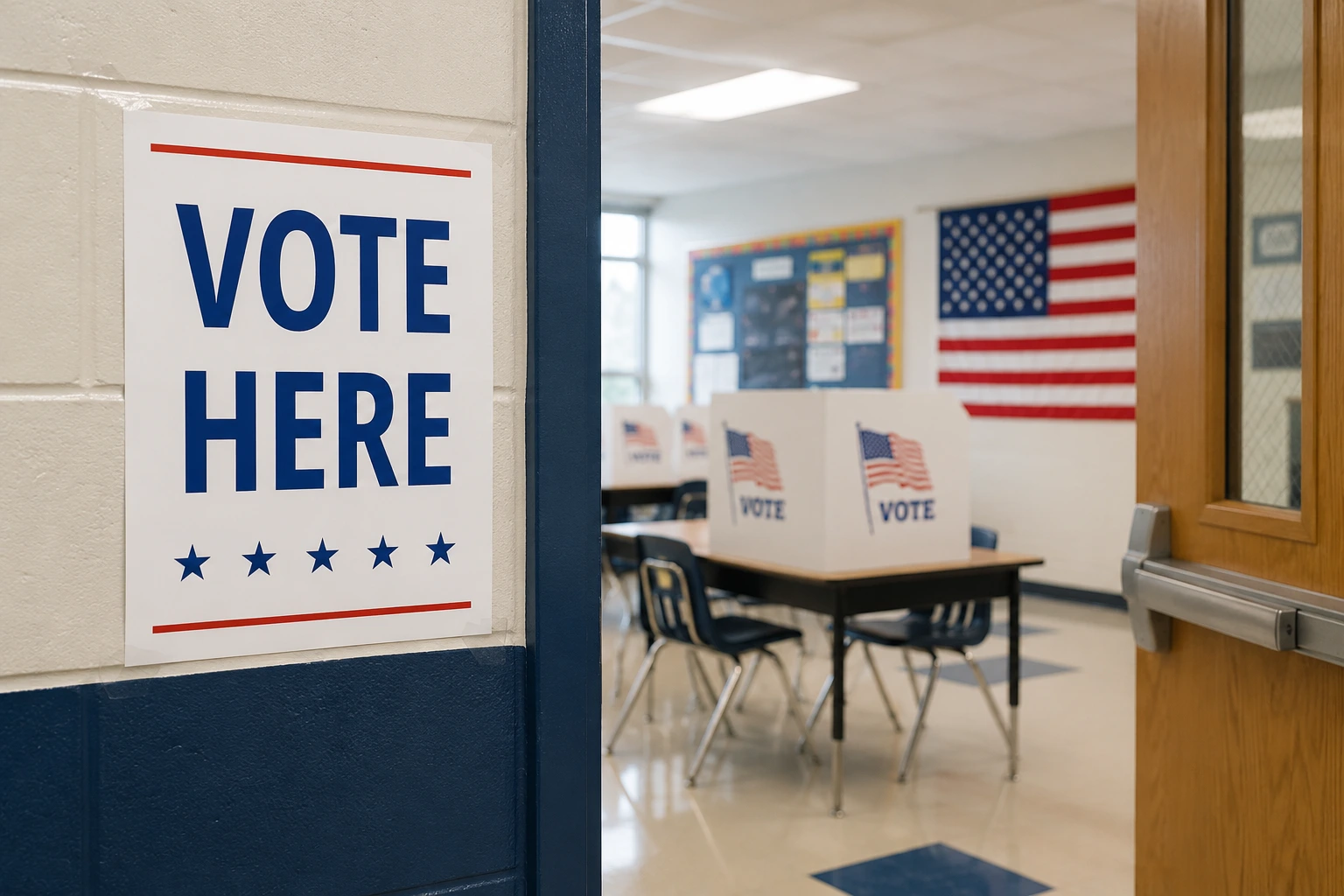
On Tuesday, May 19, 2026, voters across New York State had their say on school district budgets for the 2026-27 school year. With hundreds of districts on the ballot and the state operating under a late state budget that left many school administrators guessing at their final aid figures, this year's vote carried unusually high stakes. The results were largely positive, with the overwhelming majority of New York school budgets passing on the first vote. But a handful of districts were not so fortunate, and their struggles offer an important window into the financial pressures mounting in communities across the state.
Of the roughly 700 districts outside the Big Five city school districts - New York City, Buffalo, Rochester, Syracuse, and Yonkers - that are required to put their spending plans before voters, the vast majority won approval on May 19. School budget approval rates in New York have historically hovered above 95 percent, and early reports from regional news outlets suggest this year followed that pattern, even amid the financial uncertainty caused by Albany's delayed state budget.
The backdrop to this year's vote was significant. New York state lawmakers failed to finalize the state budget by the April 1 deadline, forcing local school boards to estimate their state foundation aid figures before locking in property tax report cards. For districts with heavy reliance on state support, that uncertainty translated directly into tighter proposed budgets, higher projected tax levies, and, in some cases, budgets that voters ultimately rejected.
While most districts cleared the hurdle, several did not. Here is a breakdown of the confirmed budget defeats from Tuesday's vote, organized by region.
North Country:
The AuSable Valley Central School District (Clinton County) saw its budget fail by a significant margin, going down 780 to 638. According to the district, the proposal reflected "significant financial challenges," including roughly $1.3 million in staff reductions and a plan to move sixth grade to the middle school in an effort to close a $1.5 million deficit. The community's rejection signals serious concern about the scope of those structural changes.
The Ogdensburg City School District (St. Lawrence County) also fell short, with voters rejecting the proposed budget by a vote of 329 to 301. The plan had included a 3.81 percent spending increase and a 3.99 percent tax levy increase, along with an elementary school reconfiguration plan that proved contentious.
Southern Tier and Catskills:
In Delaware County, voters in the Stamford Central School District rejected an $11.7 million spending plan by just two votes, 75 to 73. The district's budget fell within the property tax cap, but school leaders noted that the state's expected 1 percent increase in foundation aid simply did not cover rising costs. Stamford was also considering a merger study with the neighboring Jefferson Central School District, which also saw its budget rejected by voters on Tuesday, adding another layer of complexity to an already difficult situation.
The Prattsburgh Central School District (Steuben County) faced a higher bar because its proposed budget exceeded the property tax cap, requiring a 60 percent supermajority to pass. It failed to meet that threshold. The rejected plan would have meant a 40.6 percent tax levy increase of approximately $1.09 million over the prior year's budget, a figure that proved too steep for voters.
Long Island (Nassau and Suffolk Counties)
At least five Long Island school budgets failed on May 19, while 116 others won approval. Results for three additional districts were still pending as of Wednesday morning.
Two districts failed to win a simple majority. Three Village Central School District (Suffolk County) was defeated 2,340 to 2,051, and Locust Valley Central School District (Nassau County) fell short 850 to 765. Both required only a simple majority, making their defeats a clear signal from voters rather than a narrow supermajority miss.
Three more districts failed because they were seeking a tax cap override and could not reach the required 60 percent supermajority. The most dramatic result came from South Country Central School District (Suffolk County), where voters overwhelmingly rejected the spending plan 2,747 to 1,105. The district has been at the center of a financial crisis marked by mismanagement and overspending, and its proposed budget carried a 13.45 percent tax levy increase. A contingency budget there would force deeper cuts on top of the dozens of positions already eliminated, and could threaten programs including AP courses. Board members acknowledged the result Tuesday night and said they would determine whether to present a revised budget for the June 16 revote or adopt a contingency budget directly.
Islip Union Free School District (Suffolk County) also failed to clear the supermajority bar, with 859 voting against and 639 in favor. And Bayport-Blue Point Union Free School District (Suffolk County) fell short with a vote of 679 in favor and 568 against. Superintendent Timothy Hearney said the district was disappointed but committed to fiscal responsibility, and that administration and the board would meet to evaluate next steps.
It is worth noting that four other Long Island districts had also sought tax cap overrides and succeeded. Lynbrook passed 924 to 345, Greenport cleared the bar with a 72 percent passage rate at 398 to 153, Shelter Island was approved 549 to 256, and Uniondale passed 718 to 451 -- proof that override requests are not automatic defeats when communities are brought along with the case for investment.
Rochester Region (Monroe and Orleans Counties)
In Monroe County, the Spencerport Central School District narrowly lost its budget vote by a margin of just 53 votes, 798 to 745. The proposed plan represented a budget-to-budget increase of $4.58 million and projected a 4.7 percent increase in the tax levy — technically below the district's maximum allowable levy limit of 5 percent. Board of Education member elections and a laptop purchase proposition were approved, even as the budget itself fell short.
In Orleans County, the Lyndonville Central School District saw its $19,194,000 spending plan voted down 172 to 129. Propositions related to bus purchases and library funding passed separately.
Under New York State law, a district whose budget fails on May 19 has two options going forward. It can present a revised or identical budget to voters in a revote, which must happen no later than June 17, with a new public hearing required within a week. Alternatively, the district can forgo a revote and adopt a contingency budget, which carries no property tax levy increase and often forces cuts to programs and services. Districts that fail on a second vote are required to adopt the contingency budget by default.
The stakes of the contingency path are real. Programs, staff positions, extracurriculars, and student services can all be on the chopping block when a district operates under a zero-levy-increase cap. For families in districts like AuSable Valley and Stamford — where financial pressures were already driving the proposed cuts — a contingency budget could deepen an already difficult situation.
Classrooms Are at a Crossroads: NYC Schools, AI Policy, Federal Cuts & More
Education advocates and district administrators have been sounding the alarm for weeks about the impact of Albany's late budget on local school district financial planning. According to the Educational Conference Board, this was the first time since 2010 — before the state's property tax cap took effect — that school districts had to finalize spending plans with such significant uncertainty about final state aid levels.
For many districts, the difference between the governor's proposed aid figures and the competing state legislature proposals represented millions of dollars in either direction. Without clarity from Albany, administrators had to make educated guesses and present those estimates as locked-in figures to their communities — a dynamic that likely contributed to voter skepticism in tight races like Spencerport and Stamford.
By the Numbers: Failed Budgets at a Glance
| District | County | Vote (Yes-No) | Key Issue |
|---|---|---|---|
| South Country CSD | Suffolk (Long Island) | 1,105-2,747 (needed 60% supermajority) | 13.45% levy increase; deep fiscal crisis, leadership turmoil |
| Islip UFSD | Suffolk (Long Island) | 639-859 (needed 60% supermajority) | Budget exceeded tax cap |
| Bayport-Blue Point UFSD | Suffolk (Long Island) | 679-568 (needed 60% supermajority) | Budget exceeded tax cap; fell short of 60% threshold |
| Three Village CSD | Suffolk (Long Island) | 2,051-2,340 (simple majority) | Standard majority budget defeated |
| Locust Valley CSD | Nassau (Long Island) | 765-850 (simple majority) | Standard majority budget defeated |
| AuSable Valley CSD | Clinton | 638-780 | $1.5M deficit, staff cuts |
| Ogdensburg City SD | St. Lawrence | 301-329 | 3.99% levy increase, school reconfig |
| Stamford CSD | Delaware | 73-75 | Failed by 2 votes, state aid gap |
| Jefferson CSD | Delaware | Not yet confirmed | Merger study under consideration |
| Prattsburgh CSD | Steuben | Did not reach 60% supermajority | 40.6% proposed tax levy increase |
| Spencerport CSD | Monroe | 745-798 | 4.7% levy increase, narrow defeat |
| Lyndonville CSD | Orleans | 129-172 | Budget defeated; bus prop passed |
If your child attends school in a district whose budget failed, here is what to watch for in the coming weeks. First, look for a communication from your district's superintendent or board of education outlining next steps. Most boards are required to inform their community about the revote or contingency path within days. Second, if a revote is scheduled, mark the date and engage. A low-turnout revote is often where outcomes shift. Third, understand what a contingency budget would actually mean for your specific district; reach out to your school board representative or parent association to get specifics before assumptions take hold.
NYC Is Spending $43 Billion on Public Schools. Will Test Scores Improve?
For parents statewide, this budget season is a reminder that school funding is a local decision with statewide consequences. The late arrival of Albany's budget created a ripple effect that communities are still navigating. Staying informed, attending board meetings, and engaging in these conversations matters, especially when the margin of defeat is as slim as two votes.
The Standard NY will continue to track revote announcements, contingency budget decisions, and the eventual impact of the final state budget as it relates to school aid. Bookmark this page for updates as more complete statewide results become available through the New York State Education Department.


Comments (0)
No comments yet — be the first to share your thoughts.
Leave a comment