

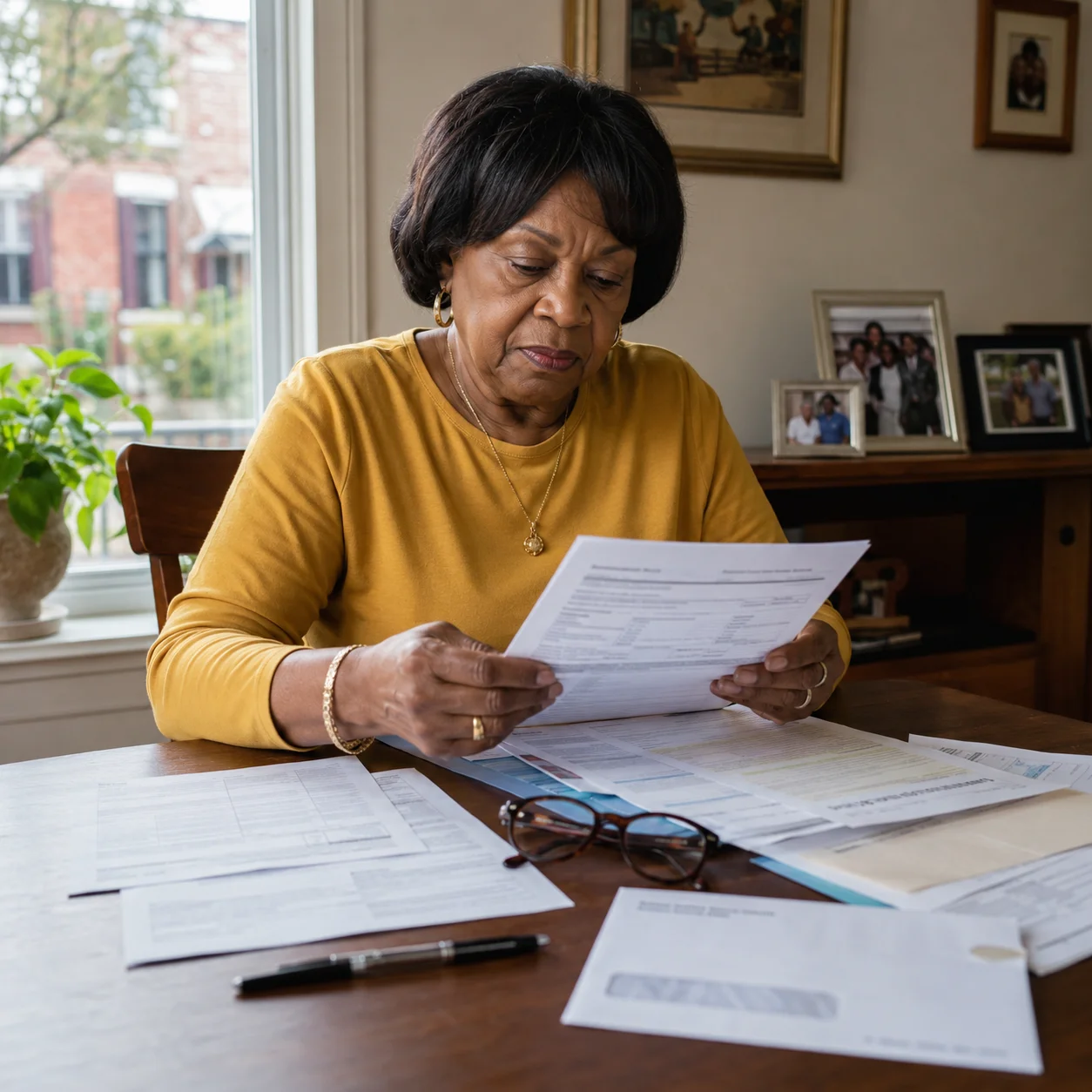
Somewhere in Cheektowaga right now, an envelope from the state of New York is sitting in a mailbox next to the electric bill and a coupon circular, and it is worth more than either. Multiply that scene by roughly 2.78 million households, from a co-op tower in the Bronx to a ranch house outside Watertown, and you have this year's STAR program rollout: real money landing in real budgets, on a schedule tied to when each district sends its school tax bill.
Governor Kathy Hochul's office confirmed in June that property tax relief worth more than two billion dollars is moving through New York's School Tax Relief system this summer and fall. The number sounds abstract until you ask the only question that matters at the kitchen table: how much of that is mine, and when does it show up?
The Two Tracks: Basic and Enhanced
Basic STAR covers most homeowners with household income under $500,000 and pays out between $350 and $600 this year, delivered either as a credit check or, for longtime recipients, as a straight reduction on the school tax bill itself. Enhanced STAR, reserved for eligible seniors with income below $110,750, runs considerably higher, between $700 and $1,500, reflecting the program's long-standing bet that fixed incomes need a bigger cushion against rising school levies.
Acting Tax Commissioner Amanda Hiller put the goal plainly, saying the state wants "every eligible homeowner to take advantage of the STAR program." That is a lower bar than it sounds. A meaningful share of eligible households, particularly newer homeowners and co-op owners who assume the benefit is someone else's paperwork problem, never register at all.
One Bronx co-op owner, standing beside the governor at the announcement, said she had to learn about the benefit by word of mouth, a reminder that STAR still spreads mostly through neighbors talking to neighbors rather than through the mail.
Where the Money Is Actually Landing
This is a statewide program, not a downstate one, and the regional numbers make that clear. Long Island leads every region with $659.2 million spread across 572,000 recipients, followed by the Mid-Hudson Valley at $461.1 million for 397,000 households. New York City accounts for $149.7 million reaching 474,000 recipients, a lower per-recipient average that reflects the city's mix of co-ops, condos, and rental-heavy blocks where fewer residents own the underlying property tax bill. Western New York, where more than 314,000 households will split $168.5 million, and the Finger Lakes, at $193.7 million for 274,000 recipients, round out the larger regional totals, with the Southern Tier, Mohawk Valley, North Country, Central New York, and the Capital District all receiving proportionate shares.
The timing follows each district's own school tax due date rather than a single statewide mailing day. Homeowners in New York City, Buffalo, Rochester, and Syracuse, where school tax bills come due in late June and July, are already seeing checks and direct deposits, while the rest of the state's deliveries continue rolling out through the fall as local due dates arrive.
Exemption or Credit, and Why the Difference Matters
Not every recipient gets a check. Homeowners who enrolled in STAR before the state shifted the program's structure years ago may still receive their benefit as a straight exemption, a reduction baked directly into the school tax bill rather than a separate deposit. Everyone who registered since then receives the STAR credit instead, arriving as a mailed check or, increasingly, as a direct bank transfer. The state has been nudging homeowners toward that second path for a reason: enrolling in the STAR Credit Direct Deposit Program means the money lands in an account instead of a mailbox, a meaningful difference for anyone who has ever chased down a missing check in October.
Signing up is not automatic. Homeowners register through the Homeowner Benefit Portal inside the Tax Department's Online Services system, and the state recommends doing it at least fifteen business days before a district's school tax due date to guarantee the deposit lands on time. Miss that window and the benefit does not disappear, it simply arrives the old-fashioned way, by mail, on the district's own timeline.
The Backdrop Worth Noticing
New York is choosing to keep funding this school tax offset at a moment when federal support for public education has been anything but stable. The state's continued commitment to STAR sits in sharp contrast to the funding fights playing out in Washington, where billions in previously approved education dollars have been held up at the federal level, leaving districts to absorb uncertainty that Albany, at least for now, is not passing down to homeowners.
For families deciding what to do with a check that might run anywhere from $350 to $1,500, the honest answer depends entirely on the rest of the household ledger. A late-summer STAR deposit is exactly the kind of windfall that either quietly disappears into everyday spending or does real work against a balance that has been sitting there for months, and Family Symposium's guide to credit, debt, and a family's financial future is a reasonable place to think through which of those two outcomes actually serves a household better.
New Homeowners and the Registration Gap
Anyone who bought a primary residence in the past year and has not yet registered for STAR is very likely leaving money on the table right now. The Tax Department's own outreach this year specifically targets that group, along with longtime homeowners who never enrolled because a previous benefit came bundled into a mortgage escrow account and nobody flagged the change. The state has scheduled regional STAR seminars through the summer, starting with a session in Erie County, aimed at walking residents through registration and the direct deposit sign-up in person rather than through another form buried in a tax bill.
The larger point sitting underneath the check amounts is simple enough. New York carries some of the highest property tax burdens in the country, and STAR is the state's answer to that reality, not a bonus so much as a partial refund on a bill that was always going to be steep. Whether a household sees $350 or $1,500 depends on income, age, and region, but the program only works for people who actually show up and register for it.
None of this requires an accountant or a special appointment. It requires an afternoon on the Tax Department's website, a bank account number for direct deposit, and, for the truly overdue, a decision to finally register a primary residence that has been eligible for years without anyone claiming it. Nearly three million New Yorkers are getting this right already. The gap between that number and every eligible household in the state is where the real money is still sitting.


Comments (0)
No comments yet — be the first to share your thoughts.
Leave a comment