

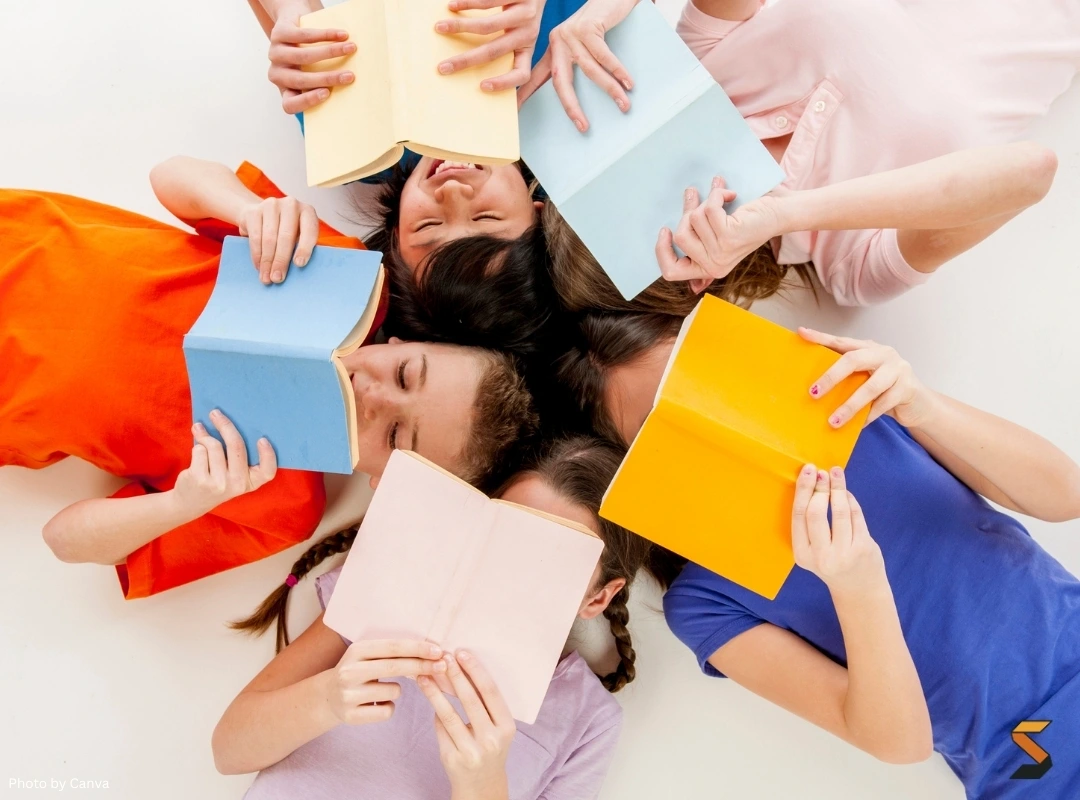
No matter your budget, your borough, or your bookshelf situation, here is how New York families can keep their kids reading all summer long and actually come out ahead.
Every June, something quietly happens in schools across New York City and the state. Teachers hand out summer reading lists, guidance counselors send home pamphlets, and parents tuck them into a folder with the best of intentions. Then July arrives. The lists disappear. The books sit unopened. And by September, kids can lose up to two months of reading progress, a well-documented phenomenon that educators call the summer slide.
But here is what is easy to miss in that familiar story: summer reading does not require a Barnes and Noble budget. It does not require a private tutor, a structured curriculum, or even a trip to a specific part of the city. What it requires is a plan, a little creativity, and an honest look at the free and low-cost tools already available to New York families.
A study published in the American Educational Research Journal found that students who do not read over the summer can fall back as much as three grade levels in reading skills by the time they reach middle school, with the effects compounding year over year. For kids in under-resourced communities, the gap is even wider because access to books at home is less consistent.
New York's own data reflects this. The New York State Education Department has consistently flagged reading proficiency gaps that widen between third and eighth grade, with research pointing squarely at unstructured summer months as a contributing factor. For families navigating already stretched budgets, the pressure to keep kids academically engaged without spending money they do not have can feel like an impossible ask. It is not.
NYC Is Spending $43 Billion on Public Schools. Will Test Scores Improve?
If you only take one action from this article, make it this: get your child a New York Public Library card. It is free, available to any New York City resident, and it unlocks an extraordinary range of summer reading resources that most families do not fully use.
The NYPL runs its annual Summer Reading Challenge every year from late June through August. Kids log the minutes they read, track their progress, and earn prizes and incentives at branch locations across Manhattan, the Bronx, and Staten Island. Brooklyn Public Library and Queens Public Library run parallel programs with their own rewards and events, so no matter what borough you are in, the infrastructure is already there.
Beyond the challenge itself, library cards give access to Libby and SimplyE, the NYPL's free digital lending apps that let families borrow ebooks and audiobooks with no waitlist frustration for popular children's titles. For families without reliable home internet, most branch locations offer free Wi-Fi and computer terminals, and the city's LinkNYC kiosks provide outdoor internet access at no cost throughout all five boroughs.
One of the most persistent myths about childhood literacy is that building a home library is expensive. In New York City, that is simply not true if you know where to look.
The Housing Works Bookstore in SoHo and its thrift shops across the city frequently sell children's books for under a dollar. The Strand Bookstore near Union Square has a children's section with rotating discounts. Housing cooperatives, school PTAs, and neighborhood Buy Nothing groups on Facebook and Nextdoor regularly circulate free books, and the Little Free Library network has dozens of locations across the city where families can take and leave books at no cost.
For families outside the city, the New York State Library system connects residents to statewide digital resources through Empire State Digital Network, including access to Hoopla Digital, which unlike Libby has no waitlists and allows instant borrowing of thousands of children's titles.
Nationally, organizations like First Book and Dolly Parton's Imagination Library have income-qualified programs that mail free books directly to children's homes each month. If your child is under five, Imagination Library is worth exploring regardless of where in New York State you live.
One of the reasons summer reading programs fail is that families try to replicate school at home, and children rightfully resist. Summer reading works best when it feels like anything but homework.
Let your child choose. Research from the National Literacy Trust consistently shows that reading choice is one of the strongest predictors of reading motivation. If your kid wants to read graphic novels, let them. If they want to read sports almanacs or manga or fan fiction, those count. The goal is to keep the habit alive, not to curate a refined reading list.
Audiobooks are a powerful and often overlooked tool, especially for reluctant readers or kids with learning differences like dyslexia. Listening to a well-narrated book builds vocabulary, comprehension, and story structure awareness in the same ways that silent reading does. Many families find that pairing audiobook listening with a car ride, a walk in Prospect Park, or a subway commute becomes one of the most natural reading habits they ever build.
Co-reading with your child is also more powerful than most parents realize. You do not need to be a trained educator to sit next to your eight-year-old and read the same book. Asking simple questions like 'What do you think is going to happen next?' or 'Why do you think the character made that choice?' builds critical thinking skills that show up directly on standardized assessments come September.
The digital literacy landscape for children has expanded considerably, and many of the best tools are free. Epic is a digital reading platform for children up to age 12 that is free for educators and significantly discounted for families. During the summer months, many schools provide students with continued access codes.
Khan Academy Kids offers reading and language arts content through age eight at no cost. Newsela provides leveled news articles for older students, and during the summer it can be a useful bridge between casual reading and the kind of nonfiction comprehension that middle school increasingly demands.
For New York City families specifically, the Department of Education's MyApps portal gives students continued access to school-licensed platforms through the summer. Parents should contact their child's school before the last day to confirm which platforms remain active and how to log in at home.
Beyond the library system, several organizations run structured summer literacy programming for New York families, often at no cost.
The New York City Department of Youth and Community Development funds summer youth employment and enrichment programs that include academic support components at dozens of sites across the city. The Summer Rising program, administered through the NYC DOE, offers free summer school programming for students in kindergarten through eighth grade, with a literacy focus baked into its daily schedule.
For families upstate or on Long Island, the Summer Youth Employment Program through the State Department of Labor includes literacy and career readiness components for teens. Local school districts also frequently run Title I-funded summer programs at no cost for qualifying families; it is worth a direct call to your district's main office to ask what is available for the coming summer.
Not every adult in a child's life grew up with books or feels confident around them. That is a reality in many New York households, and it is one that the conversation about childhood reading habits often ignores. If you are a parent who finds reading difficult, who is working through English as a second language, or who simply did not have the same access growing up, that context matters and it does not disqualify you from supporting your child.
Reading to your child in any language builds literacy. Telling family stories aloud builds narrative comprehension. Asking your child to read the menu at a restaurant, or the ingredients on a box, or the signs in the subway, is reading too. Literacy lives in everyday life, not just in the pages of assigned books, and every parent has something to offer in that space.
It would be incomplete to talk about summer reading gaps without acknowledging that they are not primarily a result of individual family choices. They are structural. Communities with fewer bookstores, under-resourced libraries, limited internet access, and less stable housing produce kids who fall behind over the summer at higher rates. That is not a coincidence.
Advocates in New York have pushed for years to expand summer school access, strengthen library funding, and include early literacy benchmarks in school accountability frameworks. The New York State Education Department's recent focus on the Science of Reading and phonics-based instruction has brought renewed attention to early literacy, but that work only holds if the gains made during the school year are not erased by an unstructured summer.
Families should feel empowered to ask their school, their district, and their elected representatives what summer literacy infrastructure actually looks like in their community. Parent voice is one of the strongest levers in education policy, and the summer slide is an issue where community advocacy has consistently produced results.
Summer reading is not a privilege reserved for families with Amazon accounts and organized home libraries. It is a strategy, and in New York, the tools to execute that strategy are more accessible than most families realize. A library card, a free app, a good audiobook, and twenty minutes a day of reading in any form can protect and extend what your child worked toward all year.
Start small. Start now. And if you need help finding resources in your specific borough or district, your local library branch is the best first call you can make. They are ready for you.
New York Public Library
- NYPL Summer 2025 Hub (all ages): https://www.nypl.org/summer/2025
- NYPL Kids Summer Reading Challenge: https://www.nypl.org/summer/2025/kids
- NYPL Library Card (free): https://www.nypl.org/library-card
- All 3 NYC Library Systems (Brooklyn, Queens, Manhattan/Bronx/SI): https://summerreading.org/
Free Books
- Dolly Parton's Imagination Library (check availability by zip code): https://imaginationlibrary.com/check-availability/
- NYS Imagination Library Grants info: https://www.nysl.nysed.gov/libdev/dpil
NYC Programs
- Summer Rising (NYC DOE — free, grades K-8): https://www.schools.nyc.gov/enrollment/summer/summer-rising
- NYC DYCD Summer Rising page: https://www.nyc.gov/site/dycd/services/after-school/summer_rising.page


Comments (0)
No comments yet — be the first to share your thoughts.
Leave a comment