

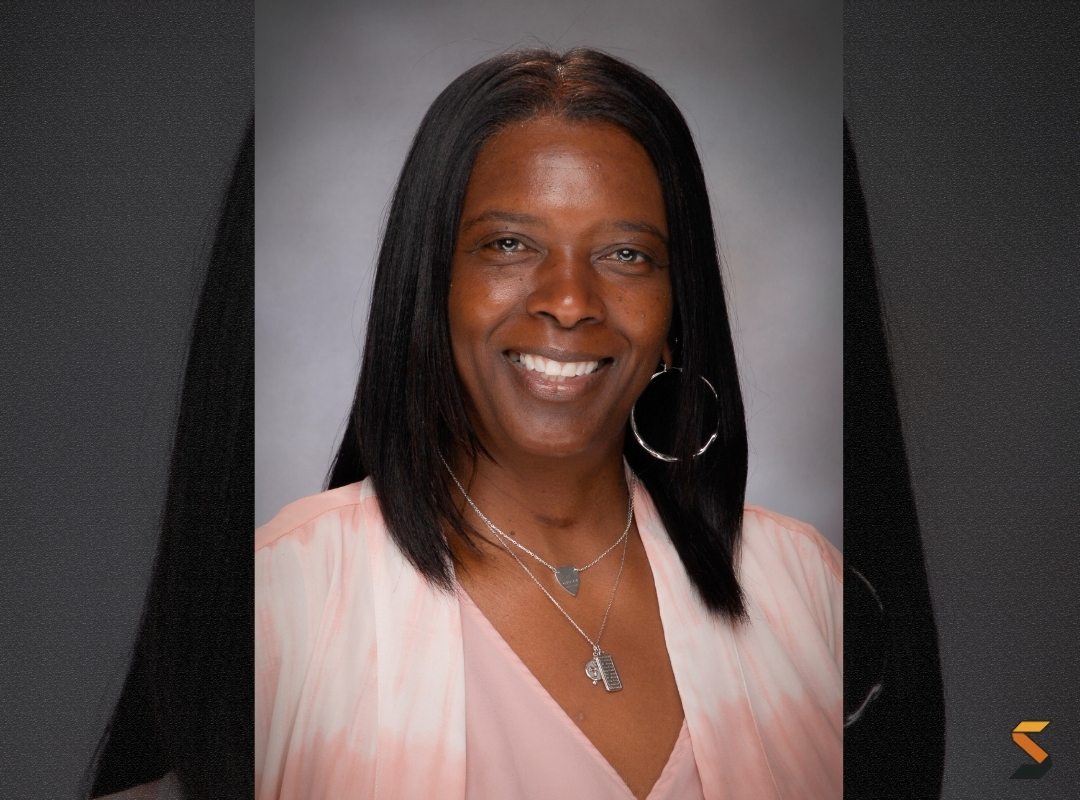
An Exclusive Interview by TheStandardNY.com
In this inaugural edition of The Gold Standard, we sit down with Dr. Marnie Hazelton, Ed.D., a trailblazing educator whose career spans from substitute teaching to leading entire school districts. Rooted in hip-hop culture and international travel, Dr. Hazelton’s journey is a testament to transformative leadership across New York and New Jersey.
The Gold Standard is our exclusive interview series highlighting urban education changemakers and community leaders pushing boundaries for equity. Through five insightful questions, we explore the "why," the leadership style, and the humanity that fuels their work.
Dr. Hazelton’s path began in Bed-Stuy at P.S. 309, a journey documented by Good Morning America. Her trademark became her ability to connect with students through pop culture, a gift she carried as she rose to become the first Black woman superintendent in Linden’s history. "I had done meaningful work," she reflects, "yet it felt like all my accomplishments had been reduced to race and gender." She defied those boxes by leading through the pandemic with a style she describes as fair, firm, and consistent.
Her community work is equally intentional. From founding My Brother’s Keeper chapters to securing food and hygiene equity for students, she remains grounded: "Children can't learn when they're hungry." Today, she remains a fierce advocate for critical thinking over indoctrination, warning against sanitized curricula. "Educational institutions are meant to cultivate critical thinkers," she asserts.
Dr. Hazelton’s story reminds us that leadership isn't linear, it’s lived. She stands as a beacon for educators, proving that transformation follows when you lead with heart and honesty.
1. Let’s go back to the beginning — when did you first know you wanted to lead in education, and what was the spark that lit the fire in your journey?
I started my career in education as a substitute teacher. At the time, I was working as a lifeguard and running my own public relations company. I also hosted an internet radio show on a station founded by Chuck D. from Public Enemy and produced hip-hop mixtapes, which I sold in Paris, London, Berlin, and Amsterdam. During that period, I was also filming a documentary chronicling international hip-hop culture.
In 1996, after a brutal winter, I saw an ad in the Sunday paper seeking substitute teachers to work during Spring Break—teachers had to give back vacation days because of the high number of snow days used in December and January. The only requirement was a bachelor’s degree, so I found another stream of income! I worked as a substitute during the day and as a lifeguard in the evening. Every other month, I traveled to Europe to sell mixtapes, shoot my documentary, and interview artists.
Meanwhile, my parents kept pressuring me to get a “real” job or career. I found my groove in subbing and was fortunate to work in the same district where I also worked at the local pool. I already knew many of the students. Over the next four years, I began receiving more long-term substitute positions, and several principals encouraged me to pursue my teaching credentials. I investigated it but became overwhelmed by the requirements and decided to let it go.
Then one Sunday in 2000, while on break from lifeguarding, I came across an ad in the New York Times. It read: “One in four New York City students cannot read. What are you going to do about it?” It was a call for the first cohort of the New York City Teaching Fellows. The ad explained that the program would cover a master’s degree in education, provide all New York State teaching certifications, assign a mentor, offer a six-week training boot camp, and guarantee a teaching position in one of New York City’s 40 lowest-performing schools.
I started as a fourth-grade teacher at P.S. 309 in Bedford-Stuyvesant, Brooklyn, while attending graduate classes at CUNY Brooklyn College in the evenings and over the summer. My first year in the classroom was even documented by Good Morning America. Those first five years were some of the most rewarding of my personal and professional life. My background in rap music served as the perfect bridge to connect with my students. I was immersed in pop culture, which made me highly relatable.
However, it quickly became clear that the system was dysfunctional and failing our most vulnerable students. After a conversation with my principal about the overly rigid curriculum, I realized I needed to become a school administrator. I still remember being in the front office, frustrated about the ELA curriculum, and the principal said, “You’re a first-year teacher—what do you know about good schools?” I responded, “I know a lot about good schools. I went to excellent public and private schools—and this is not a good school.”
2. You made history during a pandemic, becoming the first Black woman to lead Linden Public Schools in nearly a century. What did stepping into that legacy mean for you, and how did you make space for your voice in rooms that weren't built for you?
Being the first in anything comes with a lot of expectations. At first, it sounded exciting—even glamorous. However, when the press release came out, and that’s what they led with, it didn’t feel the same seeing it in print. I had done meaningful work during my first superintendency, and even more phenomenal work as a classroom teacher. Yet it felt like all my accomplishments had been reduced to race and gender.
That said, I am not someone who suffers from impostor syndrome. I approached the challenges of my new position with the same professionalism and grit that I always have. Walking past the estrogen- and melanin-free wall every day was a motivator. I continue to demonstrate that I belong in this space, and I led the district through COVID with tenacity, competence, grace, and heart.
I stand on the shoulders of some incredible ancestors. Both of my parents were active in the civil rights movement. My grandfather served in World War II, and both of my great-grandfathers served together in France during World War I. I also know the name and birthdate of one of my enslaved ancestors—Mary Steel, my great-grandmother’s grandmother—who was born enslaved in Maryland in 1832 and died in 1922.
Knowing and understanding your family history and being able to speak the names of those ancestors who never had the opportunities I have now is a powerful place to lead from.
3. How would you define your leadership style in three words, and how do those qualities show up in how you lead teams, respond to crisis, and build school culture across your districts?
My mother is a retired school administrator who worked in Inglewood, California, as an assistant principal. Her three favorite words on leadership became mine: be fair, firm, and consistent. That is how I lead.
I also let my team know that I will never ask them to do anything I wouldn’t do myself. You will always find me in classrooms, leading lessons. I organize superintendent field trips for students and administrators. I’m very creative and often come up with initiatives while brainstorming with my team.
My expectations are high, and when I come up with an idea, we strike while the iron is hot! I also love diving deep into data, and I’m not afraid to surround myself with people who are smarter than I am. I’m often described as fearless, but not reckless. I don’t hesitate to face problems head-on and manage crises decisively.
I truly believe that life is 10% what happens to you and 90% how you respond.
What I’ve learned from students who observe my leadership is that they always know if you truly care about them. That means I must lead with honesty and integrity. I also must be open to criticism and willing to admit when I get it wrong. I try to amplify student voice, value their feedback, and act on it. I believe students appreciate that from the leaders in their lives, and it fosters mutual respect.
4. Whether it was in Linden or now in Englewood, community engagement seems central to how you lead. What are some specific initiatives or partnerships you’re proud of that put families and neighborhoods at the center of education?
I’m proud of our community initiatives and partnerships with My Brother’s Keeper (MBK), The Algebra Project, the Stop & Shop Food Pantry, the League of Innovative Schools, and The Right to Read initiative. Since my days as a classroom teacher, I’ve always believed in extending the classroom into the community. I credit my early experiences as a lifeguard with shaping my understanding of the importance of nurturing the whole community.
Once I began teaching and joined ASCD, I deepened my understanding of what it means to educate the whole child—and how essential external partnerships are to that mission. As a working parent myself, I also understand how difficult it can be for families to attend evening school events after a long workday. That’s why we’re intentional about creating multiple ways for families to engage in their children’s education.
My Brother’s Keeper, a male mentoring program, has been one of our most impactful initiatives. I’m proud to have founded MBK chapters in both Roosevelt and Linden. Here in Englewood, we’re doing exciting, grassroots work with The Algebra Project, which is transforming how our students and teachers approach math. A cohort of our educators is currently collaborating with the Algebra Project to write an accessible calculus curriculum.
I’m also incredibly proud of our partnership with Stop & Shop, which donated $17,000 this past school year to help stock our district food pantry. Every two weeks, we’re able to provide groceries and hygiene products to over 100 families. We recognize that children can’t learn when they’re hungry, and they often struggle with confidence when they don’t have access to essentials like deodorant, soap, toothpaste, or laundry detergent.
To deepen these efforts, I created a standalone position - District Community Liaison - to help us build partnerships and secure donations. We operate under the belief that it truly does take a village to raise a child.
5. When you look at the state of public education today, with everything from equity battles to AI and mental health crises, what gives you hope, and what keeps you up at night?
The state of education is at the forefront of how we shape the world. The rise of disinformation and the erosion of discernment are threatening the very foundation of our democracy. Every Pre-K–12 school district should incorporate digital literacy into its curriculum.
AI is a powerful and helpful tool when used responsibly. However, in schools, we’re increasingly seeing it used to cut corners or, in too many cases, to cheat. Educational institutions are not meant to indoctrinate; they are meant to cultivate critical thinkers and problem solvers.
Right now, I’m concerned that we are not fostering environments where critical thinking, analytical skills, and collaboration are truly valued.
The sanitization of history is particularly troubling. When we erase or rewrite uncomfortable truths, we set ourselves up to repeat past mistakes. There must be room for respectful discourse and the teaching of accurate, inclusive history—even when it’s uncomfortable.
As a woman of color in leadership, I understand the power and responsibility of representation. I consider myself a globalist; the world is too small and interconnected for us to lead with a “me-first” mentality. All students benefit when they see diversity in their classrooms and administration.
When I was in school, I only had two Black teachers, one in 8th grade and one in 12th. Diversity is aspirational for students of color and helps to break down stereotypes for others. Representation matters. It shapes not just who children believe they can become, but also how they understand and respect one another.
Dr. Hazelton’s interview kicks off The Gold Standard with the grace of a true visionary. Her story is a call to action for anyone who believes in education as liberation. Stay tuned for more voices reshaping our schools and communities.
Contact us if you know an education trailblazer who needs to be heard and seen!

Comments (0)
No comments yet — be the first to share your thoughts.
Leave a comment