


Do you ever feel like your heart is sprinting, but your body is stuck? Like there's a weight on your chest, but you keep going because you have to? That's anxiety. And for far too long, it's been the invisible chain holding too many of us back. In Black communities across the U.S., anxiety has long been misunderstood, brushed off, or labeled "weakness." But let's be clear: anxiety is real , and it is not a sign of failure. It is the body's natural reaction to stress, a built-in alarm system that sometimes won't shut off. According to the Anxiety & Depression Association of America , more than 40 million adults in the United States, roughly 18.1% of the population, are affected by anxiety disorders every year. But the reality runs deeper for Black Americans. A study published by JAMA Psychiatry in 2021 revealed that while Black adults are 20% more likely to experience serious mental health problems than the general population, they are far less likely to receive treatment due to stigma, underdiagnosis, and lack of access to culturally competent care.
The Pressure of Being "Strong"
"Being a Black woman in America means constantly having to prove you're strong enough to carry the weight of the world," actress and producer Taraji P. Henson once said during an emotional interview on Red Table Talk. "But nobody asks if you're okay." Taraji has since become one of the loudest advocates for mental health in the Black community, launching the Boris Lawrence Henson Foundation in honor of her father to provide mental health resources to underserved communities. NBA superstar Kevin Love also spoke about his panic attacks, saying, "Mental health isn't just an athlete thing. It's an everyone thing. No matter what our circumstances, we're all carrying something." We talk a lot about grit and resilience. But we need to talk about survival strategies that don't drain us, don't leave us gasping for air, and don't treat anxiety like a silent badge of honor.So What Does Anxiety Look Like in Real Life?
It's that tight feeling in your stomach before a job interview. It's waking up three times in the night before your child's IEP meeting. It's preparing to walk into a room where you know you'll be the only Black face, again. It's motherhood, fatherhood, relationships, money, school, racism, generational trauma... all wrapped into one tight package under your skin. And while anxiety can be managed through clinical therapy and medication, you don't always need a prescription bottle to begin healing. Everyday habits, grounded in mindfulness and movement, can shift your mental landscape. [caption align="aligncenter" width="1000"]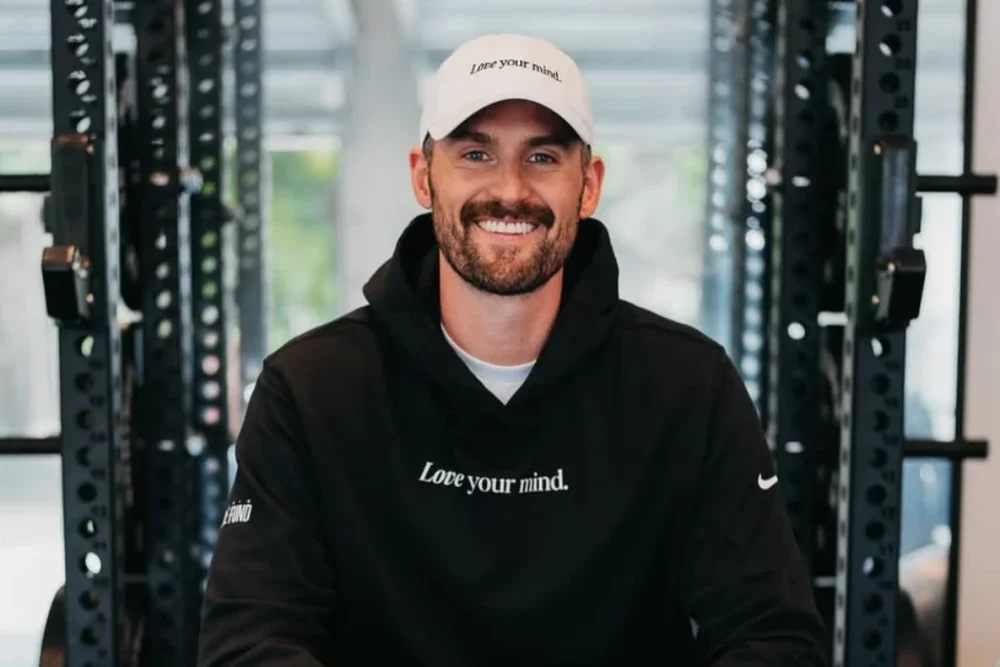 Courtesy of NBA Star Kevin Love[/caption]



Comments (0)
No comments yet — be the first to share your thoughts.
Leave a comment