

A high school junior in Buffalo, Hempstead or the Bronx walked into class this week as part of a graduation system the state has not finished writing. Under New York's current timeline, the Class of 2027 is the last group required to pass Regents exams to earn a diploma. Today's ninth, 10th and 11th graders are waiting on rules that do not yet exist on paper, and in New York City public high schools alone that group numbered roughly 212,000 last school year.
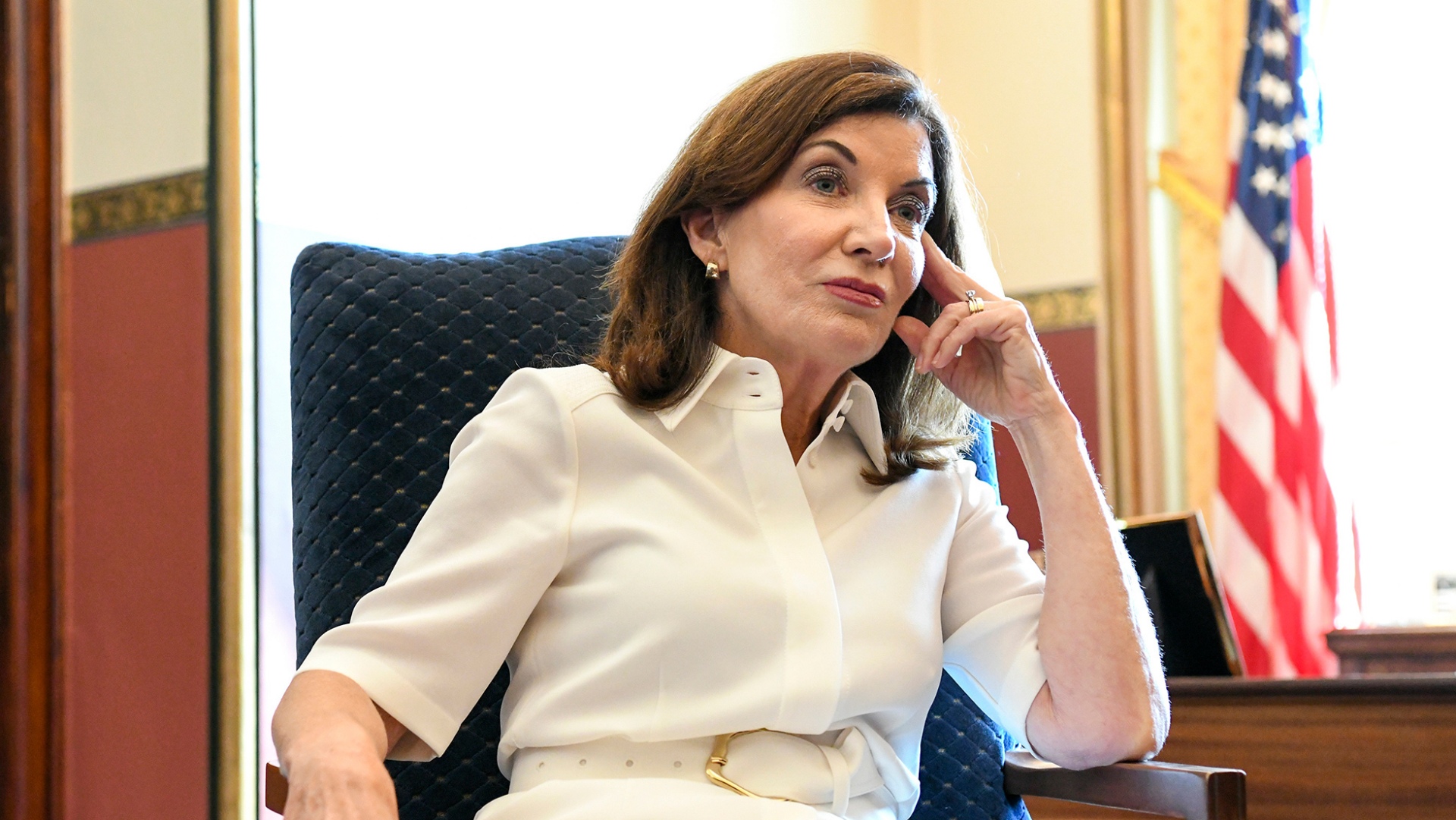
Gov. Kathy Hochul, two days after defeating Republican Bruce Blakeman to win a second full term, has decided that the gap belongs on her ledger as well. Speaking on the Max Politics Podcast last week, she described what she hears when headlines announce the end of the exams. "People see in the articles, 'New York State abandons Regents,'" Hochul said, as reported by Chalkbeat. "They think I'm New York." She went further, telling the host, "The buck should stop with me, given that we are the funder of education."
Her spokesperson, Jonah Allon, said the governor is troubled by "the lack of clarity about what will replace" the exams. "The Board of Regents have a responsibility to preserve academic rigor and ensure clear, consistent graduation standards across the state," Allon said. Asked whether Hochul believes the Regents should remain a graduation requirement, or which alternatives she would back, her office did not respond.
What Hochul wants is a structural change, and the structure is old. Under the state Constitution, the Education Department answers to the 17-member Board of Regents, whose members are elected by a joint session of the Legislature. The Regents in turn choose the education commissioner, a post Betty Rosa has held since 2021. The governor proposes the school aid budget and signs or vetoes education bills, yet she has no vote on what a student must show to graduate. Hochul has tested those limits before. When Rosa favored letting districts write their own cellphone rules, the governor pushed a statewide school phone ban instead and signed it into law last year.
The Regents have been less certain than their votes suggest. At the board's September meeting, members agreed to let the department begin drafting regulations that would remove the exam requirement. Formal rules are expected before the board in February, with a final vote anticipated in June and changes slated to take effect for the 2027-28 school year. Shortly before that vote, Chancellor Lester Young admitted he was unsure of its substance. "I was trying to understand what the action was we were voting on," Young said, according to Chalkbeat. "I'm a literate person, and I didn't get it." The measure passed unanimously moments later.
Regent Hasoni Pratts, the mother of a 10th grader in a New York City public school, pressed officials at the same meeting on what families had actually been given to work with. "What I did not hear was what resources [and] what tools do we have for parents and students who are in this purgatory period of full implementation?" she asked. Zach Warner, the assistant commissioner who oversees state assessment, said the department was still working out how to give districts freedom without producing uneven quality from one to the next. "That's not something we obviously have a full answer on to yet," he said.
The working answer for current high schoolers is a phrase, local assessment strategies, under which each district decides how its students will demonstrate readiness during the transition. Districts will not be permitted to require a passing Regents score for a diploma once the new rules take effect. Students will keep sitting for statewide tests in English, math and science because federal law requires them, and New York adds social studies to that list. Those tests would grade schools for accountability purposes rather than gate individual diplomas, and state officials have said they plan to build new standardized assessments to fill that role.
The long-term design is more ambitious than the interim one. Under NY Inspires, the state's graduation overhaul, students would demonstrate six attributes laid out in a Portrait of a Graduate, among them critical thinking and effective communication. The evidence could include capstone presentations, the performance tasks long used by New York Performance Standards Consortium schools, industry certifications and programs like the International Baccalaureate. The current three-tier diploma would give way to a single diploma, with new credit requirements following later in the decade.
New York City, which educates more high schoolers than any other district in the state, has already sketched what the in-between years could look like. Katie Hansen, the city Education Department's executive director of academic policy and systems, told a City Council hearing in September what happens if the Regents requirement ends in June 2027. The Class of 2028 would graduate by completing its 44 required credits. "We're not expected next year to stand up a one-for-one replacement for the Regents exams," Hansen said at the hearing, Chalkbeat reported. "Within that, there's of course many ways of showing their learning to earn their credit, but there won't be a separate system of assessments that students have to complete to meet graduation requirements."
Eric Dinowitz, the former Bronx high school teacher who chairs the Council's education committee and supports moving away from the exams in principle, listened to that plan and worried aloud about the incentives it creates. "Without a replacement of equal or more rigor, it's going to turn into a checklist," he said. Education Department leaders, he added, "might say we're getting pressure to increase our graduation rates, just do whatever you can to pass the kid."
The state has run a version of this before. During the pandemic, when many Regents exams were canceled, students could satisfy the requirement by passing the course tied to the test, and graduation rates for students with disabilities and English learners rose sharply. Jeff Smink, deputy director of policy and advocacy at EdTrust-New York, expects the interim period to repeat that pattern. The changes could "make it look like more students are graduating," Smink said, "but we're going to have even less of an idea if they're actually prepared or not."
His organization has since gone further. On Oct. 28, EdTrust-New York released Preparing Before Proceeding: A Call to Delay NY Inspires, a report asking the Regents and the department to pause the overhaul for two years. The group wants a phased rollout afterward, beginning with ninth graders in selected districts in the 2028-29 school year. The report points to 2024 national test results showing that 31 percent of New York eighth graders were proficient in reading and 26 percent in math. It also cites Maine, which reversed its statewide proficiency-based diploma mandate in 2018 after districts struggled to carry it out. "New York must prepare its schools and students before it proceeds with a transformation of this scale," said Arlen Benjamin-Gomez, the group's executive director.
Hochul's bid for control arrives on top of an argument that has been building outside government for months. Dan Weisberg, a former first deputy chancellor of New York City's schools who is now chief program and policy officer at the Wallace Foundation, made the case in Vital City in October. "There is no single, clear line of accountability for the quality of education New York's children receive," Weisberg wrote. "When a governor is clearly in charge, there's real potential for serious leadership on education." New York spent $31,918 per pupil in the 2023-24 school year by the Census Bureau's count, more than any other state. That spending has kept climbing even as enrollment keeps falling across much of the state.
California offers a fresh example of the move Hochul is contemplating, since Gov. Gavin Newsom this fall succeeded in consolidating power over that state's education policy. A governor who takes the wheel also takes the blame, though. In New York that would mean answering personally for reading and math scores that have stayed middling despite record spending, and for any graduation pathway that falters in a district without the staff or money to build it.
The Legislature, which elects the Regents and whose cooperation any change would require, has signaled it will not hand over the keys quickly. "It's great that the governor would like to take a more hands-on approach to education," state Sen. John Liu, who chairs the Senate committee on New York City education, told Politico. "The state Education Department is structured the way it is due to law as well as the state constitution so the governor will need to work within those confines."
Benjamin-Gomez, whose group wants the overhaul delayed, still called it a "big deal" that the governor is weighing in, and she noted that education barely surfaced in the campaign Hochul just won. "If she had control over the education system, she would be running on an education agenda that she could develop and then be held accountable to implement," she said.
For now, the calendar belongs to the Regents. Draft regulations are due before the board in February, the final vote is expected in June, and the juniors sitting in classrooms this fall would become the first seniors to graduate under whatever the board adopts. Hochul will deliver her State of the State address and her executive budget before either date, two documents in which she could put in writing what she believes a New York diploma should require. Her office has not yet said.
Comments (0)
No comments yet — be the first to share your thoughts.
Leave a comment