
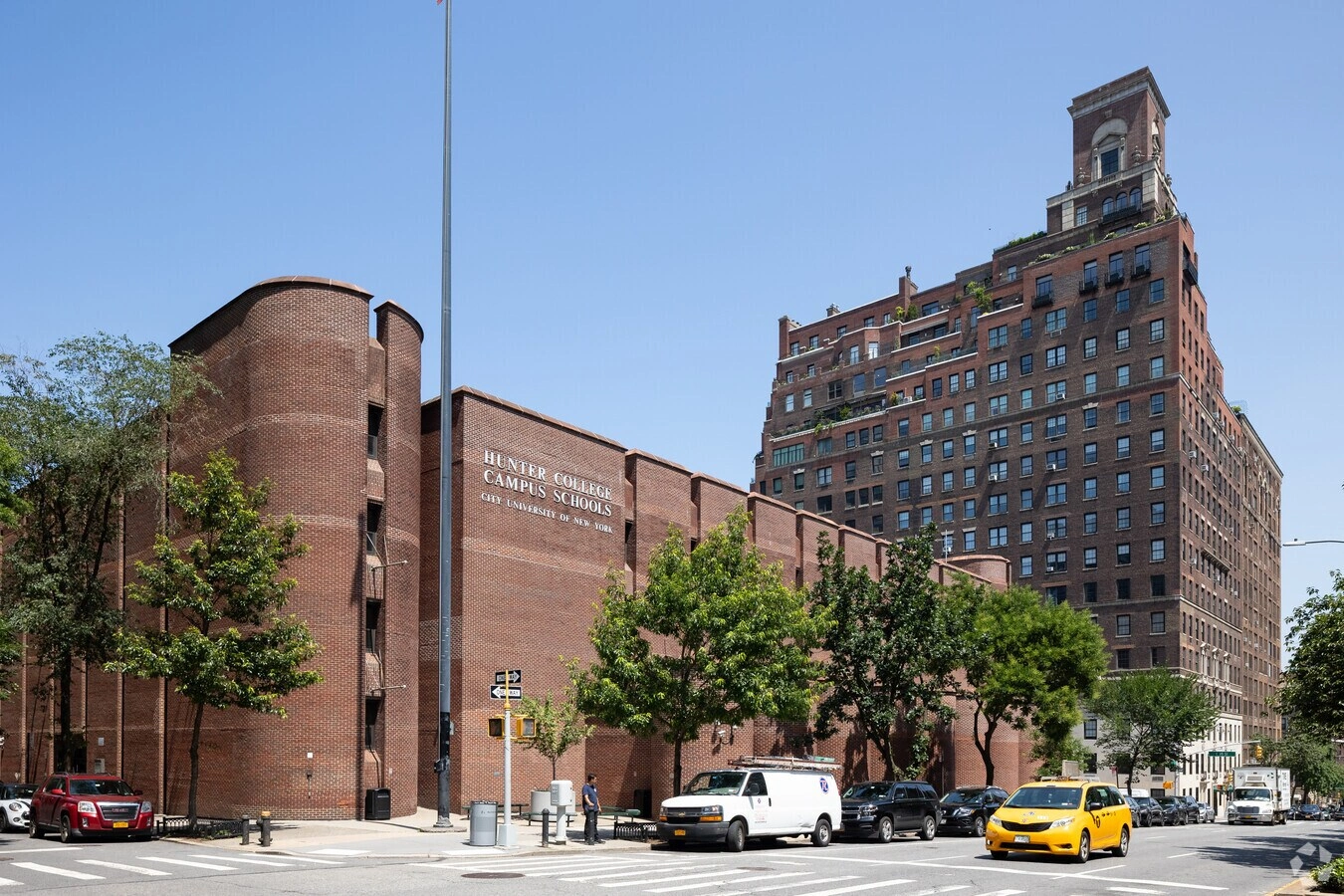
Juno Hayes walked into the Panel for Educational Policy's monthly meeting on Wednesday (Oct. 28) carrying a petition and a complaint about her own classmates. "My own classmates have been relying on AI to complete assignments," the Hunter College High School student told the panel, according to NY1. The petition she presented carried the signatures of more than 1,000 New Yorkers who oppose the use of AI in schools.
About two dozen students, teachers and advocates rallied ahead of the meeting with a single request. "We're here asking the mayor and the chancellor to extend the AI moratorium to high schoolers," said Liat Olenick, a co-founder and co-chair of Climate Families NYC. New York City's pause on student-facing generative AI covers children from 2-K through eighth grade this school year. It stops at the door of the high schools, where a supervised pilot is scheduled to begin this month.
The answer from the Education Department was no, at least for now. In a statement, First Deputy Chancellor Danielle Giunta said of the pilot tools, "We're going to see how they are as a tool and a resource for learning." A department source told NY1 that families will be notified in writing before a pilot tool is used and may request alternative assignments that cover the same material. Every pilot must also comply with Education Law 2-d, the state's student data privacy statute.
The fight over a few thousand high school classrooms in one city is the most visible piece of a much larger gap. Across New York, there are no state rules for how schools use generative AI with students, and most districts have not written their own. That leaves New York City, with roughly two in five of the state's public school students, setting the only detailed AI policy most families in the state have seen. Districts from Long Island to the Southern Tier are making purchasing and classroom decisions on their own timelines.
The city policy itself was announced Wednesday, Sept. 2, days before school opened. Mayor Zohran Mamdani and Chancellor Kamar Samuels put a one-year AI moratorium on student-facing generative AI in grades 2-K through 8 for the 2026-27 school year. The mayor's office announcement said the rule covers nearly 600,000 students, or two-thirds of the system's enrollment. Companion chatbots are barred in every grade. Exceptions cover assistive technology for students with disabilities, tools for multilingual learners and career readiness courses such as computer science, and teachers may still use AI for planning and administrative work. "Children need teachers and human connection in order to learn and grow," Mamdani said in the announcement.
The high school side of the policy is the part now under pressure. The city approved five limited pilots, Quill, Edia, Brisk Teaching, Playlab and Intel AI-Ready Schools, for a maximum of 50,000 general education high school students. No more than five classes per school may take part, and every session must be supervised by a trained educator. The time caps are specific. Quill is limited to 15 minutes a week and Edia to 20, while Brisk Teaching runs 10 to 20 minutes once or twice a week. Playlab is held to two assignments per marking period, and Intel's program gets one period a week. Every high school student, pilot or not, receives two 45-minute AI literacy modules each year. NY1 reported that only about 5 percent of public school students are expected to take part.
Enforcing the younger-grades moratorium has proven messier than announcing it. When the policy launched, Mamdani said the city would "fully discontinue or disable the AI components of more than 38 previously allowed programs" without naming them. Chalkbeat obtained the list after more than a month of requests. It reported on Friday, Oct. 23 that the list includes widely used reading and math programs, assessment tools and a chatbot the Education Department built itself with Microsoft. Amira, an AI reading tutor used in more than 200 city schools, was banned outright because it cannot function without AI. Several companies told Chalkbeat their products do not use student-facing generative AI at all. Houghton Mifflin Harcourt said none of its flagged products, among them Read180 and Arriba la Lectura, rely on it. Magma Math disabled its AI hints on Sept. 4 and was cleared to operate again on Oct. 5.
The department has not explained how it decided which tools met its definition. Spokesperson Onika Richards told Chalkbeat, "We will continue to evaluate the evolving AI landscape and take the steps necessary." Leonie Haimson, a longtime critic of classroom technology, argued that neither side of the vetting can be taken on faith. "You cannot trust the companies that they're not using student-facing AI," she said, adding, "You cannot trust the DOE to independently evaluate and assess these products."
Outside the five boroughs, the picture is thinner still. New York Focus built a crawler to search the websites and board platforms of all 678 school districts in the state. It reported on Oct. 13 that around 270 have formal AI policies, most of them endorsing "responsible AI use" to improve instruction. Of the roughly 400 districts with no policy found online, more than 70 confirmed to the outlet that they had none, and 39 said they planned to write one during the current school year. Dozens of districts, including the City School District of Albany, built their policies from sample language published by the New York State School Boards Association.
Superintendents described the squeeze plainly. "It's a really hard place for public education to be right now," Albany Superintendent Joseph Hochreiter told New York Focus. He described districts caught between parents who want a pause and employers who want graduates trained on the tools. Hochreiter said he wants state standards for acceptable use by grade level but opposes a ban that would leave districts "further behind." In Yonkers, Superintendent Anibal Soler Jr. put it more bluntly. "Banning it is the easy way out because it doesn't force us to have tough conversations," he said.
The State Education Department has not issued those standards. Spokesperson Karen Male told New York Focus that "the department continues to develop comprehensive statewide guidance to support emerging technologies in schools," without giving a date. Our reporting in late August found the same vacuum, with New York City's technology purchasing frozen while it drafted the rules that became the September moratorium. Two months later, the state has still not set a floor for anyone else.
Lawmakers have proposals waiting, though none can move before the Legislature returns in January. Sen. Andrew Gounardes announced the FOCUS Act, S10685, on Friday, Aug. 21. It would require education technology companies to register with the state attorney general before selling to districts. Vendors would also have to show compliance with student privacy laws and cite at least one independent study showing improved academic performance. The bill would also bar generative and conversational AI platforms from school-issued devices and create what Gounardes calls a "right to analog learning." "Tech corporations are treating kids like a science experiment," he said in announcing it. The bill sits in the Senate Rules Committee. A separate measure, A9190 and its Senate companion S10133, would restrict most classroom AI before ninth grade and remains in committee.
The state has already shown it will legislate classroom technology when it decides to. New York's bell-to-bell cellphone restrictions, now in their second school year, came from Albany rather than from district-by-district policy, and the first year of enforcement reports gave every district the same rulebook. On AI, families outside New York City are still waiting for a statewide rulebook of any kind.
In New York City, the next test arrives with the pilot itself. The department has said it will judge the tools by their effect on learning and by student and teacher feedback. "We will see what we learn from those pilots, the impact on student learning, the effectiveness in a student experience," Giunta said. The moratorium for younger grades runs through the end of the 2026-27 school year. The city has not said what evidence would lead it to extend the pause, end it, or carry the high school pilots into a second year.
Comments (0)
No comments yet — be the first to share your thoughts.
Leave a comment