

For Najé J., a participant in a new HBCU finance course, the lesson that stayed was about risk. "I really enjoyed class, especially learning about the four rules to mitigate risk when it comes to investing in the stock market," she wrote in a testimonial for Champions for Financial Legacy. "It's so easy to be young and to see people living luxurious lives and owning a lot of luxury items and thinking that it's better to day trade rather than trading over time."
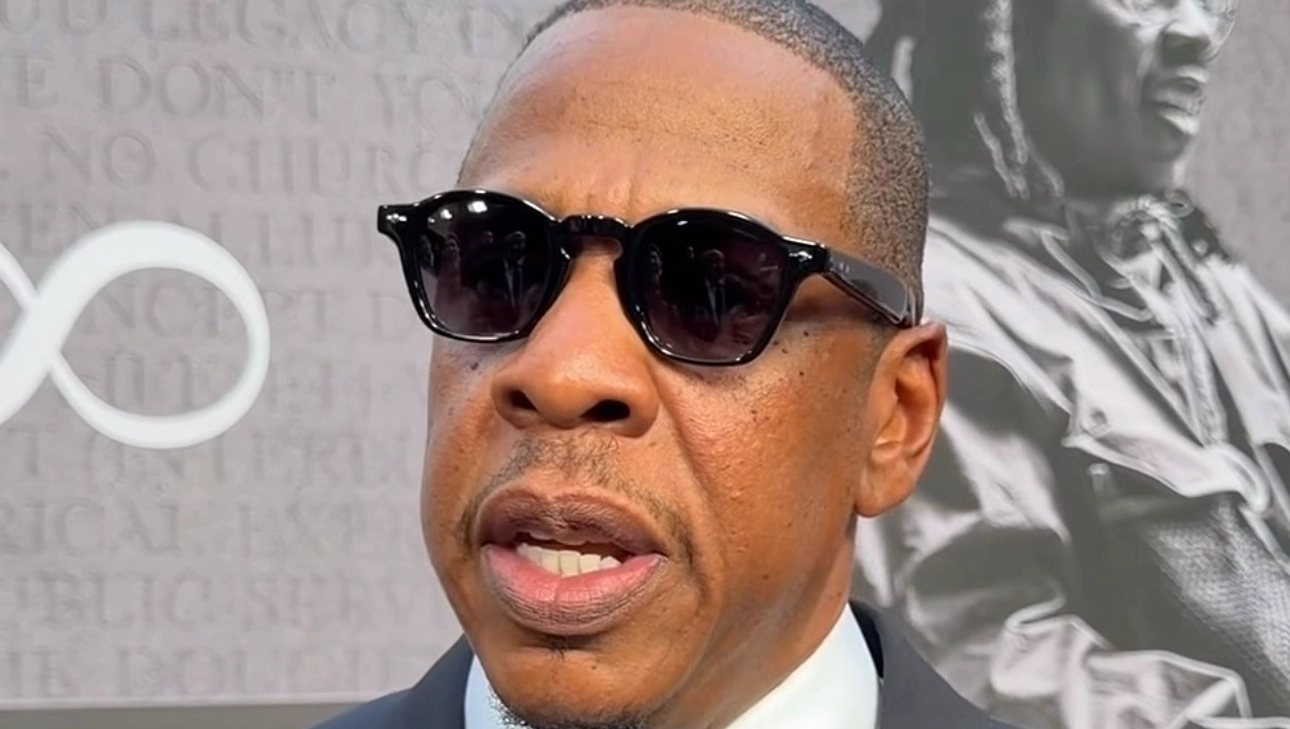
The course she took did not come from a celebrity donation dropped into a university's general fund. Champions for Financial Legacy, or CFFL, is a financial education program run by the Shawn Carter Foundation, which Jay-Z founded with his mother, Gloria Carter. Its curriculum comes from the Wharton School of the University of Pennsylvania, and Toyota Motor North America pays for it.
Campuses get the materials, the faculty training and the learning platform at no cost, and they decide whether to offer the course for credit or as a co-curricular program. It launched in spring 2025 at Lincoln University, Norfolk State University and Virginia State University, and it now lists seven HBCU partners. What it has not yet published is the outcome data that would show whether it changes how graduates borrow, save and invest.
From a Philadelphia classroom to Brooklyn to three campuses
The curriculum began as Bridges to Wealth, a community program Wharton strategy professor Keith Weigelt has run with Penn undergraduates for about 12 years. It teaches high school students and adults in Philadelphia how to budget, use credit and invest. In one recent session, The Daily Pennsylvanian reported, more than 30 high schoolers each invested two $20 increments in the stock market and watched the money move in real time.
Weigelt first brought the curriculum to the area around the foundation's headquarters in Brooklyn, and that work became the pilot for CFFL. Penn's research office says it supported a collaborative research agreement with the foundation in April 2024 to turn Bridges to Wealth into a broader program for historically Black colleges and universities.
The foundation announced the program in November 2024, and classes started the following spring. Paul Quinn College in Dallas joined in 2025, and Delaware State University, Johnson C. Smith University and Tuskegee University joined this year, according to the program's partner list.
What the syllabus covers
CFFL describes a course in which students learn to navigate the stock market, invest safely, budget, manage credit scores and control debt. Faculty at partner campuses receive hands-on training before they teach it. The university presidents who signed on describe the content in practical terms, from credit and debt to estate planning.
"The CFFL program will provide Spartans with an opportunity to learn about important financial tools such as estate planning, debt management and credit," said Javaune Adams-Gaston, president of Norfolk State.
Lincoln University's president, Brenda Allen, framed it as a matter of curriculum integration rather than a guest seminar. "The integration of the CFFL program into our curriculum will enhance our deliverables in this area and enable our students to take what they learn into our local and global communities," she said.
Weigelt's own emphasis is time, and how early a family starts building. "If you don't pass on wealth, that means each new generation starts from zero," he told The Daily Pennsylvanian. "We're really pushing this intergenerational wealth. Because, you know, you have to start from zero… You have to start investing. The sooner you invest, the quicker your wealth is growing."
The debt the course is up against
The students CFFL targets borrow more than their peers, and the gap is long documented. A 2016 report from the United Negro College Fund's Frederick D. Patterson Research Institute found that 80 percent of HBCU students borrowed through federal loan programs. HBCU borrowers averaged about $26,000 in federal loans, compared with about $15,000 for students elsewhere.
The same UNCF analysis found that HBCU graduates were four times as likely as other graduates to borrow $40,000 or more. Those figures are a decade old, and more recent federal data puts the average Black college graduate's student debt at about $52,000, roughly $25,000 more than white graduates. HBCUs also enroll far more Pell Grant recipients than other colleges, so their students start with less family wealth to fall back on.
A financial literacy course cannot shrink a tuition bill or replace a grant. Fareeda Griffith, managing director of Wharton's Coalition for Equity and Opportunity, said the program's goal is behavior rather than information alone. "As you think about something as simple as savings or investment, it seems like it's something that everyone knows," she said. "But most of the time when you have access to the information, your behaviors change, and so I think the notion of financial literacy is not enough alone. We need to change financial behaviors."
Students as the delivery system
The feature that separates CFFL from a standard personal finance elective is the student ambassador role. Trained students run workshops for local residents and share the curriculum beyond campus. Griffith calls it a "train the trainer" model, built to carry the material past the classroom.
"This is one of the ways in which we can really have an impact on the wealth gap within this program," she said. The program's site frames the same idea as students passing their knowledge to families and neighbors, with financial education tied to community service.
Casandra R., another participant, described exactly that effect in her own testimonial. "Inspired by the program, I've diversified my stock portfolio and developed a strong desire to share this newfound knowledge with others, fostering more investment conversations among friends," she wrote.
Why families in New York should watch
The program's roots run through Brooklyn, where Jay-Z grew up in the Marcy Houses and where his foundation is based, and it arrives as New York begins its own experiment. As TheStandardNY reported, the state now requires personal finance instruction in grades five through 12, but it does not require a standalone course, a credit or an assessment.
That leaves many New York students who head to HBCUs arriving with uneven preparation. Some will have taken a full semester of budgeting and credit. Others will have seen the material folded into a math or economics unit. A college program that assumes no prior instruction fills a gap the state left open.
The Jay-Z name also carries a caution for families. The Roc Nation School at Long Island University in Brooklyn, a separate institution tied to his company, has faced questions about the cost of its scholarships, which TheStandardNY covered in its guide to what full tuition leaves out. CFFL is a different program with different funders, but the lesson about reading the fine print applies to both.
What is still missing
CFFL publishes partner quotes and student testimonials, but not enrollment counts, completion rates or follow-up data on borrowing and savings, and its success stories page features three participants. That is a small evidence base for a program now operating on seven campuses with a major corporate sponsor.
Families and students considering the course can ask the questions the program has not yet answered publicly. Does the campus offer it for credit, and does that credit count toward a major or only as an elective? Who teaches it, and how much training did they receive? Has the campus tracked whether participants borrow less or graduate with savings? Those answers will show whether the curriculum changed what students did with their money, which is the standard Griffith set for it.



Comments (0)
No comments yet — be the first to share your thoughts.
Leave a comment