
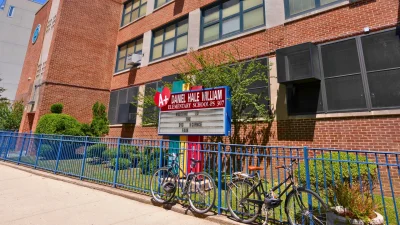
The building at 604 East 139th Street in Mott Haven opens this month as Strive Charter School, kindergarten through fourth grade, with a core day running from nine in the morning to half past four and optional hours stretching from seven to seven, seven days a week, all year. Breakfast, lunch and dinner are free. Rebecca Goodsell, the incoming principal, described the after-hours program to the Bronx Times as being "like a day camp," and said the reasoning was simple: "The school day is the school day, and then after that is fun."
New York's Board of Regents voted in January to send the application that produced this school back to the people who approved it, warning that the maneuver behind it violated state law. The school is opening anyway.
Asked about SUNY's power to overrule the state's own education board, Grannis called it "a feature, not a bug," and told New York Focus that the goal is "to make it easier for people who want a good quality charter school education to get it by being more flexible." Roughly 270 families applied by midsummer.
Read that sequence again and notice what is missing. No hearing in Mott Haven. No vote by anyone the neighborhood elected. The New York charter school cap is a number the Legislature set, and the question of whether this transfer respected it was settled by a committee of gubernatorial appointees overruling a board chosen by the Legislature.
The Regents' objections have not been procedural complaints alone. Daniel Morton-Bentley, counsel to the State Education Department, has pressed charter operators on student suspension rates and on whether their schools serve children with disabilities and English language learners at rates matching the districts around them. Those are the questions a review body exists to ask. New York City is a useful test of how much the asking accomplishes, since roughly 285 charter schools already operate there against a cap the Legislature has declined to raise, which is precisely why a transfer of an existing charter is worth more than an application for a new one.
The money moves whether or not the district agrees
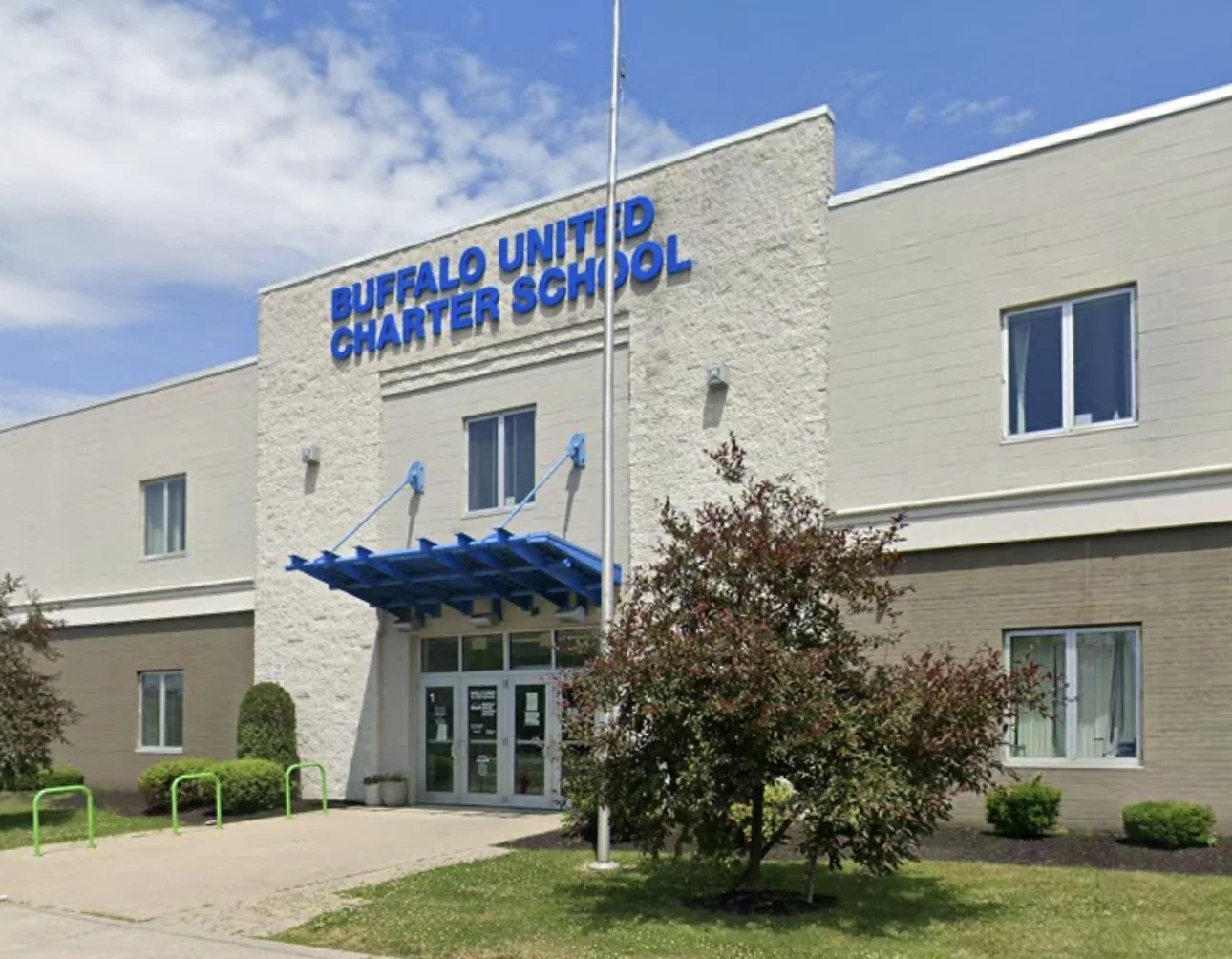
Districts pay tuition to charter schools for every resident student who enrolls, at an average of about $16,600 per student. That obligation is not discretionary, and it does not wait for the enrollment losses to catch up with the payroll. Brentwood, on Long Island, paid $9 million to charter schools in 2009. In the 2024-25 school year it paid $107 million. Buffalo budgeted $195 million this year for 22 charter schools educating more than 10,000 children, in a district already facing the prospect of a state monitor.
Victor Pratt, the former Hempstead school board president, has watched the calculations from the receiving end. "Charter schools do not coexist with public schools, they operate at the expense of public schools," he said. Whether readers accept that framing or reject it, the cash flow behind it is not in dispute, and it lands on the same statewide enrollment decline that has been squeezing district budgets since before the pandemic.
Two lawsuits doing the work the statute will not
On January 27, New York State United Teachers, joined by educators and parents from the Brentwood and Central Islip teachers associations, sued SUNY, its Board of Trustees and the SUNY Charter Schools Institute in Albany County Supreme Court over three Academy Charter Schools the Regents had opposed. The Board of Regents and the New York State PTA filed affirmations supporting the litigation, which is a striking posture for a state board reduced to filing paperwork in support of a union suing another arm of state government.
NYSUT President Melinda Person framed the filing as a last resort. "SUNY Charter Schools Institute's actions left us no alternative," she said in the announcement. "This entity has repeatedly ignored state law by dismissing community voices." In June the union filed again, this time over Strive, arguing the approval breached the cap. Person's summary of the strategy was six words long: "We've tried to change the law, and now we're going to the courts."
The fix is a bill, not a court date
Assemblymember Phil Ramos, whose district covers Brentwood and Central Islip, calls SUNY a "backdoor approval system" and has sponsored legislation requiring public hearings and local votes before an authorization takes effect. Senate Education Chair Shelley Mayer has said there is "a serious movement of legislators" behind charter reform. Neither chamber has passed it.
There is a version of this debate about whether charter schools work, and it is not this one. Strive's extended hours answer a real problem for parents who work past four thirty, and the 270 families who applied were not confused about what they wanted. The question in front of Albany is narrower and more embarrassing: the state built a review process, staffed it with the educators it selected for exactly this purpose, and then wrote the statute so their conclusions carry no weight. A review that cannot stop anything is a comment period wearing the costume of oversight.
Give the last word to one authorizer and make that authorizer answerable to the districts paying the bill, or keep two and let the objection mean something. New York currently does neither. Classes in New York City begin on September 10, and the students walking into 604 East 139th Street will do so under a charter the Board of Regents twice said should not exist.


Comments (0)
No comments yet — be the first to share your thoughts.
Leave a comment