
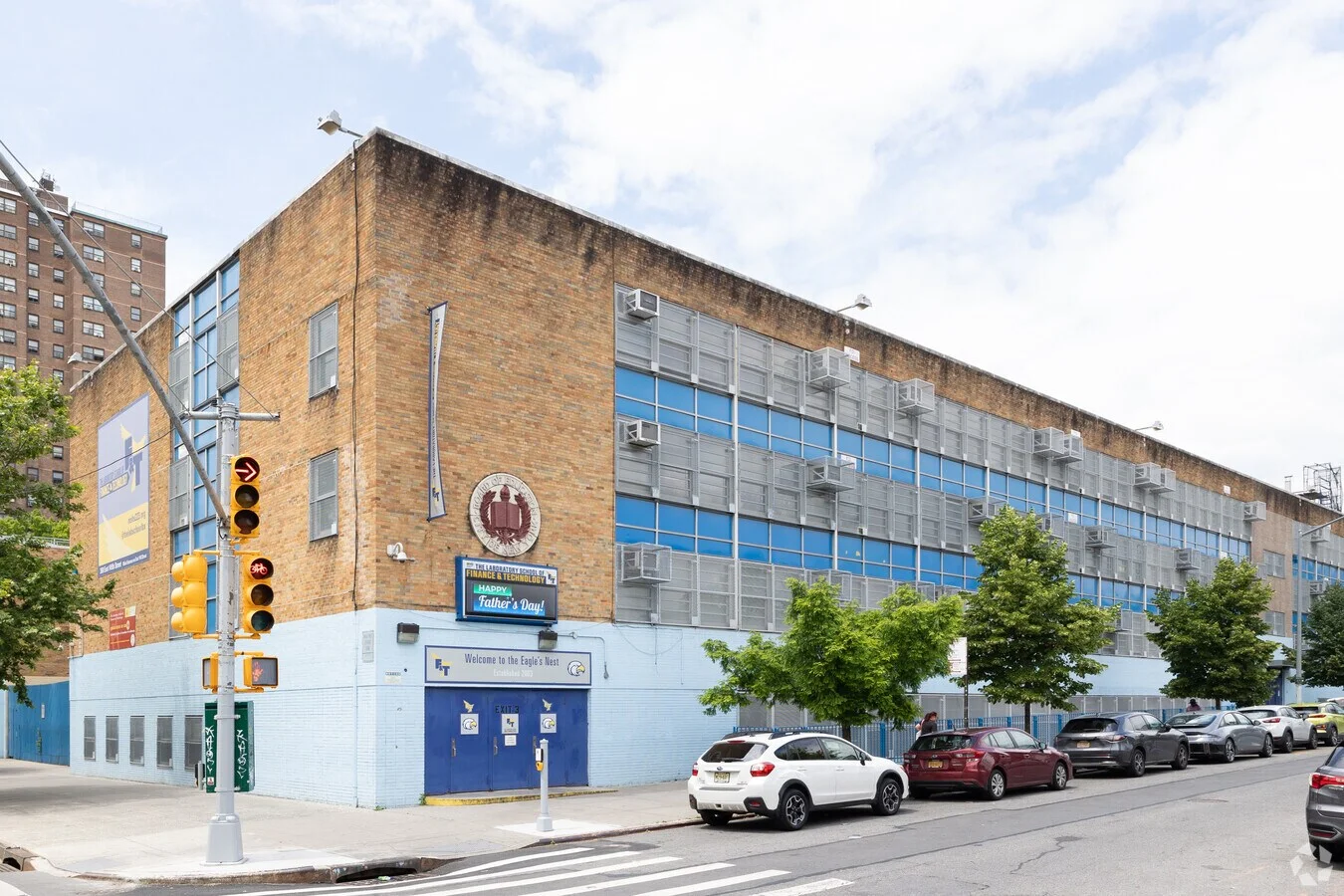
New York’s own data shows that 29 schools are under receivership this spring across 10 districts. Rochester has seven schools in the system. Buffalo and Syracuse have five each. Schenectady has three. New York City, a district serving roughly 1 million children, has four.
That distribution matters when Albany talks school accountability. In practice, New York’s receivership policy primarily affects small upstate cities and their surrounding communities, including Elmira, Amsterdam, Kingston, Newburgh, and Albany. Many of these districts have faced decades of population loss, shrinking tax bases, concentrated poverty, and aging infrastructure. In some communities, the high school still bears the name of an industry that largely disappeared years ago.
On July 31, the State Education Department opened a public comment period on proposed revisions to the regulations governing school designations and the interventions that follow. Comments are due by 11:59 p.m. Monday, September 28, at [email protected]. The Board of Regents is in recess during August and is scheduled to meet again beginning September 14.
That schedule gives affected communities 59 days to comment, most of them during the back-to-school period. It also means the board expected to vote on the changes will be unavailable for much of the comment period. Families, educators, and local officials should review the proposal early, submit specific written concerns, and ask their districts to publish the information in accessible formats and multiple languages.
The central argument over New York school receivership
Accountability is necessary. Some schools have failed to provide students with a strong education for years, and ignoring those results would impose another burden on families. The concern is that New York school receivership has often operated as a system imposed on communities rather than developed with them. The current rulemaking process risks repeating that pattern.
New York should extend the comment period into October and conduct direct outreach in the districts most likely to be affected. That outreach should include public meetings, translated materials, and clear explanations of how the proposed tiers could change a school’s status. Community Engagement Teams should also have a meaningful procedural role in improvement plans. At minimum, receivers and state officials should be required to respond in writing to the team’s recommendations before a plan is finalized.
What the proposed regulations would change
The proposed amendments to sections 100.19 and 100.21 of the Commissioner’s Regulations would create a tiered accountability structure: CSI-A, CSI-B, School District Superintendent Receivership, and Independent Receivership. The department describes the model as support that is “differentiated across multiple tiers of increasingly rigorous support.”
The proposal would also establish a new route into superintendent receivership for transfer high schools. These schools often enroll students who have struggled in, or been unable to remain in, other school settings. The amendments would adjust the standards schools must meet to exit receivership as well.
A tiered system could improve state accountability rules if it distinguishes between schools with different levels and types of need. Treating a school that missed one subgroup target the same way as a school that has underperformed for a decade creates a blunt system. More precise classifications could help direct staffing, funding, technical assistance, and leadership support where they are most needed.
The concern is how the changes fit into a broader shift in the state’s accountability framework. Amendments to Commissioner’s Regulations 100.21 adopted for the 2025-26 school year renamed the “Chronic Absenteeism” indicator as “Attendance,” removed “Academic Progress” as an indicator, and reduced the minimum subgroup size from 30 students to 20.
Each change may have a reasonable justification. Taken together, however, they may make it more difficult for the public to understand why a school is struggling and which students are affected. Communities reviewing the latest proposal should ask whether the new tiers will produce more useful information or simply create additional administrative categories. They should also ask how the state will measure progress, publish results, and determine when intervention has worked.
Chronic absenteeism cannot be solved by regulation alone
Receivership is often asked to address problems that extend beyond school administration. When Pleasant Valley and Lincoln elementary schools in Schenectady entered receivership in February, more than half of the students in each building were chronically absent, missing more than 18 days during the school year. Across New York, approximately one in four students is chronically absent.
The Comptroller’s data shows that the burden is not evenly distributed. Chronic absenteeism affects about 33 percent of students in high-need rural high schools and nearly 41 percent in high-need urban and suburban high schools, compared with 13.4 percent in low-need districts.
A student cannot learn consistently without being in class. Yet an improvement plan drafted in Albany cannot repair a broken car, accommodate an unpredictable work schedule, address housing instability, or ensure access to asthma medication. As our reporting on chronic absenteeism data shows, building conditions and neighborhood circumstances can explain more of the attendance problem than curriculum alone.
That is why chronic absenteeism in New York should be clearly identified as a major educational and community issue, not used primarily as a punitive measure against principals. Effective plans should pair attendance data with practical interventions, including transportation assistance, health services, family outreach, flexible scheduling, and partnerships with local agencies. Schools should also report whether those interventions improve attendance over time.
Community Engagement Teams need real authority
New York’s existing receivership process includes several mechanisms for public participation. A district entering receivership must notify parents in writing, hold a public hearing within 30 days, and establish a Community Engagement Team within 20 business days. Districts must submit quarterly reports and an annual continuation plan by the end of June. On August 10, the department posted its receivership expectations and reporting timeline for 2026-27.
This structure provides a foundation for meaningful collaboration. In Schenectady, Chief Academic Officer Tia Corniel described the process to WAMC in direct terms: “The word that comes to mind is truly collaboration.” Parents, educators, and superintendents in these districts are generally not rejecting outside help. They are trying to make use of the resources and oversight the state provides.
The weakness is that Community Engagement Teams remain advisory. They can meet, review plans, and offer recommendations, but the receiver retains final authority. Families quickly recognize the difference between being consulted and having influence. When parents spend several evenings on a committee and later see a plan that does not address their concerns, participation begins to feel performative.
New York can strengthen the process without eliminating the receiver’s authority. The state could require a formal response to each team recommendation, publish those responses with the improvement plan, and identify which proposals were accepted, modified, or rejected. It could also require receivers to explain how parent and community feedback shaped spending, staffing, attendance strategies, and academic goals.
Those steps would make accountability more transparent and give communities a clearer way to evaluate progress. Schools facing serious challenges need oversight, but lasting improvement is more likely when families and local educators can see how decisions are made and how their input changes the work.
Why New York’s school receivership debate affects the whole state
Families in Nassau, Westchester and other downstate communities may ask why a debate over school receivership in Rochester or Elmira concerns them. The answer comes down to money and precedent.
First, state taxpayers fund receivership. State aid supports improvement plans, consultant contracts and extended-day programs in schools under receivership. Every dollar spent on a strategy that educators, families and students do not trust is a dollar unavailable for other students across New York. School improvement funding should produce measurable gains, not simply sustain a process that lacks credibility inside the school.
Second, the rules adopted this fall will establish how New York responds when it identifies a school as persistently underperforming. No district has a permanent exemption from that system. Enrollment is declining, budgets are under pressure, and this summer’s preliminary statewide results showed proficiency rates of 48 percent in English language arts, 57 percent in math and 47 percent in science. Suburban districts that have never appeared on an accountability list are also watching their results closely.
What the state should do
Commissioner Betty Rosa has said that “accountability is a powerful catalyst for meaningful change and stronger outcomes for students.” The state should apply that principle by treating trust as a necessary condition for reform. In these districts, trust is often in shorter supply than funding and cannot be created through an administrative directive.
Three practical steps would improve the process:
- Extend the public comment period through the end of October, giving upstate school districts time to open their buildings, consult families and hold board meetings.
- Distribute plain-language notices through districts under receivership, rather than relying only on a state education department listserv.
- Give engagement teams a documented process for responding to public feedback, including a clear explanation of which recommendations the state adopts or rejects.
These steps would not weaken accountability. They would make the process more credible and workable. Parent voice in education policy is often treated as a slogan, but in this case meaningful participation would require little more than a broader email campaign, a revised calendar and a transparent response process. For background, read our explainer on what happens when New York places a school in receivership.
The public comment deadline is September 28. Comments can be sent to [email protected]. Twenty-nine schools are waiting for the state to define the rules, while many families in those communities still have not been clearly told that their views can help shape the outcome.
| District | School | Status |
|---|---|---|
| Albany City (1 school) | Giffen Memorial Elementary School | (Continuing) |
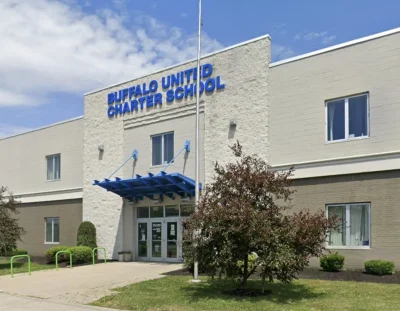
| Buffalo Public Schools (5 schools) | PS 31 Harriet Ross Tubman School | (Newly identified) |
| PS 37 Marva J. Daniel Futures Preparatory School | (Continuing) | |
| PS 43 Lovejoy Discovery School | (Newly identified) | |
| PS 97 Harvey Austin School | (Continuing) | |
| PS 131 The Academy School | (Continuing) | |
| Elmira City (1 school) | Thomas K. Beecher Elementary School | (Newly identified) |
| Greater Amsterdam (1 school) | R.J. McNulty Academy | (Newly identified) |
| Kingston City (1 school) | John F. Kennedy Elementary School | (Newly identified) |
| New York City (4 schools) | Bronx Career and College Preparatory High School | (Newly identified) |
| Brooklyn High School for Leadership and Community Service | (Exiting June 30, 2026) | |
| New Directions Secondary School | (Exiting June 30, 2026) | |
| P.S./I.S. 224 | (Newly identified) | |
| Newburgh City (1 school) | South Middle School | (Newly identified) |
| Rochester City (7 schools) | Virgil Grissom School No. 7 | (Newly identified) |
| Dr. David and Ruth Anderson School No. 16 | (Continuing) | |
| Henry Hudson School No. 28 | (Continuing) | |
| Dr. Iris J Banister School No. 33 | (Continuing) | |
| East Lower School | (Continuing) | |
| Edison Career and Technology High School | (Continuing) | |
| James Monroe High School | (Continuing) | |
| Schenectady City (3 schools) | Pleasant Valley Elementary School | (Newly identified) |
| Lincoln Elementary School | (Newly identified) | |
| William C. Keane Elementary School | (Continuing) | |
| Syracuse City (5 schools) | Bellevue Elementary School | (Newly identified) |
| Clary Middle School | (Continuing) | |
| Lincoln Middle School | (Exiting June 30, 2026) | |
| Roberts PreK-8 School | (Newly identified) | |
| Seymour Dual Language Academy | (Newly identified) |


Comments (0)
No comments yet — be the first to share your thoughts.
Leave a comment