
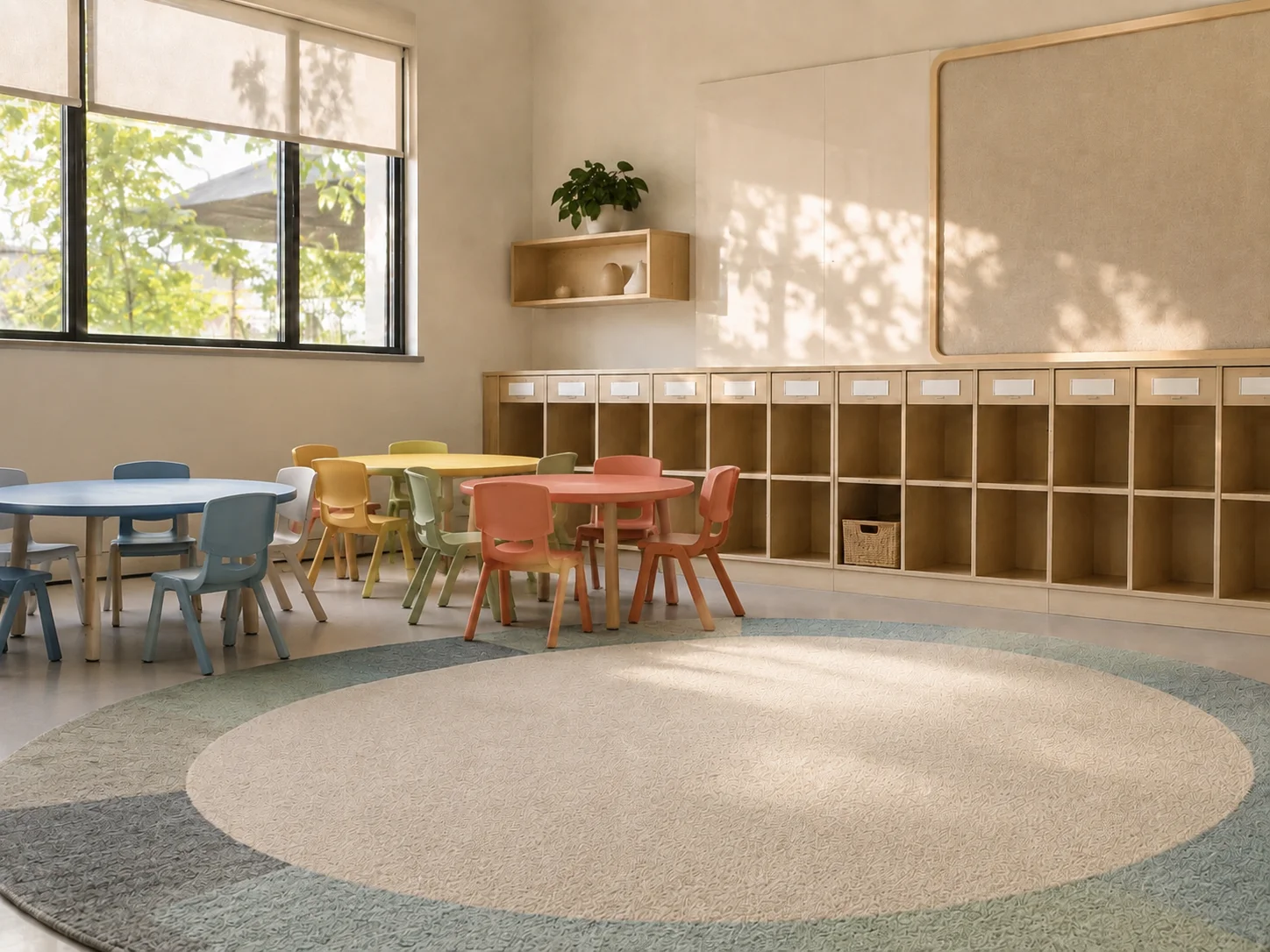
Last year, New York State put roughly $1.2 billion on the table for school districts to run prekindergarten and the State got about $170 million of it back.
The funding went unspent not because the money came with impossible conditions or families rejected the seats, but because districts faced staffing shortages, limited space, and reimbursement rates that undermined program budgets. In some cases, districts never established the programs at all. More than half of the 658 districts receiving allocations left at least $100,000 unspent. Monroe-Woodbury Central School District in Orange County returned $4,786,514.
This year the stakes changed twice over, and almost nobody outside a business office noticed.
What a parent needs to know, briefly
New York now pays districts substantially more per prekindergarten child than it did, and it counts those children on a single day. For the 2026-2027 school year, that day is October 7, 2026. The prekindergarten enrollment a district reports on that date determines its final prekindergarten payment for the year. A four-year-old enrolled and attending by then is not just getting a free seat. That child is state money arriving in a district budget.
The rate reset
Prior to the change, reimbursement bottomed out around $5,400 per child, which in much of New York does not cover a certified teacher, an aide, a classroom, and a bus route. Districts did the math, concluded that running a program would cost more than the state would send, and left the allocation on the shelf.
The enacted state budget rebuilt that formula. Every district's full-day four-year-old rate is now set at the higher of $10,000 or its Foundation Aid per pupil amount. In its February report on the executive proposal, the Office of the State Comptroller estimated the change would grow universal prekindergarten spending by $561 million, or 52.5 percent, and noted the design intent plainly: the proposal "would simplify the formula and allow rates for districts with the lowest wealth and highest need students to increase over time."
The result is a table on the State Education Department's website that almost no parent has seen and every parent should. The 2026-27 allocation file lists a full-day four-year-old rate for every district in the state. Brentwood is set at $21,607 per child. Wyandanch, $21,032. Hempstead, $20,346. Roosevelt, $19,392. Rochester City, $17,237. Syracuse City, $16,524. Belfast, in Allegany County, $16,335. Dunkirk, $15,904.
And Monroe-Woodbury, the district that returned the most money in the state, sits at the $10,000 floor. So does Guilderland, which left $1.1 million unspent. So does the New York City Chancellor's Office.
A four-year-old in Brentwood is worth more than twice as much state money as a four-year-old in Monroe-Woodbury, because the formula now tracks district wealth and student need. Whether your district's per-pupil rate sits at the floor or near the ceiling tells you something real about how Albany reads your community, and it is a number you can look up in about ninety seconds.
One day, one count
The school funding formula stops being abstract at this point, because a household can act on it.
A memo issued June 23 by Erik Sweet, executive director of the Office of Early Learning, and Yufan Huang, assistant commissioner of the Office of Information and Reporting Services, sets out the mechanics. Districts report enrollment monthly into the Student Information Repository System, the state's central data pipeline. But the department uses "the Basic Educational Data System (BEDS) Day on October 7, 2026, to determine final UPK payments for the 2026-2027 school year." Preliminary snapshots follow in January and March, and final payments are reconciled against the August snapshot.
The memo's opening principle is the one to remember: "UPK funding is directly determined by the exact number of students served in a given school year." It closes with a warning aimed at business offices that reads differently if you are a parent: "Inaccurate data or uncorrected discrepancies may affect a district's final UPK reimbursement."
Translated: an eligible four-year-old who is not enrolled by early October is a seat the district did not fill and money the district will not draw. Multiply that by a few dozen children and you have the beginning of an explanation for the $170 million.
Why the money went back
The unspent-funds figure comes from a State Education Department report to the Governor and the Legislature, obtained through a public records request by the nonprofit newsroom New York Focus and published in July. It is not posted publicly, and the department's own prekindergarten data pages carry students-served and demographic files with no unspent-funds field, so the underlying report is not something a resident can pull up at home. That is worth saying out loud, because a spending gap this size ought to be a public dataset.
The reasons districts gave were mundane and mostly credible. They could not hire enough certified teachers. They had no classroom space, particularly in districts that had already converted every spare room. Enrollment shifted. Recruiting community-based providers, the childcare centers and Head Start programs that partner with districts to run seats off-site, proved harder than expected. The administrative load of running the program deterred small districts. And some families, offered a half-day program ending at 11:30, chose private care that runs until six, because a half-day seat does not solve a working parent's actual problem.
State Senator James Skoufis, whose Hudson Valley district contains several of the largest returners, has been the loudest voice on this. "I fight for this money and then they give it back to Albany and they don't create the UPK slots for four-year-olds in their community," he told News 12 Hudson Valley in July. He laid out the household consequence directly: "When that happens, that young family has one of two options. They either have to out-of-pocket spend $10,000 to $15,000 a year to get their 4-year-old in education, or they don't send their 4-year-old to a pre-K education." On the district defense, he was unsparing: "They've had six years to figure it out. If they have a space problem, if they have some other problem, they've had six years to figure it out. Unfortunately, a big part of the problem is they have not prioritized this. It's a shame."
Districts would tell it differently, and some of them have a case. Rachel Anderson, assistant superintendent in Guilderland, pointed to the partner shortage: "It may be difficult to secure enough partners to fully meet that need." A district that cannot find a provider or a certified teacher is not being lazy. It is facing a labor market.
Marina Marcou-O'Malley, co-executive director of the Alliance for Quality Education, framed the underlying failure as one of follow-through rather than intent: "Yes, we're putting money into the system, but we also need to go back often to see what is working."
The deadline behind the deadline
There is a second countdown, and it is the reason the excuses have an expiration date. Under the enacted budget, all districts must provide prekindergarten access to eligible four-year-olds by the 2028-2029 school year. Two sources close to the budget process describe the mandate the same way, though we have not read it in statute, so treat the year as reported rather than confirmed. Districts that have spent six years explaining why a program will not work now have roughly two years to make one work anyway.
Meanwhile the money keeps moving on a calendar most people never see. Targeted Prekindergarten allocations for 2026-2027 were announced in a June 29 memo with a digital submission deadline of August 31 this year, sample BOCES awards running from $349,557 at Questar III to $518,388 at Madison-Oneida, each with an 11 percent local match. That is the same late-summer compliance stretch we covered in the August 31 rush facing school business offices, and prekindergarten paperwork sits squarely inside it.
What to do with this
If you have a four-year-old, call the district office this week and ask three questions. Does the district run a prekindergarten program, full-day or half-day. Are seats still available for this year. And if the answer is no, is the district partnering with a community-based provider that has openings.
If you are a resident without a four-year-old, the questions are different and arguably more useful. Ask your board of education what the district's prekindergarten allocation was last year and how much of it was spent. Ask what the district's 2026-27 per-pupil rate is, since it is public. Ask what the plan is for the 2028-2029 requirement. Those are ordinary questions about district budgets and a board should be able to answer them without notice.
The academic return on investment case for early education is one of the least contested findings in education research, which is why the state keeps putting money behind it. But state aid is not a grant that sits waiting. It is a reimbursement triggered by children in seats on a specific Wednesday in October. Districts that treat enrollment data as a compliance chore rather than a revenue function will keep sending money back, and the families who needed the seats will keep paying $12,000 a year to a private center instead.
Last year New York left $170 million of its own education funding unclaimed at rates half what they are now. The bill for repeating that in 2026-2027 will be considerably larger, and it comes due on October 7.


Comments (0)
No comments yet — be the first to share your thoughts.
Leave a comment