

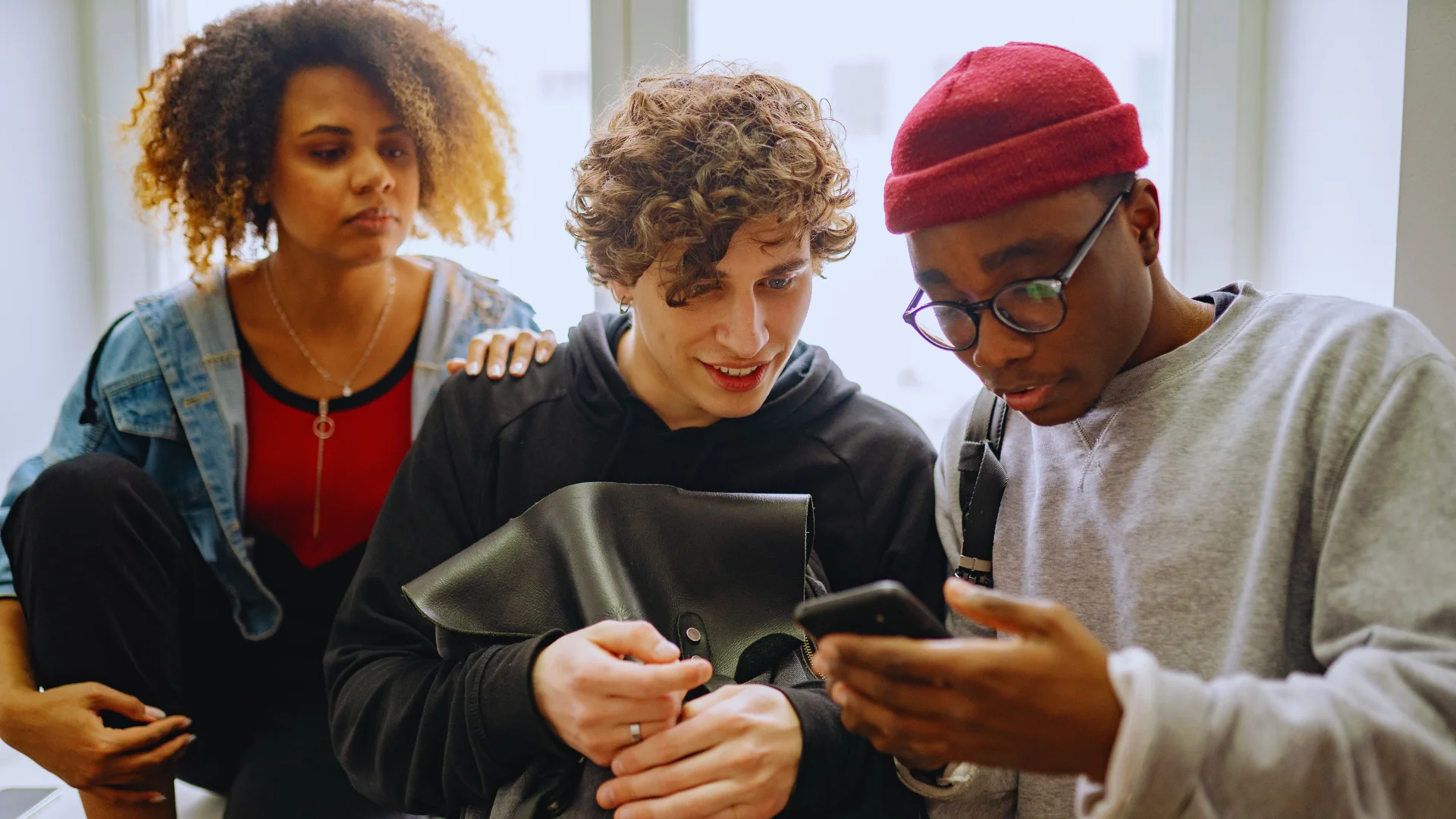
At Schoharie Middle School, which locked away student phones a full year before Albany required it, sixth-grade teacher Natalie McKay first noticed the change in the cafeteria. Tables that had sat silent over glowing screens filled up with conversation, and the corridors followed. "The hallways became loud again," McKay said last spring, describing a building where students had started talking to one another between classes instead of scrolling.
For more than a year, noise like that made up most of the evidence for New York's bell-to-bell smartphone law, which took effect in September 2025. The law covers every public district, charter school and BOCES program in the state, from Buffalo to Montauk. On Tuesday, Nov. 17, researchers at Harvard, Dartmouth and the testing nonprofit NWEA released the first large national study to attach a learning figure to strict phone storage. The figure is modest, it appears to last, and parents deserve to see it before anyone in Albany rounds it up.
The learning gain, counted in weeks
The Harvard study, led by Tom Kane of the Center for Education Policy Research with Dartmouth economist Douglas Staiger, followed math and reading growth for 3.3 million students at 4,600 schools. It drew on NWEA MAP Growth results from the 2021-22 through 2025-26 school years, covering districts in 49 states and the District of Columbia. Students in grades 3 through 10 at schools that required them to seal their phones in lockable pouches saw achievement growth rise about 0.01 standard deviations a year. The authors translate that into one to two extra weeks of learning annually, or roughly two minutes recovered from every hour of class time.
Those recovered minutes look larger once they are set beside the decline they are being measured against. Between 2013 and 2024, eighth-grade math and reading achievement nationally slid by roughly a full grade level, a loss of two to three weeks of learning every year. Kane's team found that the pouch gains began in a school's first year and were still visible three years later. "Strict cell phone bans seem to plug about half of that leak," Kane said in announcing the results, which the center published alongside its summary of the findings.
The effect held across elementary, middle and high schools, across high-poverty and low-poverty buildings, and across students who started the year ahead or behind, with no statistically significant difference among those groups. Pouches also appeared to shrink the share of students whose reading scores dropped sharply from one year to the next.
What the study found in states with bans like New York's
The researchers also examined the 22 states that had statewide restrictions in place during 2025-26, and the results there point the same way with less certainty. Students in states with bell-to-bell bans, the category that describes New York's law, posted reading growth about 0.016 standard deviations higher. States that barred phones only during instructional time showed a gain of about 0.019 standard deviations in math.
The authors caution that states adopting bans may already have been on improving trajectories, which could inflate those statewide estimates, so the cleanest evidence remains the comparison of individual pouch schools. New York's law leaves the storage method to each district, and the choices range from magnetically sealed pouches to classroom lockboxes like those at J.H.S. 383 Philippa Schuyler in Bushwick. In the Central Square district north of Syracuse, students keep their phones inside approved pouches in their backpacks, an arrangement Superintendent Tom Colabufo said has been working.
The gains New York educators reported
New York's own evidence comes mostly from the adults standing at the front of the room. Gov. Kathy Hochul's office surveyed educators at the close of the first phone-free year and collected 585 responses from every region, grade level and school role. Eighty percent said the policy had delivered positive results for their school, and 76 percent reported better classroom behavior, including improved attention, more respect among peers and better listening to directions.
Three in four respondents said their own ability to teach effectively had improved, 80 percent saw stronger social connections among students, and 60 percent reported a decline in bullying and cyberbullying. Asked what had changed in their classrooms, 311 educators pointed to more active participation in discussions, ahead of improved peer collaboration at 282 and better focus on assignments at 273.
Those spring results tracked a December 2025 survey of more than 350 school administrators, in which 92 percent described their transition to phone-free classrooms as smooth. Both surveys were distributed by the governor's office, which fought for the law in the state budget, and both measure what educators observed rather than what students learned.
Where the gains have not shown up yet
The first statewide test results from the phone-free year did not deliver a reading bump. Preliminary 2025-26 results released by the State Education Department in August showed grades 3 through 8 English language arts proficiency falling five points to 48 percent. Math proficiency rose two points to 57 percent, and science proficiency in grades 5 and 8 climbed three points to 47 percent.
In New York City, reading proficiency fell six points to 50.3 percent, and third-grade proficiency dropped from 58 percent to 44.2 percent in a single year. Those swings are hard to pin on phones in either direction, because the steepest drops came in the youngest tested grades. They also followed an unusually large seven-point ELA gain the year before, a seesaw that led EdTrust-New York to call for an independent audit of the state's reading exams. The Harvard team relied instead on MAP Growth tests, which measure the same students' progress over time rather than the share who clear a fixed proficiency bar.
A separate national study released in May by economists at Stanford, Duke, the University of Michigan and the University of Pennsylvania found average test-score effects close to zero. That team, which followed pouch schools for three years, did find gains in high school math alongside slight losses in middle school. Teachers in its survey reported that the share of students using phones in class for personal reasons fell from 61 percent to 13 percent after pouches arrived. Suspensions rose about 15 percent in a school's first pouch year before fading, a pattern The Standard examined in June when it asked whether New York's cellphone ban is working.
New York districts saw the same early friction in their own numbers. Williamsville's first enforcement report, required under Education Law Section 2803, counted 1,618 violations involving 810 students during 2025-26. On Long Island, the Hicksville district logged 698 enforcement responses involving 481 students over the same school year. English learners and Hispanic students there were disciplined at rates well above their share of enrollment, as The Standard found in its review of the first enforcement reports in September.
What parents can do with the numbers
My son graduated from high school in June 2025, three months before the law took effect. Reading the Harvard figure, I thought about how many two-minute slices of his school days went to messages from home, some of them mine. A week or two of learning a year sounds small in a press release. If the gains stack the way the study suggests, the eight years from third through tenth grade add up to two to four months of instruction.
Students themselves remain split on how far New York-style rules should reach into the day. A national survey by Hopelab and Data for Progress, conducted between June 24 and July 10, found that 64 percent of high school students support classroom phone bans while 80 percent oppose all-day bans. Half of the students who explained their opposition to all-day rules said they needed a phone for emergencies.
New York's law answers that concern on paper by requiring every district to give families written methods for reaching their children during the school day. Parents who have never read those instructions can find them in their district's posted policy. Families can also ask which storage method their school uses, because the Harvard gains were measured where phones went into closed pouches rather than merely out of sight.
The enforcement report is the other document worth reading, since every district had to post one on its website by Sept. 1, 2026, with demographic data on which students were disciplined. The statute bars suspending a student solely for breaking the device policy. A parent who sees a long list of violations at their child's school can fairly ask what the district is doing instead. None of the research addresses the hours after dismissal, when the Harvard authors note that phone and social media use outside school remains an open question for learning.
Hochul has said her administration will track academic results as the policy matures, and the next markers arrive on a fixed calendar. Spring 2027 state tests will show a second phone-free year of proficiency rates, and the second round of district enforcement reports is due Sept. 1, 2027.


Comments (0)
No comments yet — be the first to share your thoughts.
Leave a comment