

If you are the parent of a child with an IEP, you probably saw the headline this week and felt your stomach drop before you finished reading it. The federal agency that has overseen services for children with disabilities for half a century is handing that job to someone else. The natural first question, the one that matters more than any policy debate, is simple: does this change anything for my kid on Monday morning?
The honest answer is reassuring in the short term and genuinely uncertain in the long term, and the difference between those two timelines is the whole story. The protections themselves are written into federal law, and that law did not change this week. What changed is who administers and enforces it. That distinction sounds technical, but it is where every real consequence will eventually live.
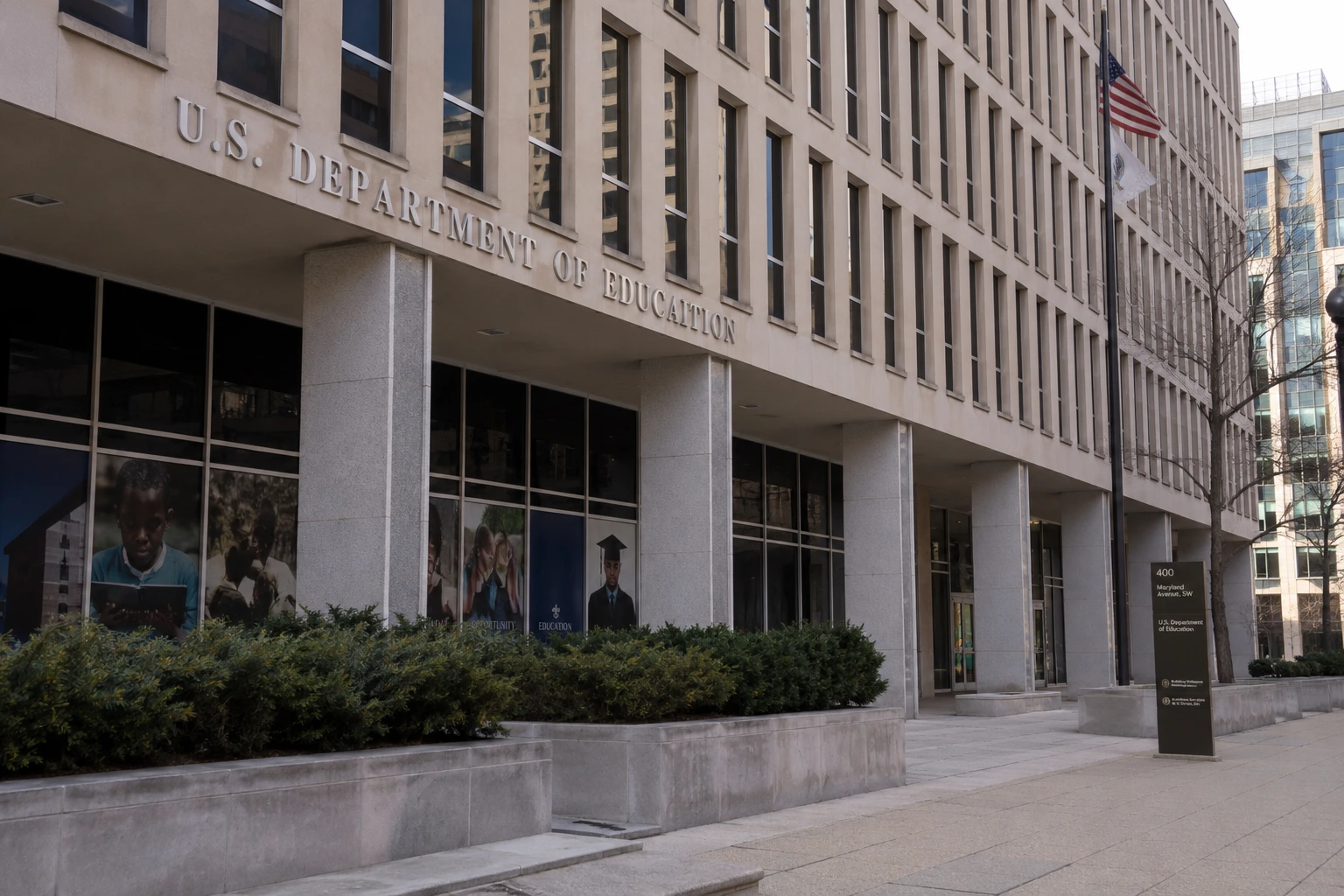
On Tuesday, the U.S. Department of Education announced it is moving two of its most important functions to other agencies. Oversight of special education, run through the office that administers the Individuals with Disabilities Education Act, is shifting to the Department of Health and Human Services. Enforcement of civil rights in schools, long handled by the department's Office for Civil Rights, is moving to the Department of Justice, which will also take over work protecting student privacy. The changes were made through a new round of interagency agreements, the latest in a series the administration has used to hollow out the department from the inside.
This is part of a stated effort to close the department entirely and, in the administration's words, return education to the states. It is worth being precise about the limits here. Only Congress can actually abolish a cabinet agency, so the department technically remains open. But with these transfers it has shed the bulk of its day-to-day responsibilities. Education Secretary Linda McMahon framed the moves as a matter of efficiency, saying the agreements align federal responsibilities with the agencies best positioned to support them, and a senior official said the special-education office would keep its statutory duties running without interruption.
Here is the fact to anchor yourself to before anything else. The Individuals with Disabilities Education Act, known as IDEA, and Section 504 of the Rehabilitation Act are still federal law. A reshuffling of which agency holds the file does not repeal a statute. Your child's IEP is still a binding legal document. Your child's 504 plan still entitles them to accommodations. School districts are still required to identify, evaluate, and serve eligible students, and they are still required to provide what federal law calls a free appropriate public education.
Just as important for families, the machinery you actually interact with mostly lives at the state and district level, not in Washington. The annual review meeting, the evaluation, the due process rights you can invoke when a district falls short, all of that runs through your state education department and is unaffected by which federal agency administers the grant money behind it. If you have ever felt unsure how to use those rights, this is a good week to get fluent in them, and a step-by-step walk through what to do after your child receives a support plan is exactly the kind of preparation that pays off, which our parent guide to navigating an IEP from day one lays out in plain language. The practical move right now is not panic. It is paperwork. Keep copies of everything, know your timelines, and document every service your child is owed and receives.
The move that has advocates most worried is the transfer of the Office for Civil Rights to the Justice Department. The reason is not that civil rights protections are disappearing, because they are not. It is a question of how enforcement will work in practice. For decades the Education Department's civil rights office focused on getting school districts to fix their practices, often resolving a complaint by changing how a school operates rather than by punishing it. That approach quietly shaped conditions for a lot of students at once, and the office had already been thinned considerably by staff cuts before this transfer.
Will an enforcement-oriented agency take the same patient, fix-the-system approach? That is the open question, and reasonable people are answering it differently. Disability advocates also worry that housing special education inside a health agency invites a medical lens, where, as one policy director at the disability rights group The Arc put it, disability is treated as a diagnosis to manage rather than an ordinary part of a child's school life. The department, for its part, sent advocates a letter the same day pledging that federal enforcement of special education protections will continue. Both things are true at once: the law guarantees the floor, and the people who enforce it determine how high above that floor most kids actually land.
The stakes are not evenly distributed, and New York is a useful illustration of why. Roughly one in five public school students in the state receives special education, well above the national rate of about fifteen percent, which works out to hundreds of thousands of children whose services are shaped, in part, by federal money and federal oversight. That money does not arrive in a district directly. It flows from Washington through the state education department and out to local schools, where it pays for the aides, therapists, and specialists that turn a written plan into an actual service.
That funding pipeline is now the subject of a real legal fight. Recent budget law assigns control of IDEA dollars to the Education Department specifically and says that money cannot simply be handed to another agency, which is part of why critics argue the transfers may not survive a courtroom. When federal dollars wobble, the effects show up first in the classroom, the same way other budget pressures quietly reshape what a child experiences day to day. States that lean hardest on the federal special education system have the most riding on whether this reshuffle runs smoothly or snags, and any disruption to federal funding timelines, something the department's own employee union has warned about with earlier transfers, is felt most acutely where the most children depend on it. Families already watching how a broader federal pullback affects school budgets have one more thread to follow.
Expect courtrooms. Efforts to dismantle the department have been in litigation for more than a year. A federal judge paused the administration's downsizing in 2025, the Supreme Court then allowed it to continue while the case proceeds, and advocacy organizations including The Arc are already plaintiffs in a federal suit challenging the broader effort. New or amended legal challenges to this week's specific moves are likely. Adding to the uncertainty, lawmakers from both parties have questioned whether these interagency agreements are even legal, casting doubt on the mechanism itself rather than just the politics.
For now, the most useful posture for a parent is informed and unhurried. Nothing about your child's legal entitlements changed this week, and any operational changes will roll out slowly and, almost certainly, with court supervision. Watch three things in the months ahead: whether complaint investigations slow down, whether grant money continues to arrive on schedule, and whether your district communicates clearly about where to turn when something goes wrong. The law promising your child an education has not moved. The question is who will answer the phone when you call to enforce it, and that is a story worth following closely rather than fearing blindly.



Comments (0)
No comments yet — be the first to share your thoughts.
Leave a comment