

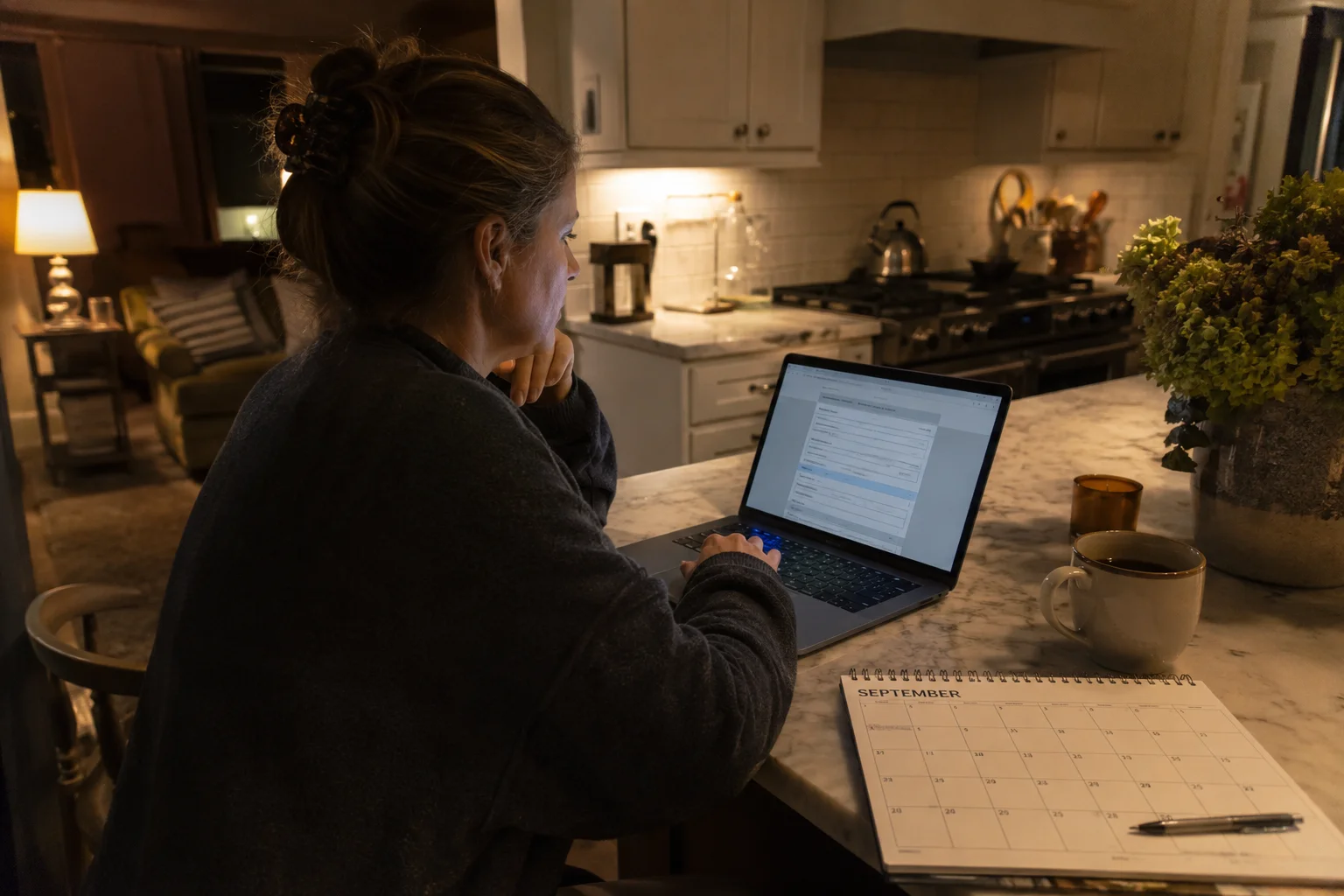
The message tends to arrive the way bad news does in July, quietly, while you are trying to nail down September. You sit down to apply for help paying for child care in your county, and the application is closed. Not full. Closed. No new names taken.
That is what tens of thousands of parents ran into this year, in the same twelve months Albany announced the largest child care investment in state history. The distance between those two facts is the story families are walking into this fall.
New York's FY2027 state budget added roughly $1.2 billion in new, recurring funding to the voucher program, the biggest single increase it has ever seen, pushing total spending toward $3 billion, about a 40 percent jump over the prior year. Yet that money did not flip every county's enrollment back on. For much of the spring, more than 30 counties plus New York City had stopped accepting new applications, and whether your family can land a voucher this fall depends far more on your zip code than on your paycheck.
The spending plan lawmakers passed this year was not shy about ambition. It fully funds free care for two-year-olds over its first two years, shores up 3-K seats in New York City, launches a statewide pilot for affordable day care for children under three, and locks in a mandate for universal pre-K across the state by the 2028-29 school year. On paper it reads like a promise to families that the days of a full paycheck vanishing into a day care bill are numbered.
The dollars back some of that up. Monroe County alone was slated for $108.6 million, an increase of $18.3 million over the year before. Statewide, the child care line is the fattest it has ever been. The catch is that a bigger pot arriving in April does not undo a year of counties turning families away.
Why the waitlist did not move
The mechanism most working parents rely on is the Child Care Assistance Program, the voucher that covers much of the weekly cost of a day care slot or a home provider. Demand for it exploded. In July 2025, 21 counties had closed or waitlisted new applications. By the spring of 2026 that number had climbed past 34 counties plus New York City, according to reporting by New York Focus and the Children's Agenda.
The surge did not come from nowhere. New York widened eligibility over the prior two years, then demand surpassed the appropriations behind it. In New York City, the waitlist grew roughly tenfold in under a year, adding about 1,500 families a month, as a standoff between city and state over who would cover the tab dragged on.
New York City is the starkest case. The city's child care voucher waitlist swelled past 24,000 children by early May, and the city had not enrolled a single new family through the program since May 2025. Money was not the only bottleneck. The city had claimed only $105 million of a $350 million supplemental pot the state made available, with $245 million still on the table against a September deadline.
This is going to be a moving target.
That was Onondaga County Executive Ryan McMahon, whose county became one of the first to climb back out. In late June, Onondaga reopened its waitlist using $55 million from the state budget, enough to serve the 477 families already waiting on top of the roughly 5,000 children enrolled, with normal operations expected by the end of August.
A county-by-county lottery
Not every county got that math to work. Erie County was staring at an $8.5 million shortfall even after more than $14 million in supplemental funding, with over 300 families still waiting. The result is a patchwork where two parents earning identical wages, one in Onondaga and one across a county line, can get opposite answers. The voucher is a statewide program in name. In practice it has become a lottery run 62 different ways.
What this means for families this fall
For New York families mapping out the school year, the practical takeaway is to treat a voucher as something to chase early and locally, not assume. Call your county's Department of Social Services now, ask whether applications are open, and if there is a waitlist, get your name on it in writing. Reopenings are happening on a rolling basis as budget dollars flow, so a door that was shut in May may be cracked by late summer.
The stakes here are not abstract. Child care routinely rivals rent as a household's single largest line item, and the collapse of a voucher can be the difference between a parent keeping a job and leaving the workforce. This is squarely a child care affordability question, and it lands at the same moment families are absorbing every other cost that comes with back to school 2026, from supplies to before-care to the after-school programs the program also helps cover for kids up to age 13.
New York has moved on other fronts to give household budgets room, including the property tax relief reaching nearly three million residents this year. Families already doing the arithmetic on a college savings account know the drill. Every recurring cost you can cap frees money for the next one, and few costs are as cappable, if you can get in, as child care. For a fuller picture of that relief, our breakdown of the STAR property tax rebate lays out who qualifies.
How to check whether you qualify
Eligibility for New York child care assistance runs to families earning under 85 percent of the state median income, which works out to roughly $114,000 a year for a household of four. Once you are in, the program caps what many families pay out of pocket at around $15 a week, while the state covers an average subsidy near $300 a week per child. The state's Office of Children and Family Services keeps current eligibility rules and county contacts in one place, and it is the fastest way to confirm the numbers for your own household before you apply.
The bill the budget did not pay
There is one piece of the puzzle Albany left on the table, and it will shape whether any of this holds. The child care workforce got no compensation boost this year, even though state senators had floated a $500 million fund to raise pay. Child care workers in New York earn about $38,000 on average, less than nearly every other occupation in the state, and providers cannot fill seats they have no staff to run. Advocates at the Schuyler Center warned that the state simply cannot reach its universal-care goals without paying the people who do the work.
Pete Nabozny, policy director at the Children's Agenda, has spent the year watching thousands of low-income children sit on waitlists while the political fight plays out above their heads. His point is uncomfortable and correct. A voucher a family cannot use, at a program with no open slots, staffed by workers a provider cannot afford to keep, is a promise on paper.
The money is real this time, more of it than ever. What parents cannot yet count on is that it will reach them, in their county, before the first bell rings. So do the unglamorous thing. Call the county, get on the list, and check back often. In a system this uneven, persistence is the closest thing to a guarantee New York is offering families right now.



Comments (0)
No comments yet — be the first to share your thoughts.
Leave a comment