

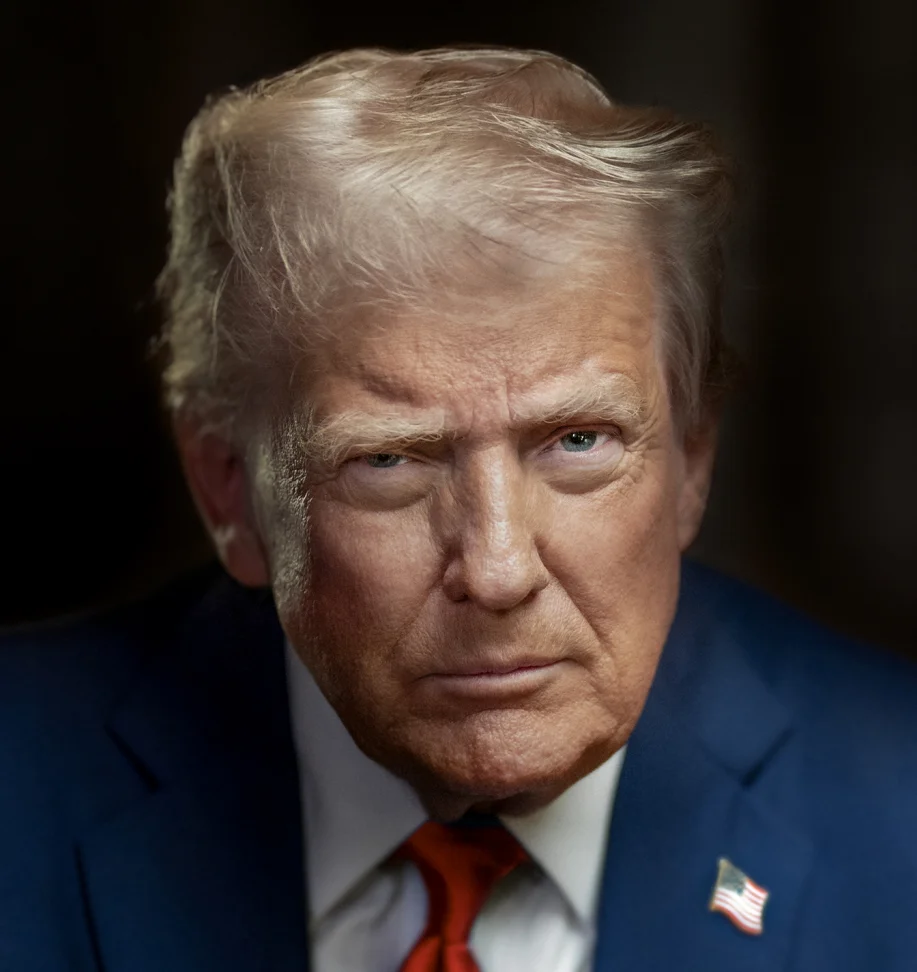
By the count Education Week has kept since the week Donald Trump returned to office, the tally stood at 100 lawsuits as of July 16, 2026: 100 separate legal challenges to a single administration's education policy, filed at a pace that outstrips almost anything in the department's history. Some target a single grant program. Others aim at the Department of Education itself. Nearly all share the same plot: an executive action moves fast, a coalition of states or advocacy groups sues to slow it down, and a federal judge somewhere is asked to decide whether the president can do what he just did.
One of the earliest and most consequential of those cases carries a caption that says something about who has been doing the suing. It is called State of New York v. McMahon. New York is first alphabetically among the twenty states that challenged the administration's plan to gut the Department of Education, which is presumably how the state's name ended up on the docket. But it is not an accident that New York keeps appearing in these filings. New York Attorney General Letitia James has emerged as one of the most frequent litigants against the administration's education agenda, and the state has real money and real programs riding on how these cases come out.
What's Actually Being Litigated
Strip away the legal jargon and the lawsuits sort into a handful of recognizable buckets. There is the Department of Education dismantling fight, which challenges the administration's attempt to cut the agency's staff by roughly half and shift its responsibilities elsewhere without an act of Congress. There is a cluster of cases over federal money, including a federal education funding freeze that withheld $6.8 billion in already appropriated K-12 grants in the summer of 2025, plus separate suits over frozen pandemic relief dollars, teacher training grants, and school mental health programs. There is a fight over civil rights enforcement, playing out through DEI related funding threats and, separately, through the administration's push to bar transgender athletes from girls' and women's sports under a February 2025 executive order tied to Title IX. There is a fight over higher education, most visibly at Columbia and Harvard, where the administration has used federal contracts and grants as leverage over campus policy. And there is a fight over who gets to attend early childhood programs at all, after the administration moved to pair Head Start funding cuts with new immigration status checks for enrolled families.
Layered on top of all of it is process. The administration has repeatedly been accused of skipping the paperwork. Funding freezes, grant terminations, and new data collection mandates have almost all drawn the same legal claim: that the changes violated the Administrative Procedure Act by arriving without notice, comment, or a coherent legal rationale. Judges have found that claim persuasive often enough that arbitrary and capricious has become something close to a running theme across these rulings.
New York's Stake in the Fight
For New York families, the more useful question than how many lawsuits is what the state actually stands to lose or keep. The answers, drawn from Attorney General James's own filings, are specific. When the $6.8 billion federal freeze hit in the summer of 2025, New York's share of the frozen money came to roughly $463 million, funding that covered teacher training, after school and summer programs, and services for English learners across the state, before the Education Department reversed course under legal pressure and released the withheld funding weeks before the school year began. James called it "a huge win for our schools, our students, and the rule of law."
That was not the end of it. Earlier in 2025, James joined a coalition suing over a separate decision to cut off access to $134 million of New York's share of pandemic relief education funds, money the state had been told it could spend through March 2026 before the department abruptly changed position. A year later, in March 2026, James and sixteen other attorneys general sued again, this time over a new college admissions data mandate demanding seven years of detailed applicant and enrollment data from every college and university, broken down by race, sex, test scores, and GPA. The filing warned that SUNY, CUNY, and New York's private colleges could be forced to divert real money and staff time to comply, with the added risk that granular reporting could make individual students identifiable in smaller academic programs. Most recently, in July 2026, James joined fourteen other attorneys general suing the Education Department again over school based mental health grants, arguing that renaming a policy a federal judge had already permanently blocked does not make it any less illegal. New York's stake in that fight is at least $19 million in previously approved funding.
Wins, Losses, and an Unsettled Middle
None of this has resolved into a clean narrative of the administration winning or losing. It has resolved into something messier, which is probably closer to how litigation against a sitting president usually goes.
On the Department of Education's survival, the administration is currently ahead. After a federal judge found in May 2025 that the record showed the administration's true goal was to dismantle the department without congressional authorization, the government asked the Supreme Court to intervene. On July 14, 2025, the Court granted a stay by a 6 to 3 vote along ideological lines, allowing roughly 1,400 layoffs to proceed while the underlying case continues. Justice Sonia Sotomayor's dissent called the outcome "indefensible," warning that the majority had effectively handed the executive branch the power to gut statutes simply by firing the people who carry them out. The merits of the case are still being litigated. The layoffs, for now, stand, decided through what lawyers call the Supreme Court shadow docket, the emergency process that resolves major disputes without full briefing or a signed opinion.
On other fronts, the administration has lost, and lost recently. On June 30, 2026, the Supreme Court rejected the president's birthright citizenship executive order, an order that had rattled school registrars and immigrant families since Trump's first week back in office. And on July 1, 2026, two federal judges, one in Massachusetts and one in Washington, D.C., struck down the administration's overhaul of Public Service Loan Forgiveness, a program more than a million borrowers, including plenty of New York teachers and public employees, have relied on for two decades. The rule would have let the department deny forgiveness to borrowers who work for organizations it deemed to have engaged in disfavored activity. More than one hundred outside groups filed briefs opposing the rule. None filed in support of it.
The picture on Title IX and transgender athletes cuts the other way. On June 30, 2026, the same week the administration lost on birthright citizenship, the Supreme Court upheld state laws in Idaho and West Virginia barring transgender athletes from girls' and women's school sports, ruling that the bans violate neither the Constitution nor Title IX. That ruling did not resolve Trump's separate February 2025 executive order threatening to cut federal funding from schools that allow transgender athletes to compete, since the order and the state laws raise distinct legal questions, but it changed the ground under related litigation fast enough that a group of New Hampshire teens who had sued over their own state's ban dropped their case entirely on July 10, 2026, concluding the fight was no longer winnable.
What to Watch From Here
The shadow docket ruling on the Department of Education is worth watching closely, because it means the administration does not need to win a case on the merits to accomplish its goal. It only needs the courts to let a policy run long enough that reversing it later becomes impractical, a dynamic the school districts and unions suing over the department's dismantling flagged explicitly in their own briefing.
For New York specifically, the admissions data mandate and the mental health grant fight are the two threads most likely to produce news before the next school year starts, both because they involve real dollar figures for the state's public university systems and local districts, and because both are still in early procedural stages rather than settled. The birthright citizenship loss removes one item from the administration's list, at least for now. The rest of the docket, all ninety nine other cases Education Week is still tracking, will keep moving through federal courtrooms long after this school year ends, which means the honest answer to how this all gets resolved is that, for most of these fights, it has not yet.



Comments (0)
No comments yet — be the first to share your thoughts.
Leave a comment