

For many New York families, especially those with a preschooler or a child with a disability, what happens when a young child has a bathroom accident or needs help changing has long depended entirely on which school building they walked into. Some schools handled it with patience and care. Others left parents scrambling for a phone call, a change of clothes, or an early pickup. That patchwork is now officially over.
As of March 27, 2026, New York has its first uniform statewide protocols for diapering and toileting in public schools. The new rule, Section 136.10 of the Regulations of the Commissioner of Education, was permanently adopted by the Board of Regents and applies to school districts across the entire state. It sets a baseline for equipment, facilities, and staff training, and, just as importantly, for how children are treated when they need help.
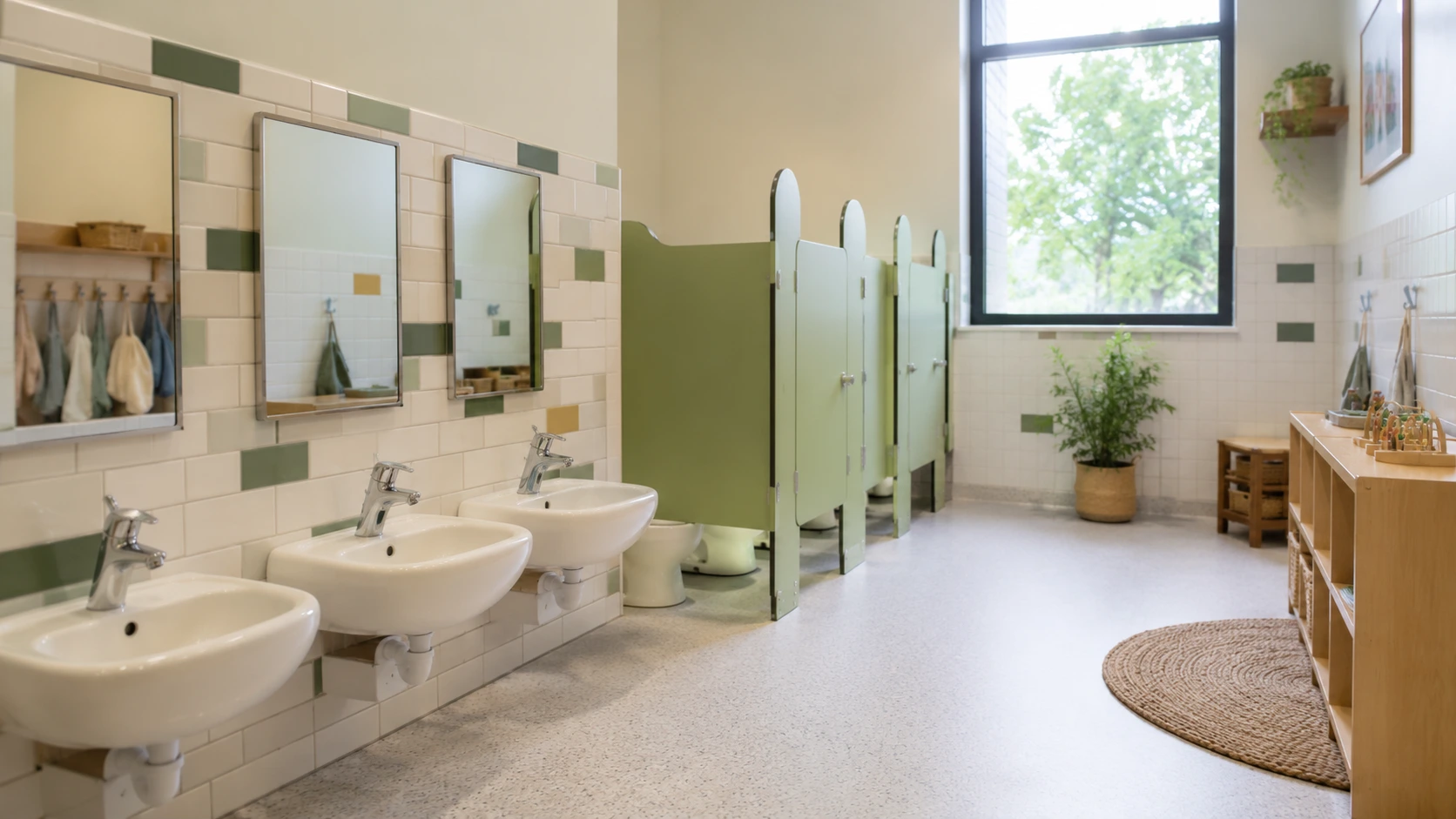
At its core, the regulation requires schools to promote a safe and healthy environment for diapering and toileting and to put a written plan in place with clear, age-appropriate routines covering student privacy, hygiene, and supervision. Schools must provide and maintain appropriate space for restrooms and diaper-changing areas, keep those areas clean and properly equipped, and stock the supplies needed to do the job safely and with dignity. The rule also requires annual training on health and safety procedures for all relevant staff, so the adults responsible are working from a standard rather than improvising.
Two provisions matter enormously for families. First, schools cannot suspend, expel, or exclude a child from enrollment or school programs based on their toileting status, which means a child cannot be shut out of public schools simply for not yet being potty trained. Second, toileting accidents must be handled, in the words of the rule, "with sensitivity and without punishment, exclusion, or shaming." For any parent who has watched a young child carry that kind of embarrassment home from school, that single line is the heart of the new policy.
Until this year, New York had no uniform standard at all. The protocols grew out of Chapter 361 of the Laws of 2024, which added a new provision to the state Education Law directing the Commissioner of Education to create statewide rules. The legislation, sponsored by State Senator John Mannion and Assemblymember Michael Benedetto, was built on a straightforward premise. Children deserve to be treated with care and dignity, and the school staff who assist them deserve clear, consistent guidance instead of a different unwritten rule in every building.
The need was felt most acutely in classrooms serving students with disabilities. Supporters argued that universal guidelines help schools provide a least-restrictive environment for the children who stand to benefit most. The educators closest to the work agreed. NYSUT, whose school-related professionals are often the ones handling these tasks, framed dignity-centered guidance as something that "can't come fast enough."
This is genuinely a statewide rule, not a New York City one. It applies to school districts, boards of cooperative educational services known as BOCES, special act school districts, approved private schools serving students with disabilities, state-supported schools for the blind and the deaf, and approved preschool special education programs from Buffalo to Long Island.
In practice, it most affects the youngest learners, the three- and four-year-olds in prekindergarten and preschool students with disabilities, along with school-age students who need diapering or toilet learning support because of an intellectual or developmental disability or another impairment. The rule explicitly recognizes that toileting independence develops differently from one child to the next, which is a meaningful shift away from treating a delay as a behavior problem.
If there is friction in the rollout, this is where it lives. The regulation sets the standard, but each district must decide which staff carry it out, and that decision has sparked real debate across the state. During the public comment period, some educators argued that potty training should remain a parent's responsibility, with one commenter calling the expectation that schools toilet-train children flatly unacceptable. The Education Department's position, grounded in the 2024 law, is that schools must provide support regardless of where a child is in the process.
School nurses have raised a sharper concern. A petition opposing an earlier draft argued that "toileting is not a nursing function," warning that pulling a building's only medical professional into routine hygiene duties could cost precious seconds during an actual medical emergency. In most schools, the day-to-day work falls to teaching assistants and paraprofessionals, the same lower-paid support staff whose pay and workload have been the subject of a long-running debate over how New York compensates the people who keep classrooms running. A mandate without the staffing and funding to back it can quietly become one more unpaid expectation.
New equipment, dedicated changing space, and annual training are not free, and the rule lands on districts already managing tight budgets. The underlying legislation projected no direct state fiscal impact, which means the practical costs of facilities, supplies, and staff time largely fall to local schools. For families trying to understand how a district absorbs a new mandate like this without cutting somewhere else, it helps to see where New York's school dollars actually go in the first place.
If your child is in prekindergarten, attends a preschool special education program, or has an IEP that touches on toileting support, now is the time to ask your district for its written diapering and toileting plan. You have the right to know how your child's privacy will be protected, how and when you will be notified, who is designated to provide help, and exactly how accidents are handled. The rule's promise of dignity only holds if parents know it exists and hold their schools to it.
The state's Office of Early Learning has published a dedicated Diapering and Toileting Regulations page along with a detailed FAQ to help families and schools understand the requirements. And because toilet learning so often straddles home and school at the same time, parents working through it on both fronts can find practical, judgment-free support on navigating potty training without the pressure.
This is a small rule carrying an outsized message. New York is telling every public school in the state that a child's bathroom needs are not a discipline issue, an inconvenience, or a reason to be sent home. They are a basic part of caring for young learners and students with disabilities. The harder part now is execution, making sure the staff who do this work are trained, supported, and fairly paid, and that no family in any corner of New York is left guessing what their school will do. The standard has finally been set. The real work is living up to it.


Comments (0)
No comments yet — be the first to share your thoughts.
Leave a comment