

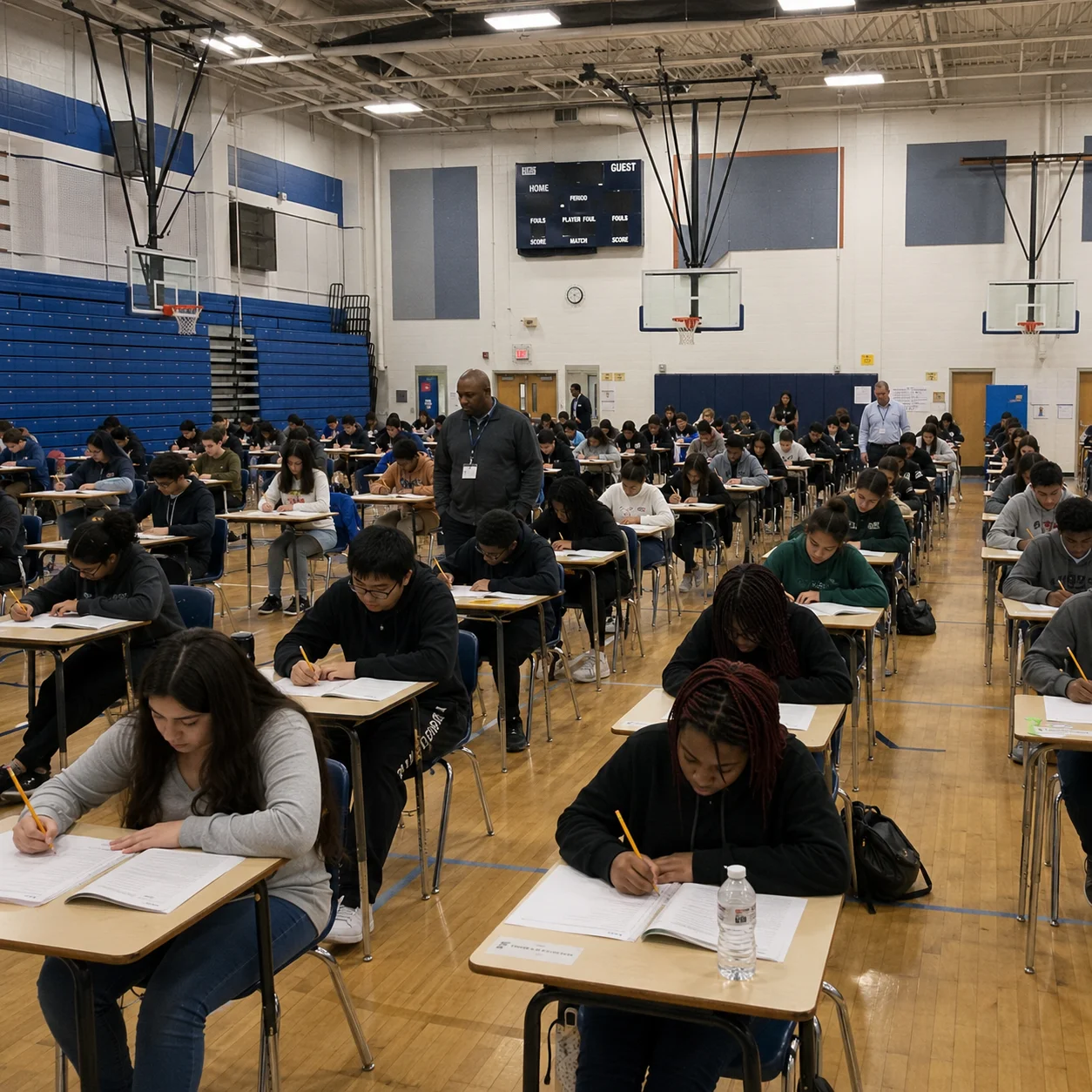
For three generations of New York families, the Regents exam was a rite of passage as fixed as the seasons. You studied, you sweated through a June morning in a silent gymnasium, and a passing score was the price you paid to walk across the stage. That machine, one of the oldest standardized testing systems in the country, is now being dismantled. If you are a New York parent trying to understand what your child actually needs to graduate, the honest and slightly unsettling answer is that the rules are changing underneath everyone at once.
Here is the direct version, the part to tell your teenager at dinner: the Class of 2027 is expected to be the last cohort required to pass Regents exams to earn a diploma. Beginning in the fall of 2026, most New York high school students will no longer need to pass those exams to graduate, and by 2029 a fully overhauled set of graduation requirements takes effect for students entering high school. The state is moving from counting seat time and exam scores toward a competency-based diploma that asks students to demonstrate what they can actually do.
The framework driving this is the NY Inspires initiative, and its centerpiece is what officials call a Portrait of a Graduate, six high-level attributes every student is meant to demonstrate. These include critical thinking, effective communication, creativity, innovation, and global citizenship. Instead of proving mastery through a single timed exam, students will be able to show readiness through research projects, internships, capstone work, and other performance-based assessments. The Board of Regents and the State Education Department have framed it as a move away from a diploma that certifies attendance toward one that certifies ability.
The people at the top are speaking in the language of transformation. Commissioner Betty A. Rosa said the goal is "ensuring that a diploma represents something meaningful, a demonstrated readiness." Chancellor Lester W. Young, Jr. called the effort "a bold reimagining of what education can and should be." For families who have long felt that a single test score is a thin measure of a young person, the philosophy is genuinely appealing. A student who freezes on exams but builds a remarkable portfolio would finally have a path that reflects their real strengths.
And here is where a supportive story turns into a cautionary one. As of this summer, the state has announced the destination without publishing the map. The Education Department has not yet released the detailed new graduation requirements, and officials have said only that specifics will arrive early in the 2026-27 school year. That is a remarkable amount of uncertainty for a change already scheduled to begin this fall.
Educators are not hiding their frustration. Robert Effinger, a teacher at the Bronx High School of Business, put it plainly: "There's no information" currently available for teachers to plan their instruction around. The unease reaches into the Board of Regents itself, where one member acknowledged that even her own child is unsure whether the exams still need to be passed. When the people writing the policy cannot answer the question for their own kids, families are right to feel unsteady.
The deeper worry is about standards. Erick Espin, an educator at Washington Heights Expeditionary Learning, and others have voiced concern that schools could lower graduation bars without what he called "serious guardrails." Alren Benjamin-Gomez of Education Trust-New York was blunter, describing the rollout as "poor policy" and "poor implementation." Advocates warn of a "wild west" scenario in which each district interprets competency differently, so that a diploma in one town certifies something meaningfully different from a diploma one county over. For a New York family weighing a move, a district transfer, or a college application, that inconsistency is not academic. It is the difference between a credential that travels and one that does not.
Strip away the politics and the practical guidance is manageable. If your child is in the Class of 2027, plan as though Regents exams still matter, because for that cohort they do. If your child is younger, the ground will shift during their high school years, and your job is to stay close to your specific district's guidance as it emerges, rather than assuming the rules your older kids followed will still apply.
Parents of students with disabilities should pay particularly close attention. The Regents system carried a well-developed set of alternative pathways and appeals, and how those protections translate into a competency model is one of the many details the state has not yet spelled out. If your child has an IEP or a 504 plan, this is the year to ask your school directly how the transition affects their graduation path, and to get the answer in writing. Advocacy works best when it starts early, before a policy hardens into practice.
Families weighing college should also keep perspective. Admissions officers read applications in the context of a student's school and state, and New York's shift toward portfolios, capstones, and demonstrated competency mirrors where much of higher education has already been heading. A well-documented research project or internship can tell an admissions committee more than a Regents score ever did. The risk is not that the new model is inherently weaker. It is that during the transition years, colleges, employers, and even neighboring districts may not yet know how to read a New York diploma consistently, and that ambiguity falls hardest on the families with the least room to absorb it. Keeping careful records of your child's coursework, projects, and any credentials they earn is cheap insurance against a system still learning to describe itself.
It is worth remembering that New York parents have real leverage when they use it. This spring, voters across Long Island demonstrated exactly that kind of engagement, and you can see how local decisions play out in our coverage of NY School Budget Vote Results: Who Passed and Who Failed. The same muscle, showing up, asking questions, and holding districts accountable, is exactly what this diploma transition will require. For more on how state decisions land in local classrooms, our News and Updates section tracks the policy as it develops.
The state secured about 2 million dollars to help schools adapt, a figure that looks modest against the scale of retraining teachers and rebuilding assessment systems across roughly 700 districts. That gap between ambition and resources is the quiet risk running under this entire reform. The vision, a diploma that means something more than a bubble sheet, is one many New York parents have wanted for decades. The execution is where it will be won or lost.
New York is attempting something genuinely ambitious, a first-in-the-nation move toward a competency-based high school credential. If it works, it could produce graduates whose diplomas reflect real capability rather than test-day endurance. If it stumbles, the cost lands on the students caught in the transition, the ones who will graduate into whichever version of the rules happens to exist the year they turn eighteen. For now, the smartest thing a New York family can do is stay informed, ask their district pointed questions, and treat this not as a done deal but as a policy still being written, one where an engaged parent's voice genuinely counts.



Comments (0)
No comments yet — be the first to share your thoughts.
Leave a comment