

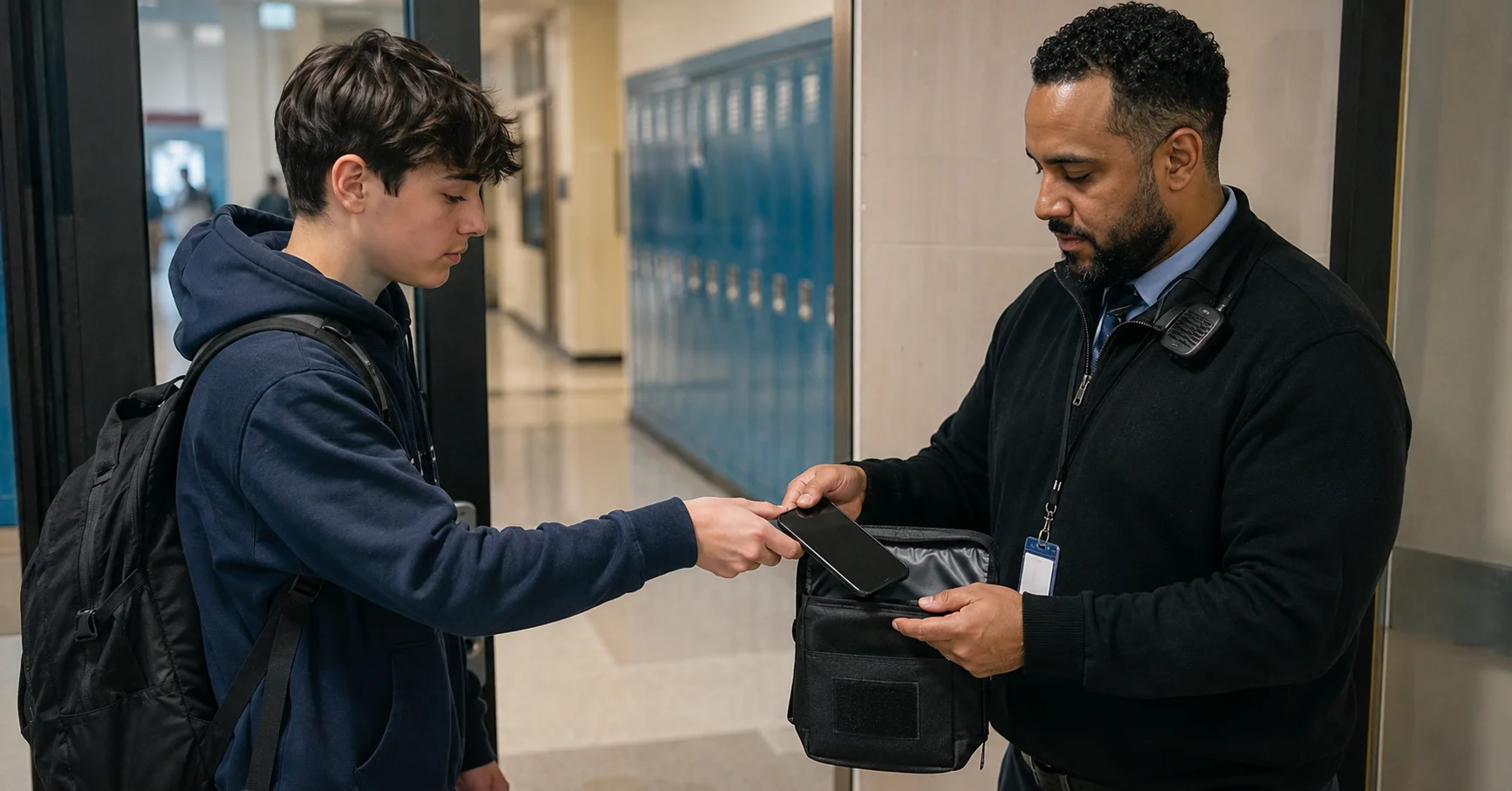
Last September, hundreds of thousands of New York students walked into buildings where the phone in their pocket became, for seven hours, effectively off limits. Some schools used locking pouches, others used labeled cubbies, or a basket by the classroom door. The policies varied, the grumbling was loud, and then, for the most part, the school year simply happened. One year later, the experiment is no longer an experiment. It is the baseline, and this fall is when we find out what it actually did.
If you are a parent sending a child back into a New York classroom, the direct answer is this. The statewide policy on phone-free schools is not new anymore, it applies all day, and the coming year brings the first real accounting of how it is being enforced. What follows now is what changed, what stayed the same, and what to watch.
New York's policy took effect for the 2025-2026 school year, making it the most populated state in the country to adopt a full day approach.
New York continues to lead the nation, Governor Kathy Hochul said in announcing the statewide policy.
The rule is a bell-to-bell restriction, which is the phrase that matters most. It does not mean phones vanish during class and reappear at lunch. It covers the entire school day, including lunch, recess, study halls, and time between periods, and it applies across public districts, charter schools, and BOCES programs.
The state paired the mandate with money, roughly 13.5 million dollars to help schools buy storage solutions, whether that means pouches, lockers, or classroom caddies. Crucially, the law did not hand down a single statewide procedure. Each district wrote its own student cell phone ban policy in consultation with parents, students, and staff unions, which is why the approach at your child's school may look nothing like the one across the county line. For a sense of how districts juggle overlapping state mandates and the budgets behind them, our coverage on NY School Budget Vote Results for 2026-2027 is a useful companion.
The most common fear among parents was that a blanket rule would ignore genuine needs. The law tried to account for that. Devices are permitted where a documented medical necessity exists, such as a student managing a condition with a phone based monitor. They are allowed for translation for multilingual learners, in emergencies, and when a teacher authorizes use for a specific lesson. Students who are caregivers can be accommodated on a reviewed basis.
For families who rely on formal supports, the key detail is that IEP and 504 accommodations override the default. If a student's plan calls for a device or an app, that plan controls. Parents heading into this year should confirm, before the first bell, that any needed accommodation is written into the plan rather than handled as a verbal understanding, because a written plan is what the policy is built to honor.
The loudest objection last year had nothing to do with academics. It was safety. Parents wanted to reach their kids, especially in a crisis. The law does not conceal that concern. It requires every district to maintain a method for parent communication during the day, through the front office, a monitored classroom line, or a similar channel.
The honest tradeoff is that you will not text your child directly at noon the way you might have two years ago. For most families, the adjustment turned out to be manageable once the school made its contact method clear. If your school has not spelled out exactly how to reach your child in an emergency this fall, that is the first question worth asking at back to school night.
Why year two is the one that counts
Year one was about logistics, getting pouches ordered and routines built. Year two is about evidence. Beginning September 1, 2026, schools must publish annual reports that include demographic data on disciplinary actions tied to the policy, along with an analysis of any disparities. That reporting requirement is the quiet heart of the whole law.
The reason it matters is simple. Rules like this succeed or fail on enforcement, and enforcement is where bias tends to hide. The mandated school discipline data will show, for the first time, whether the phone rules are being applied evenly or whether certain students are being written up far more than others for the same behavior. For anyone tracking equity in their district, those reports are worth reading the moment they post.
One guardrail is already built in. A student cannot be suspended solely for breaking the phone policy. The intent was to keep a device infraction from snowballing into lost instructional time, which would defeat the point. Watch whether your district honors both the letter and the spirit of that limit.
Whether the promised drop in classroom distraction shows up in real outcomes, in grades, in behavior referrals, in how students describe their own focus, is exactly what the coming year of data should begin to reveal. Narrative ran the conversation last year. Numbers can run it this year. For the broader picture of how Albany keeps reshaping what schools must deliver, our playbook on New York's Portrait of a Graduate crosswalks tracks the same shift from a different angle.
It is worth naming what the data cannot settle on its own. A drop in referrals could mean students are more focused, or it could mean staff simply stopped writing up a rule they find hard to enforce. A rise could mean stricter enforcement rather than poor behavior. Numbers give parents a starting point for the right questions at a board meeting, not a finished verdict. The districts that handle this well will publish the figures and then explain them, rather than letting a single chart stand in for the whole story.
There is a longer game here too, one that reaches past any single family. New York is the largest playing field in the country for this policy, and the rest of the nation is watching what its data shows. How honestly districts report, and how carefully parents read, will shape not only local practice but the national argument about phones and childhood that has been running on feeling for years.
Your back-to-school checklist
A few practical steps for back-to-school 2026. Confirm your school's exact storage method and daytime contact procedure. If your child has an IEP or 504, verify any device accommodation is documented before day one. Read the district policy for the specific consequences of a violation, and note that suspension is off the table for the phone rule alone. When the first discipline report posts after September, read it. This is the corner of New York State education policy where informed parents genuinely shape how a rule lands, district by district, child by child.
The phone ban is no longer the new thing everyone argues about. It is the water your child swims in at school. The families who do best with it this year will be the ones who stopped debating whether it should exist and started making sure it works the way it was written to.



Comments (0)
No comments yet — be the first to share your thoughts.
Leave a comment