

Most New Yorkers still think of state college aid as something for the poorest families, a grant that disappears the moment a household earns a decent middle-class living. For years that was close to true, because the income ceiling on the Tuition Assistance Program sat at $80,000 for a dependent student. It is not true anymore, and the first full accounting of what changed arrived this month in the Higher Education Services Corporation's annual report for 2025-26, which Gov. Kathy Hochul announced on Nov. 3.
The headline figure is large enough to matter to anyone who pays state taxes. HESC distributed more than $830 million in Tuition Assistance Program aid to 338,840 students in the year that ended June 30, 2026, inside a total of roughly $971 million across all of its grants and scholarships. Of those TAP students, 152,438 were newly eligible because of the income threshold increase the state passed the year before, according to the HESC 2025-26 annual report. That is nearly half of the program's recipients drawn from families who would have been turned away under the old rules.
The change came in the state budget enacted in May 2024. For a dependent student, the limit on the family's New York State net taxable income rose from $80,000 to $125,000; for independent students, it rose from $40,000 to $60,000 for those who are married without dependents and from $10,000 to $30,000 for single students. The same budget doubled the minimum award from $500 to $1,000, so even a family near the top of the new range now receives a check worth counting. The maximum award stands at $5,665 a year.
Those numbers look modest until you set them beside what a public degree costs in New York. Resident undergraduate tuition at SUNY's state-operated campuses is $7,070 for 2026-27, held flat from the year before under a resolution the SUNY trustees adopted in June. A student who qualifies for the full TAP award therefore has about four of every five tuition dollars covered before federal Pell Grants, the Excelsior Scholarship or any campus aid enters the picture, and the average TAP recipient last year received $3,210.
The report's most striking line is about outcomes rather than inputs. It states that 54 percent of SUNY students and 72 percent of in-state CUNY undergraduates attended tuition-free last year, through TAP combined with Excelsior and other awards. Excelsior alone sent more than $81.2 million to 20,342 students at public colleges, but the larger engine is TAP, which reaches private and independent campuses as well as SUNY and CUNY. For a state that spends heavily on its public universities, that is the return taxpayers should care about: whether the money turns into enrolled students who do not have to borrow for tuition.
The second change in the report will matter most to adults who have been shut out of college aid for years. HESC folded its older part-time programs into a single Part-Time TAP in 2025-26, and students can now qualify while taking as few as three credit hours a semester, down from six. That is one course. For a parent working full time, a home health aide chasing a nursing prerequisite, or a laid-off worker retraining at a community college, one course a semester is often the only realistic pace, and until last year it fell below TAP's floor.
Veterans picked up a quieter expansion of their own. Since July 2025, a veteran with at least four years of active-duty service no longer has to meet a combat requirement to qualify for the Veterans Tuition Awards, and the state says the number of veterans receiving support rose by nearly 70 percent. In dollar terms the program is small, about $2.5 million to 581 students last year, but for a service member leaving the military without a combat deployment on the record, it turns a closed door into an open one.
Even the cost of applying fell. During College Application Month in 2025, about 130 colleges and universities waived their application fees on nearly 300,000 submissions, which the state estimates saved families $15 million, and 670 high schools took part. An application fee sounds trivial to a household with savings, yet it is exactly the kind of friction that can quietly trim a first-generation student's list from six colleges to two. When the fee disappears, the list grows, and a longer list gives a student more financial aid offers to compare in the spring.
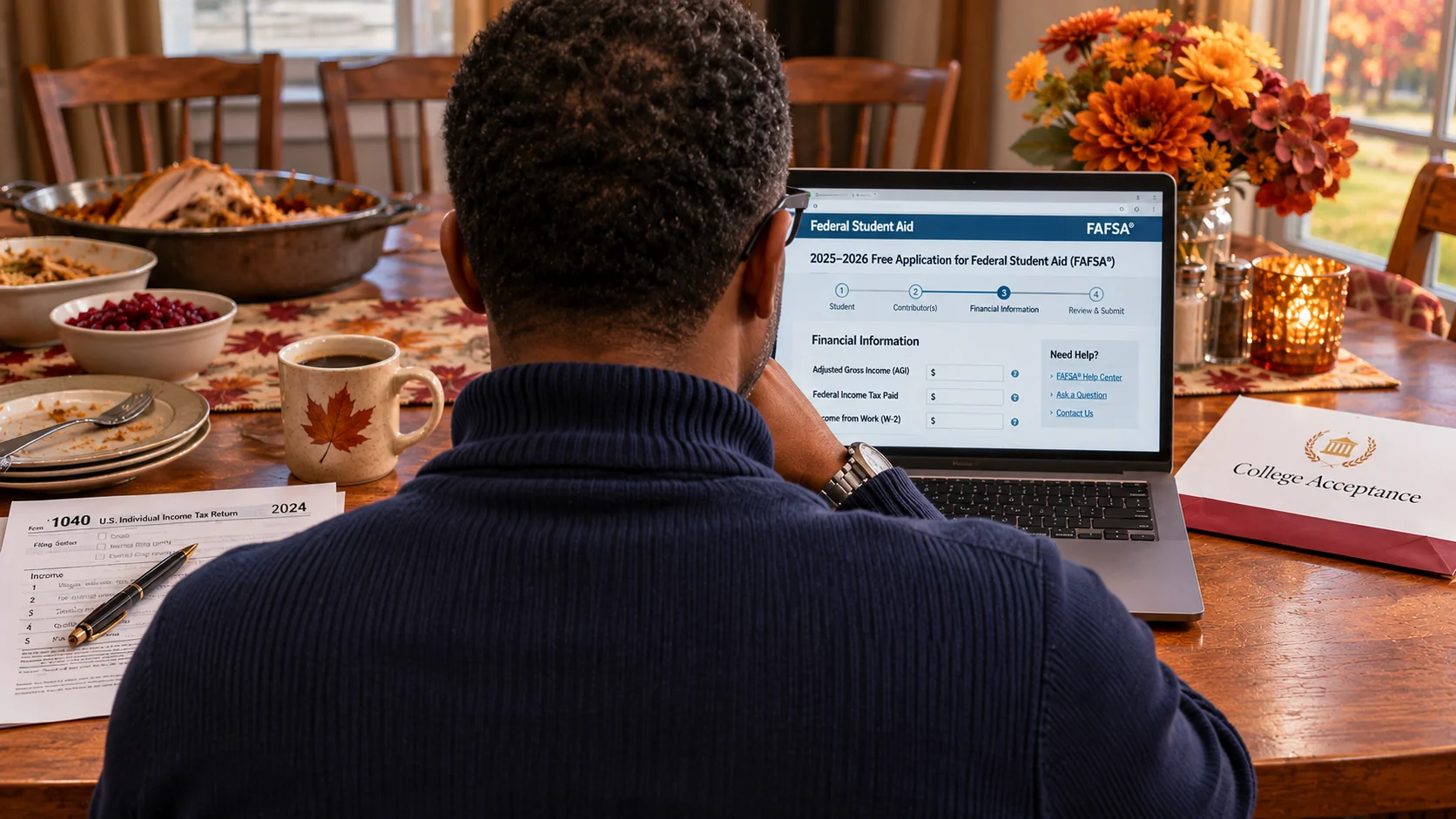
There is a catch, and it is the same catch that has always shadowed this program. Every dollar of TAP depends on two forms filed every year: the federal FAFSA and the separate state TAP application. New York ranked sixth in the nation for growth in FAFSA completions by the end of June 2026, with a 5.8 percent increase over the class of 2025, and HESC counted more than 160,000 FAFSA submissions and 35,000 TAP applications in April alone. The two counts measure different things, but the lesson for families is plain: a FAFSA filed without the TAP application leaves state money on the table.
The income test is also easier to pass than most families assume. The $125,000 ceiling applies to New York State net taxable income, the figure left after deductions and exemptions, which for many households sits well below the salary number people say out loud. A family that ruled itself out five years ago on the strength of a paycheck, and never checked the line itself on its state return, may be eligible now under the new limits.
The cheapest seat in a New York college classroom belongs to the student whose family filed the paperwork.
Timing works in your favor this year. The 2027-28 FAFSA opened in September, the earliest launch in the program's history, and HESC lists June 30, 2028, as the TAP deadline for the 2027-28 academic year, so there is no reason to wait for spring. Filing early means a college's financial aid office can build a complete package before a family has to commit, and it means any problem with a tax transcript or a missing signature surfaces while there is still time to fix it. HESC also restored direct inbound calling in March 2026, so a family stuck on a question can now reach the agency by phone without reserving a callback first.
TheStandardNY has tracked the other side of this ledger too, and the pieces fit together. Our guide to CUNY enrollment, graduation and retention rates shows what happens after students arrive, and our roundup of scholarship deadlines for New York seniors covers the private money that can stack on top of state aid. TAP sits underneath both of them, because a student who never files never learns what the state would have paid.
If anyone at your table this holiday weekend is a high school senior, a current college student or an adult thinking about going back, take twenty minutes before the leftovers run out. Pull up last year's New York return, find the net taxable income line, and compare it with the $125,000 limit for dependent students. Then file the 2027-28 FAFSA at studentaid.gov and follow it with the TAP application at hesc.ny.gov the same day, because the second form is the one that unlocks the state's money.



Comments (0)
No comments yet — be the first to share your thoughts.
Leave a comment