

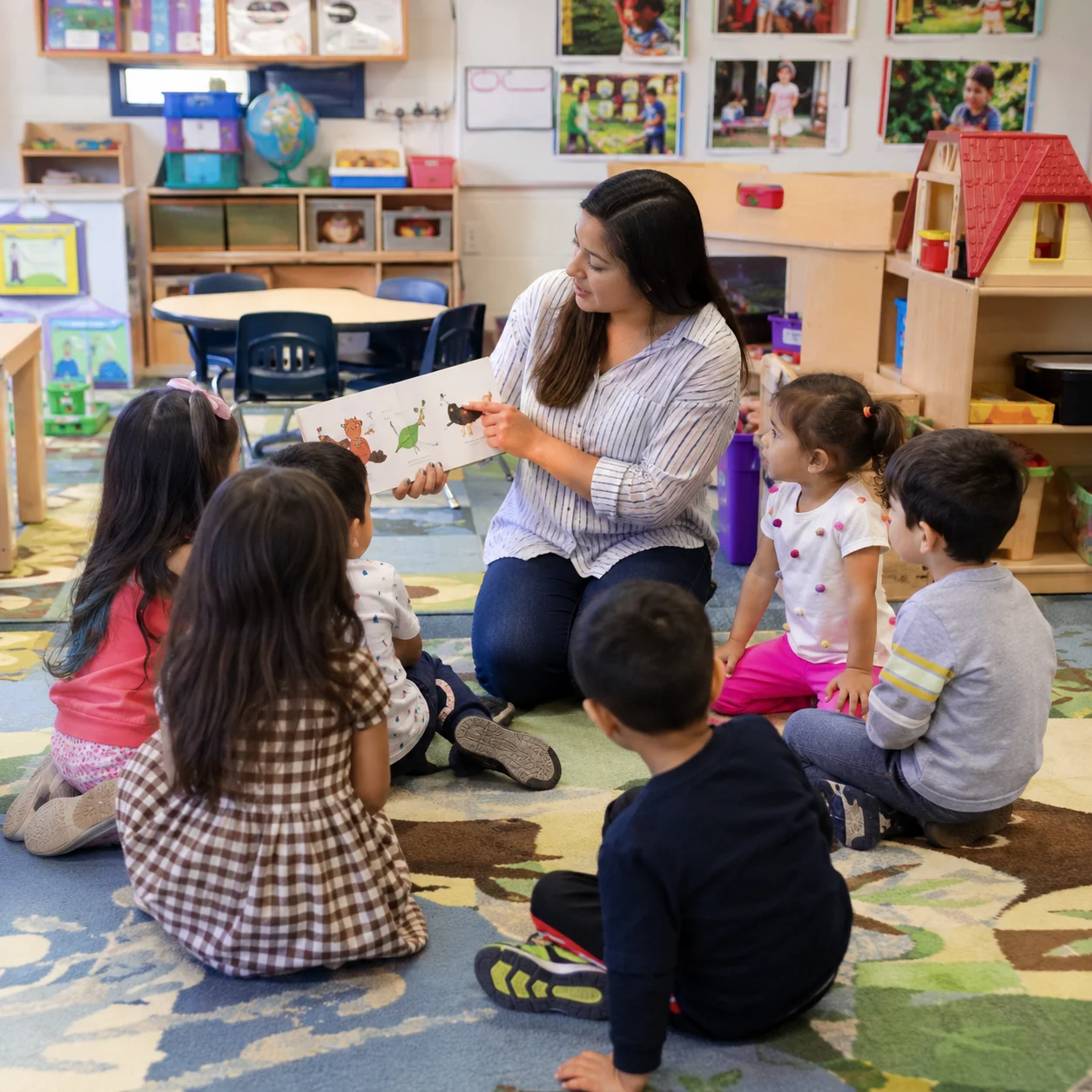
For three years, if your child attended a publicly funded preschool anywhere in New York City, a decision about how they learned to hold a crayon and sound out a word had already been made for them, downtown, before they ever walked in the door. Every program taught from the same book. As of late July, that is no longer true, and the reason it matters reaches well past the five boroughs.
The city has quietly loosened the preschool curriculum mandate that required nearly every early childhood program to use one product. Providers can now apply to teach from a menu of approved alternatives instead. It is the kind of policy shift that never trends, and yet it touches how roughly 140,000 of the state's youngest learners spend their days. For families across New York watching their own districts wrestle with top down academic rules, it is a preview of a fight that is coming everywhere.
Under the old rule, publicly funded programs for children age five and under had to use Creative Curriculum, a product from the vendor Teaching Strategies. Now the Mamdani administration lets programs apply to use one of eight pre approved options, a list that includes Units of Study, HighScope, Tools of the Mind, and Montessori, alongside choices built for English learners and children with disabilities. A city Department of Education spokesperson, Dominique Ellison, framed the change around trust in the people closest to the classroom, saying "Every early care and education program serves a unique community that they know best."
That is the whole move, and its modesty is the point. The city did not ban the old curriculum or order anyone to switch. It restored the ability to choose. After years in which uniformity was treated as the safeguard, curriculum flexibility is now the stated goal, and that reversal is what parents should actually track.
The mandate did not appear from nowhere. It was the centerpiece of a 2023 literacy overhaul branded NYC Reads, pushed by former Mayor Eric Adams and run by former schools Chancellor David Banks. The theory was defensible on paper. If reading scores were uneven and instruction was scattered, standardize it, put every classroom on the same evidence aligned page, and lift the floor. By the spring of 2024, roughly 90 percent of programs had switched over.
The trouble was what standardization felt like from inside a classroom. Veteran teachers of early childhood education complained that a single script, however well designed, could not flex to a room of three year olds who arrive speaking different languages and carrying different needs. The mandate came bundled with heavy assessment and reporting, and many educators experienced it less as support than as paperwork that crowded out teaching. The pushback was loud enough that a new administration made unwinding it an early priority. New York has been down this road at the K through 12 level too, and our look at how the state's reading push reshapes tutoring shows the same tension between a standardized method and a real child.
It is worth being fair to the original idea, because the impulse behind it was not villainous. Reading outcomes in the earliest grades really are uneven, and a scattershot patchwork of methods really can leave the most vulnerable children behind. Standardization was an attempt to guarantee a baseline, to make sure a four year old in one neighborhood was not getting a weaker start than a four year old across town. The reversal now underway is not a verdict that the goal was wrong. It is a bet that the goal is better reached by trusting trained teachers than by scripting them, and reasonable people who care about kids land on different sides of that bet.
A parent in Buffalo or on Long Island might reasonably ask why a New York City preschool rule belongs on their radar. The answer is that the argument underneath it is statewide. New York is in the middle of rewriting what school is supposed to produce, from the diploma overhaul to new expectations for what graduates should know and do. Every one of those reforms runs into the same question the preschool fight just answered. Do you mandate one method and enforce it, or do you set a goal and trust local pre-K providers and teachers to reach it their own way?
The city just leaned, hard, toward the second answer for its youngest kids. Districts upstate and on the Island are making versions of that same call right now about reading programs, graduation pathways, and how tightly to script instruction. Watching how choice plays out in the largest system in the state is genuinely useful intelligence for New York families anywhere, because the same philosophical tug of war is heading for their board of education meetings. If your district is redrawing what it expects of students, our guide to what kindergarten readiness really means is a practical place to start the conversation.
Flexibility has limits, and parents should not overread the change. The GOLD assessment, also from Teaching Strategies, remains required even for programs that adopt a different curriculum. That means the observation and data collection piece that many teachers found burdensome is still in place, so a program can swap its teaching materials without escaping the paperwork that came with the old regime. Teaching Strategies, for its part, has received nearly 33 million dollars in city contracts since the summer of 2023, a reminder that a policy reversal on the classroom side does not automatically undo the business relationships underneath it.
The city has also not said how many providers have applied to switch or been approved, which makes the real world scale of the change hard to measure yet. On paper the door is open. How many programs actually walk through it, and how fast, is the number to ask about at your next parent meeting.
Here is what to do with all this before the school year starts. If your child is in a publicly funded city preschool, it is fair to ask the director whether the program plans to keep its current curriculum or apply for something else, and why. If you are anywhere else in the state, watch whether your own district frames its academic decisions as mandates or as choices, because that framing tells you how much say teachers and families will have. Ask how any program measures progress, since the assessment often outlasts the curriculum, as the GOLD requirement shows.
The bigger lesson is not about one vendor or one mayor. It is that the pendulum between standardization and local judgment swings, and it just swung, for the youngest students in the state's biggest district. New York spent three years betting that one curriculum for everyone was the safer choice. It is now betting the other way. Parents do not have to take a side in that debate to benefit from understanding it, because sooner or later it arrives at their child's school too. The families who ask the sharp questions now are the ones who will not be caught flat footed when it does.



Comments (0)
No comments yet — be the first to share your thoughts.
Leave a comment