

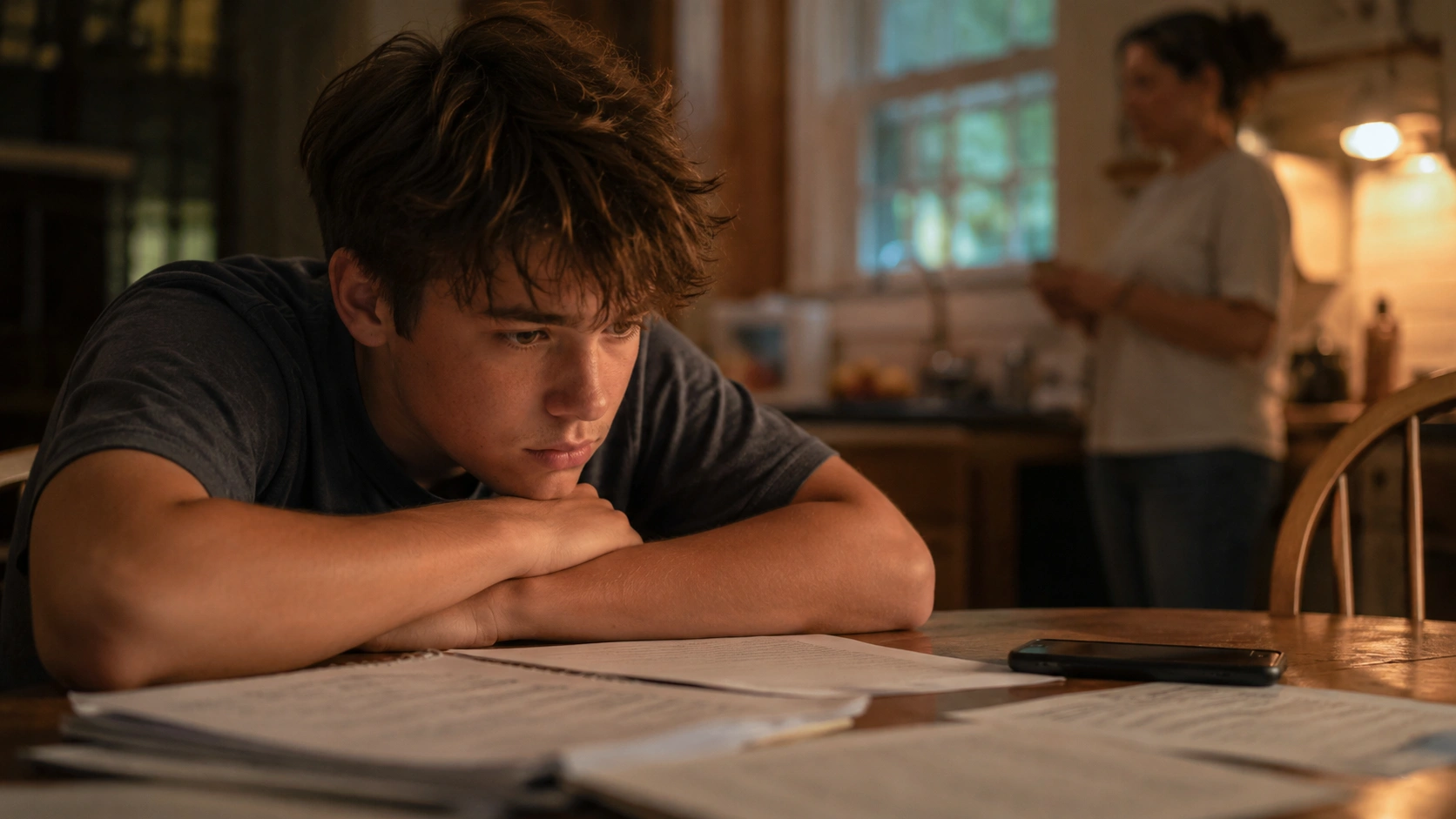
A teenager doesn't always announce distress in the language adults prefer. They may not say, "I am anxious." They may say, "Leave me alone." They may not say, "I feel overwhelmed." They may stop turning in work, sleep too much, snap at everyone, lose interest in the team they once loved, or disappear into a phone that seems to glow brighter as the room gets quieter.
For families and schools, the mistake is waiting for a crisis to become obvious. By the time a child is failing multiple classes, refusing school, cutting off friends, or showing signs of self-harm, the distress has typically been speaking for weeks, sometimes months. The language was mood, behavior, attendance, silence, conflict, fatigue, and withdrawal.
Teen mental health is not just a private family matter, or a school counseling matter. It sits between the home, classroom, peer group, phone screen, neighborhood, identity, workload, and the growing pressure young people feel to perform while pretending they are fine.
The First Signal Is Often a Change, Not a Diagnosis
Parents often ask a difficult question: how do I know whether this is normal teenage behavior or something more serious? The answer begins with change.
A teen who has always been quiet may not be in distress simply because they prefer solitude. A teen who has always been intense may not be in crisis simply because they argue. But when there is a sharp change in sleep, appetite, grades, friendships, hygiene, attendance, emotional reactions, or motivation, adults should pay attention.
A drop in grades may be an academic issue, but it may also be a symptom. Chronic lateness may be a discipline issue, but it may also be anxiety. A student who keeps asking to visit the nurse may be avoiding a class where they feel embarrassed, targeted, lost, or unsafe. A teen who laughs everything off may be using humor as camouflage.
The goal is not to diagnose children at the dinner table or in the hallway. The goal is to notice patterns early enough to respond with care instead of panic.
Schools See What Families May Not See
A parent may see the teen at their most exhausted. A teacher may see them in comparison to their usual classroom self. A coach may notice they are slower to join the group. A counselor may see that the student’s friend circle has changed. A dean may notice that small conflicts are becoming bigger ones.
This is why school mental health cannot live in one office. The counselor matters, but so does the classroom teacher. The attendance team matters. The coach matters. The security aide who greets students at the door matters. The cafeteria worker who notices a child sitting alone matters.
In New York schools, as elsewhere, students move through multiple adult spaces in one day. Each adult may only have a small piece of the story. The system becomes stronger when those pieces are connected responsibly, without turning every teenage mood into a disciplinary file.
Connectedness Is a Protective Factor
Public health guidance has repeatedly emphasized the protective role of strong bonds between young people, families, and school staff. A teen who feels known is more likely to be noticed before distress becomes dangerous. A teen who has one trusted adult in school has a place to land when the day becomes too heavy.
School connectedness does not mean students love every class or every rule. It means they believe at least one adult knows their name, notices their absence, expects something from them, and cares enough to follow up. That belief can be powerful.
Families can build connectedness at home by creating predictable check-in moments. Not interrogations. Not “What is wrong with you?” Not a lecture disguised as concern. Better questions are quieter: “What has felt heavy lately?” “Who have you been sitting with at lunch?” “What class feels hardest to walk into?” “When do you feel most like yourself?”
These questions do not magically solve depression or anxiety. But they open a door, and many teens need the door opened more than once before they walk through it.
Peer Groups Can Carry Both Support and Risk
For teenagers, peers are not background characters. They are the weather. A friendship conflict can alter the whole climate of a child’s day. A group chat can become a courtroom. A breakup can feel like public collapse. A rumor can follow a student from the bus to the bedroom.
Recent research and reporting have focused on the way adolescent mental health can be shaped by peer networks. That does not mean friends are dangerous or that struggling teens should be isolated. Isolation can deepen pain. The better lesson is that schools and families should take peer dynamics seriously.
If a teen suddenly changes friend groups, becomes secretive, avoids school events, loses confidence, or seems emotionally tied to the drama of a group chat, adults should not dismiss it as “just teenage stuff.” For a teenager, social belonging can feel like survival. When belonging is threatened, mental health can shake.
The Phone Is Part of the Room
Adults often talk about teen phone use as if the device is separate from the child’s life. It is not. The phone is where friendships happen, arguments continue, images are judged, invitations are seen, exclusions are discovered, and comparison never sleeps.
That does not mean every family solution is a total ban. It means parent support has to include digital awareness. Parents should know which apps their children use, when the phone goes away at night, whether the child is being harassed, whether group chats are escalating conflict, and whether the teen is using the screen to avoid sleep, homework, or uncomfortable feelings.
Schools have a role too. Phone policies should be clear, consistently enforced, and connected to learning and wellness, not just control. A school that limits phones during instructional time should also teach students why attention, sleep, privacy, and emotional space matter.
Attendance Is a Mental Health Clue
When a student begins missing school, arriving late, or asking to leave early, the question should not be only, “How do we enforce attendance?” It should also be, “What is the child avoiding, and what support would make return possible?”
Chronic absenteeism can be connected to transportation, caregiving responsibilities, housing instability, bullying, anxiety, depression, academic embarrassment, school climate, or family stress. A school response that relies only on warning letters may document the problem without solving it.
A better response brings attendance, counseling, family outreach, academic support, and student voice into the same conversation. The student may need a morning check-in. The parent may need a direct contact person. The teacher may need to know that missing work is connected to anxiety, not laziness. The school may need to repair trust before it can improve attendance.
What Parents Can Do Before It Becomes a Crisis
Parents do not need to become therapists. They need to become steady observers and early responders.
Start with rhythm. Notice sleep, food, schoolwork, friendships, grooming, anger, silence, and joy. A teen’s emotional health often shows up in routines before it shows up in words.
Lower the temperature of the first conversation. A teen who feels accused may defend the behavior instead of revealing the pain beneath it. Try, “I noticed you have been staying in your room more. I am not mad. I want to understand what has been going on.”
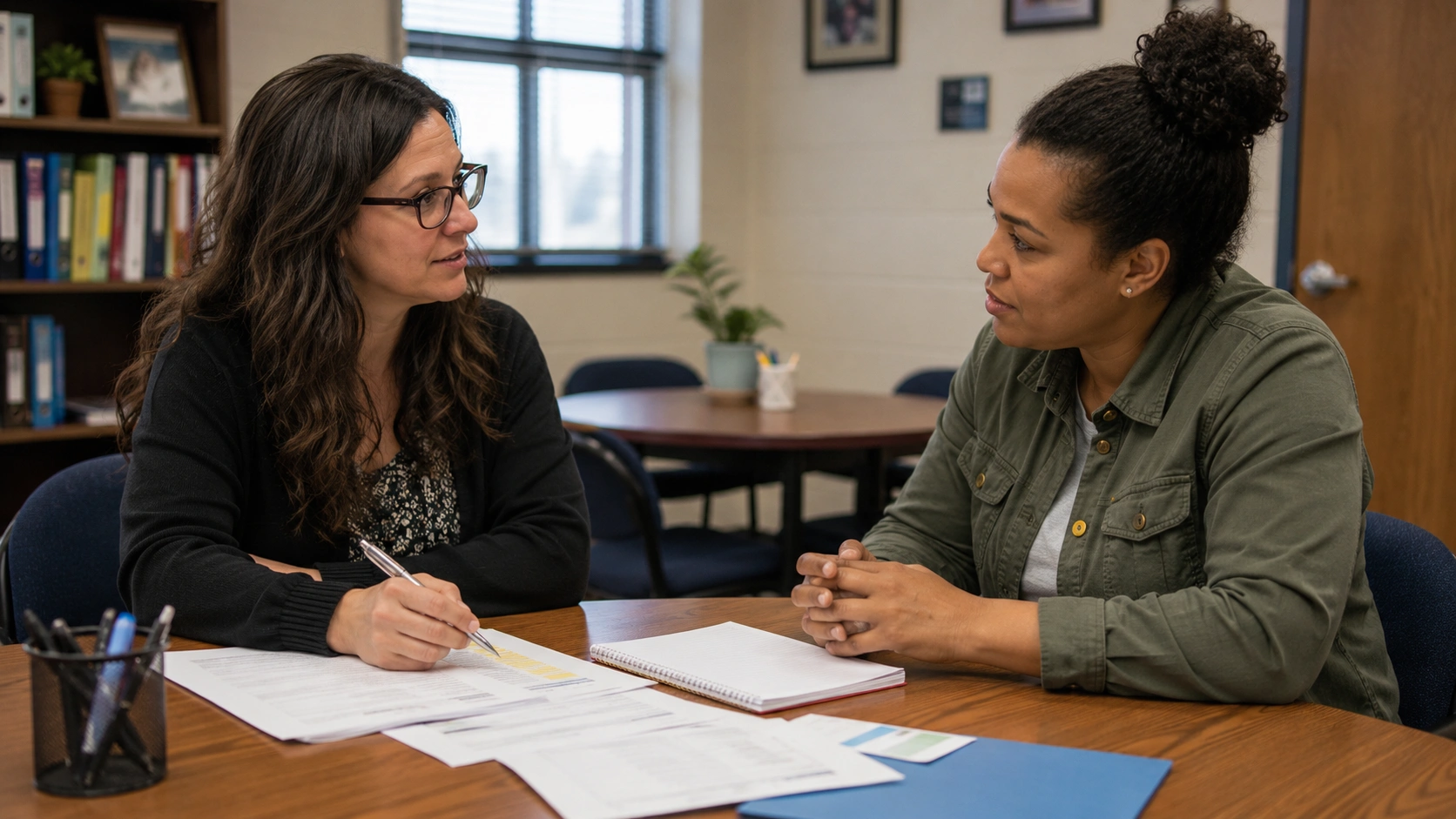
Contact the school early. Ask what teachers are seeing. Ask about attendance, assignments, peer concerns, and support options. If your child already has an IEP, 504 plan, behavior plan, or counseling support, ask whether the current plan still matches the current need.
Know when to seek professional help. If a teen talks about hopelessness, self-harm, not wanting to live, feeling unsafe, or being unable to function, families should seek immediate professional support. Love is essential, but love should not be asked to replace clinical care.
What Schools Can Do Before It Becomes a Crisis
Schools need systems that catch early signals. A teacher’s concern should have somewhere to go. Attendance patterns should be reviewed before a student disappears for weeks. Counselors should not be expected to carry the entire emotional life of a building alone.
A practical school approach includes regular team review of attendance, grades, behavior, and nurse visits. It includes clear referral pathways. It includes professional learning so staff can distinguish defiance from distress. It includes family communication that is respectful, timely, and specific.
Most of all, it includes a culture where asking for help does not feel like getting in trouble. Students should know where to go. Parents should know whom to call. Staff should know what to do when a child’s mood starts speaking in a language that looks like behavior.
The Standard Is Early Care
There will always be teenage moods. There will always be slammed doors, dramatic sighs, and days when a child answers a thoughtful question with a one-word grunt. Adolescence has never been a tidy season.
But adults cannot afford to confuse every sign of distress with attitude. The student who is withdrawing may be asking for help. The student who is angry may be scared. The student who stopped trying may be protecting themselves from the pain of failing again.
The standard should be early care. Not panic. Not punishment first. Not silence. Early care means families and schools agree that a child’s mood is information. It means adults notice, ask, document, connect, and follow through.
A teen’s mood is talking. The question is whether the adults around them have built a system willing to listen before crisis becomes the loudest voice in the room.



Comments (0)
No comments yet — be the first to share your thoughts.
Leave a comment