
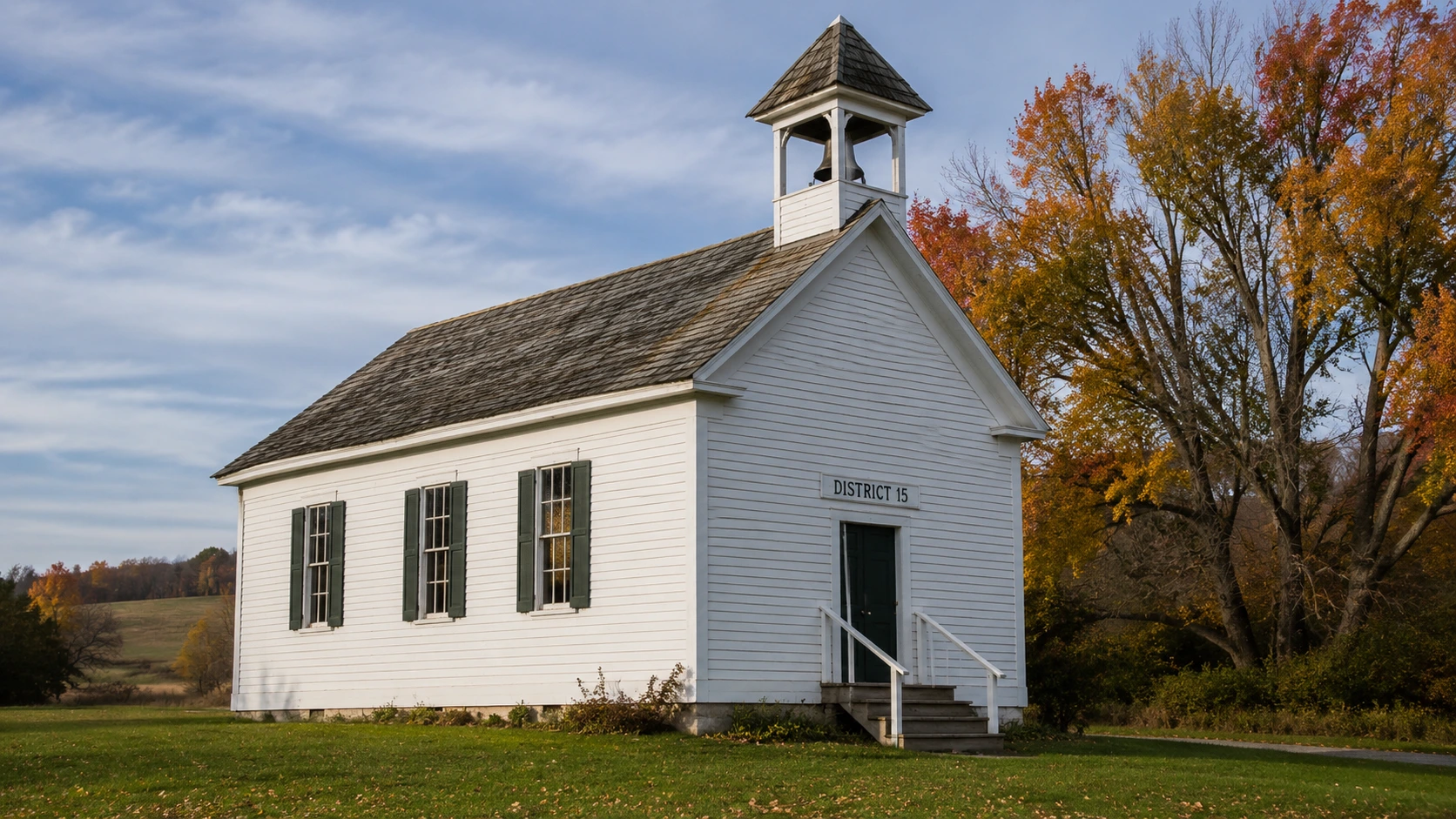
Three small religious schools in rural, central New York, Dygert Road, Pleasant View, and Shady Lane, have spent seven years at the center of a legal fight that reached the Supreme Court, sent back down, and landed, this week, in almost exactly the same place it started. A federal appeals panel looked at New York's school vaccine law a second time, under new instructions from the nation's highest court, and reached the same conclusion it reached in March 2025: the law stands. For the Amish families who brought the case, and for every New York parent watching to see whether the state's strictest-in-the-nation vaccine rule might finally bend, the answer this week was no.
How a Case About Storybooks Became a Case About Shots
The underlying dispute goes back to 2019, when New York eliminated religious exemptions from its school vaccine mandate following a serious measles outbreak concentrated in Rockland County and parts of Brooklyn. The state had allowed religious exemptions since 1966. After the repeal, medical exemptions remained available, but religious ones did not, a distinction that put New York in a small club of five states with no nonmedical opt-out at all. Three Amish schools that continued enrolling unvaccinated children were fined a combined 118,000 dollars starting in 2022. The schools and several parents sued, arguing the law violated their Free Exercise Clause rights under the First Amendment, in the case that became known as Miller v. McDonald. A federal district court dismissed the case in 2024, and the Second Circuit Court of Appeals affirmed that dismissal in March 2025, finding the law neutral and generally applicable and therefore not subject to the toughest level of constitutional scrutiny.
That should have been the end of it. Then, in December 2025, the Supreme Court did something it had never done before in a vaccine case. Without full briefing or a written opinion, it vacated the Second Circuit's judgment and sent the case back with instructions to reconsider in light of Mahmoud v. Taylor, a June 2025 ruling that gave Maryland parents the right to pull their children out of LGBTQ-inclusive storybook lessons on religious grounds. Mahmoud was a curriculum case. Miller v. McDonald is a public health case. The Supreme Court's one-line order asking a lower court to treat the second as informed by the first was, as legal commentators noted at the time, a real signal, even without an explanation attached to it.
What the Judges Actually Said This Time
The Second Circuit's answer, issued this week, was blunt. The same three-judge panel that ruled in 2025 reconsidered the case and again found the Amish schools' constitutional claims without merit. The court's reasoning leaned on a distinction it had already drawn the first time around: medical exemptions are narrow and tailored to a specific vaccine and a specific documented condition, while a religious exemption, by its nature, would apply broadly and unpredictably across an entire school population. Reviving that gap, the panel wrote, would cut directly against the state's interest in protecting public health and would risk recreating the exact clusters of low vaccination and lost herd immunity that drove the 2019 repeal in the first place.
The panel also rejected the comparison to Wisconsin v. Yoder, the 1972 case that let Amish families end formal schooling after eighth grade, and the case Mahmoud itself leaned on heavily. Yoder, the court noted, involved a law that threatened to dissolve the Amish community's entire way of life by forcing teenagers into an outside institution. New York's vaccine law does no such thing. It does not remove children from their schools or their community; it sets a health condition for attendance, a distinction the panel found meaningfully different from what Yoder addressed, even under Mahmoud's broader reading of parental religious rights. Ezra Wengerd, an elected representative for the Amish schools and one of the named plaintiffs, told a reporter the outcome was not a surprise. We kind of figured that is what would happen, he said.
The Case the Other Side Is Still Making
Religious liberty advocates who backed the Amish families have not treated this as settled, and their argument deserves a fair hearing on its own terms. Their position is that Mahmoud establishes a broader principle than a single storybook policy: that when government action substantially interferes with a parent's ability to raise a child within their faith, the burden shifts to the state to justify that interference under strict scrutiny, not the more forgiving neutral-and-generally-applicable standard the Second Circuit applied both times. From that view, a law that lets a family opt out of one lesson but not out of a medical procedure they consider religiously prohibited draws a line the Constitution should not permit government to draw. Groups including First Liberty Institute and Liberty Counsel have signaled that this fight is not over, and with the Supreme Court having already intervened once in this exact case, a second petition for review would not be a long shot.
What Actually Changes for New York Families
For now, nothing. There are still no religious exemptions to school vaccination requirements anywhere in New York, for public, private, or religious schools alike. The Department of Health's position has not moved throughout this entire seven-year fight: children attending daycare through twelfth grade must complete the required vaccine schedule to attend or remain in school, full stop, absent a qualifying medical exemption. The 118,000 dollars in fines against the three Amish schools remains in place. New York stays one of five states, alongside California, Connecticut, Maine, and West Virginia, that bar nonmedical exemptions entirely, meaning the practical stakes of this case were never confined to one upstate Amish community. Roughly nine million schoolchildren live in the two largest states, New York and California, with this kind of policy, which is part of why a case out of three small central New York schools drew national attention and a rare, unexplained intervention from the Supreme Court.
What to Actually Watch Next
Whether this ends here depends entirely on what the plaintiffs do next, and legal observers who tracked the first Supreme Court intervention are not ruling out a second one. The Second Circuit's reasoning this week, that a public health mandate is categorically different from a curriculum opt-out, is a coherent answer to the question Mahmoud raised, but it is an answer, not a foreclosure. If the plaintiffs petition again and the Supreme Court declines to take it up, that silence would functionally settle the question for now. If the Court takes the case directly this time, New York's seven-year-old law would face the kind of full briefing and argument it has so far avoided. Either way, the state's vaccine requirement remains exactly where it was on Sunday: on the books, being enforced, and one appeal away from a very different kind of scrutiny than it has faced up to now.

Comments (0)
No comments yet — be the first to share your thoughts.
Leave a comment