
There is a word that turns up every June in a handful of New York communities, and it sounds far gentler than what it does. The word is "contingency." On paper it describes a budget. In practice it describes a list of things that simply stop: the field trip that does not get booked, the junior varsity team that does not take the field, the equipment that does not get replaced, the building that the community group can no longer use on a Saturday. When a district lands in a contingency budget, it is not tightening its belt. It is operating under a state-imposed freeze that says the tax levy cannot rise a single dollar over last year's, and everything that does not fit inside that line has to go.
On Tuesday, June 16, a cluster of New York districts that had their spending plans rejected back in May got one more chance to avoid that fate. The results were a study in contrasts. Most got to yes, usually by going back and cutting. A few did not, and those communities now spend the summer absorbing what a freeze actually costs. This is the second act of a story we started tracking in May, when the first round of budget votes sorted the state into the comfortable majority and the troubled few. Here is how the reckoning landed.
A quick refresher, because the mechanics matter.
Every New York district outside the five big city systems must put its budget to a public vote on the third Tuesday in May. If voters say no, the board gets two choices. It can run a budget vote again, with the same or a revised plan, no later than the third Tuesday in June. Or it can skip the second vote and go straight to a contingency budget. The catch that gives the revote its tension: if a district holds a second vote and loses again, it does not get a third try. It is dropped into contingency automatically. June 16 was, for these districts, the last exit before the freeze.
Two other rules shaped what happened. A budget that raises the tax levy above a district's state-calculated tax cap needs not a simple majority but a 60 percent supermajority to pass, a steep bar that sank more than one plan. And looming over all of it was an unusually late state budget that left administrators guessing at their aid figures deep into the spring, building proposals on numbers that had not yet firmed up.
For most, the path to passage ran through the red pen. In Rome, where the original plan had failed in May by just 24 votes, the board trimmed $173,000 and shaved the levy increase from 2.89 percent down to 2.5 percent. The revised budget squeaked through on the revote, 1,104 to 1,065, a margin of 39 votes. A contingency budget there would have cut roughly $1 million.
On Long Island, Locust Valley reversed its May defeat with room to spare, passing a revised $99.99 million plan 1,407 to 874 after cutting about $286,000 and lowering its levy increase to 1.78 percent. Grand Island cleaned harder on the knife, slicing roughly half a million dollars and dropping its levy increase from 2.69 percent to 1.5 percent, then winning 2,650 to 1,340. West Canada Valley had the hardest math of the group, a plan that exceeded its tax cap and therefore needed a supermajority. The board carved its proposed levy increase from a startling 15 percent down to 9 percent, and voters cleared the 60 percent bar comfortably.
Then there was Ogdensburg, the outlier worth pausing on. The St. Lawrence County district did not trim a thing. It put the exact same $58.2 million budget back on the ballot, 3.99 percent levy increase and all, and simply made its case harder, walking the community through what a second failure would mean: a $648,500 shortfall and roughly 37 positions gone, including several special education teachers. This time it passed, 900 to 615. Ogdensburg is the proof that a revote is not only about the number. Sometimes it is about turnout and a clearer conversation.
No district came into June carrying more weight than South Country in Suffolk County. Its original budget had not just failed in May; it had been crushed, rejected by more than two to one against a 13.45 percent levy increase. The backdrop was a genuine fiscal emergency. The State Comptroller's office, in an enhanced review of the district's finances, found it on track for an $8.7 million deficit driven by unreasonable budget estimates, with no surplus to cushion the blow and a need to borrow millions just to balance the coming year. This was not a district overreaching. It was a district trying to climb out of a hole partly of its own making.
For the revote, the board came back with a leaner plan and a blunt list of what was being sacrificed, and the community responded. The revised budget passed by better than two to one. Turnout collapsed from the May blowout, which is the quiet pattern in revote season: the wave of opposition that defeats a budget in May rarely returns in equal force in June, and a smaller, more motivated electorate often flips the result. South Country avoided contingency, but the underlying repair work, the borrowing and the recovery plan, is only beginning.
For three communities, June 16 did not bring a reprieve. Randolph fell short again, 491 to 602. Lyndonville lost a close one, 292 to 327. And West Valley failed a second time as well. Under state law, all three are now bound to a contingency budget with zero levy growth, and the cuts that follow are not abstractions.
West Valley is a useful, uncomfortable case study, because it shows that a no vote is not always a vote against children. The district runs a single building for grades K through 12 and has lost around 200 students, and residents pushed back hard on a per-pupil cost that, by one taxpayer's math, was climbing past $60,000. The board, for its part, said its above-cap request was meant to offset a state foundation aid increase of just one percent against rising costs for student services and transportation. Both things can be true at once. The district may have asked for more than its community could bear, and the freeze it now faces will still land on actual classrooms. That is the bind a contingency budget creates. It resolves the tax fight by transferring the cost to students.
If your child attends school in Randolph, Lyndonville, West Valley, or any district that ends up under contingency, the practical guidance is the same. Watch for the board's communication laying out exactly which programs and positions are being cut, because contingency forces specific, itemized reductions rather than vague tightening. Show up to the meeting where those cuts are decided, since that is the room where a sports program or a field trip is saved or lost. And understand that the freeze is a one-year condition, not a life sentence; next May brings a fresh budget and a fresh vote, and the lesson most boards take from a contingency year is to come back with a plan the community will actually support. If you want the bigger picture of how a district's dollars get allocated in the first place, our breakdown of where New York school money actually goes is a useful companion.
Step back from the individual results and a clear shape emerges. New York school budgets are being squeezed from three directions at once: a tax cap that limits what districts can raise locally, state school funding increases that have not kept pace with the real cost of running a school, and a wave of taxpayer skepticism sharpened by an economy in which families feel every increase in their property taxes. The districts that passed their revotes mostly did so by cutting until the number felt tolerable. The ones that failed are now cutting anyway, just under a different name and without the levy revenue to soften it.
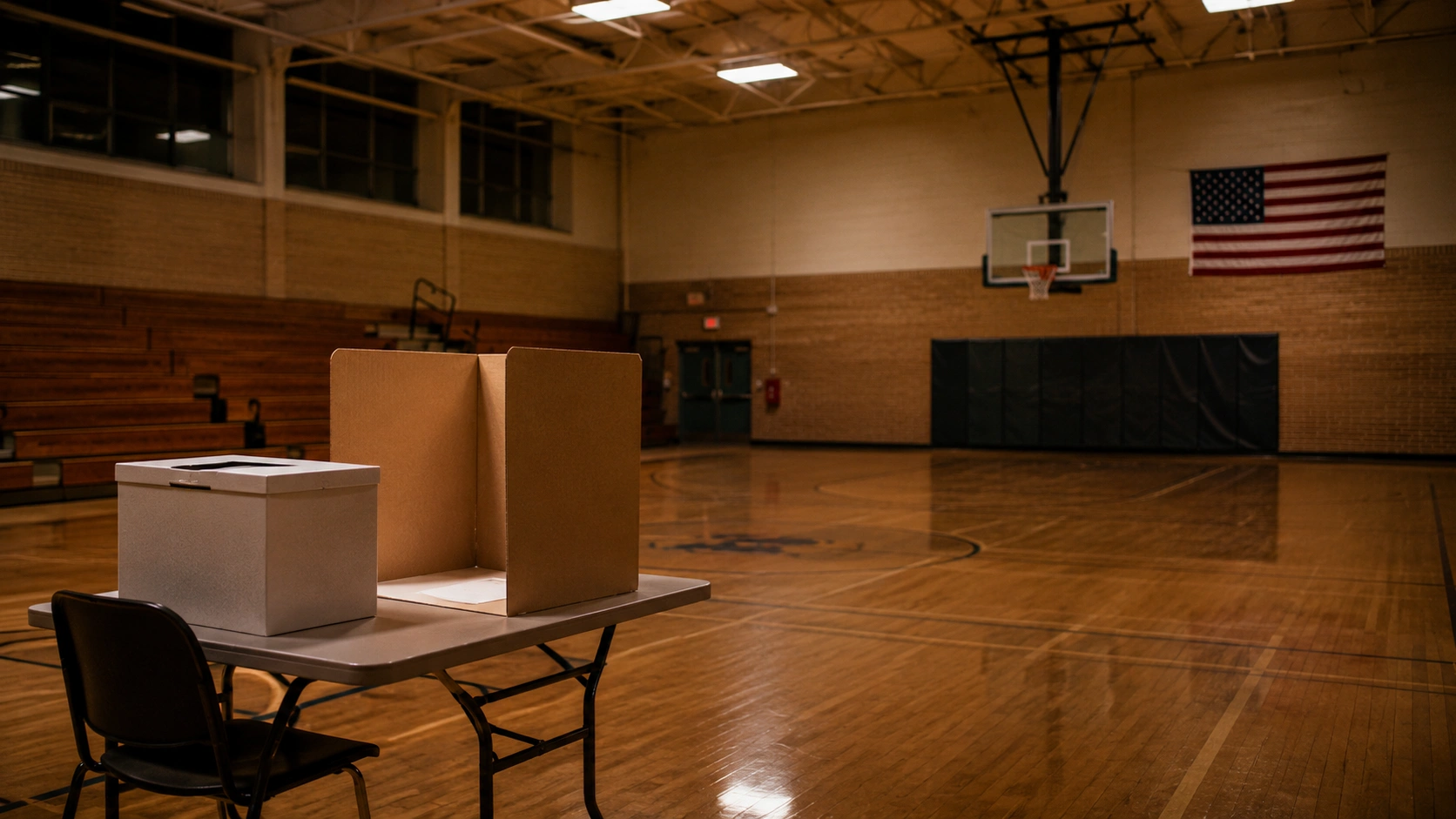
That is the real takeaway from the 2026 school budget revote cycle. The vote is local, but the pressure is statewide, and it is not letting up. For families, the season is a reminder that the most consequential education decisions are often made not in Albany but at a folding table in a school gymnasium on a Tuesday in June, by whoever bothers to show up.



Comments (0)
No comments yet — be the first to share your thoughts.
Leave a comment