

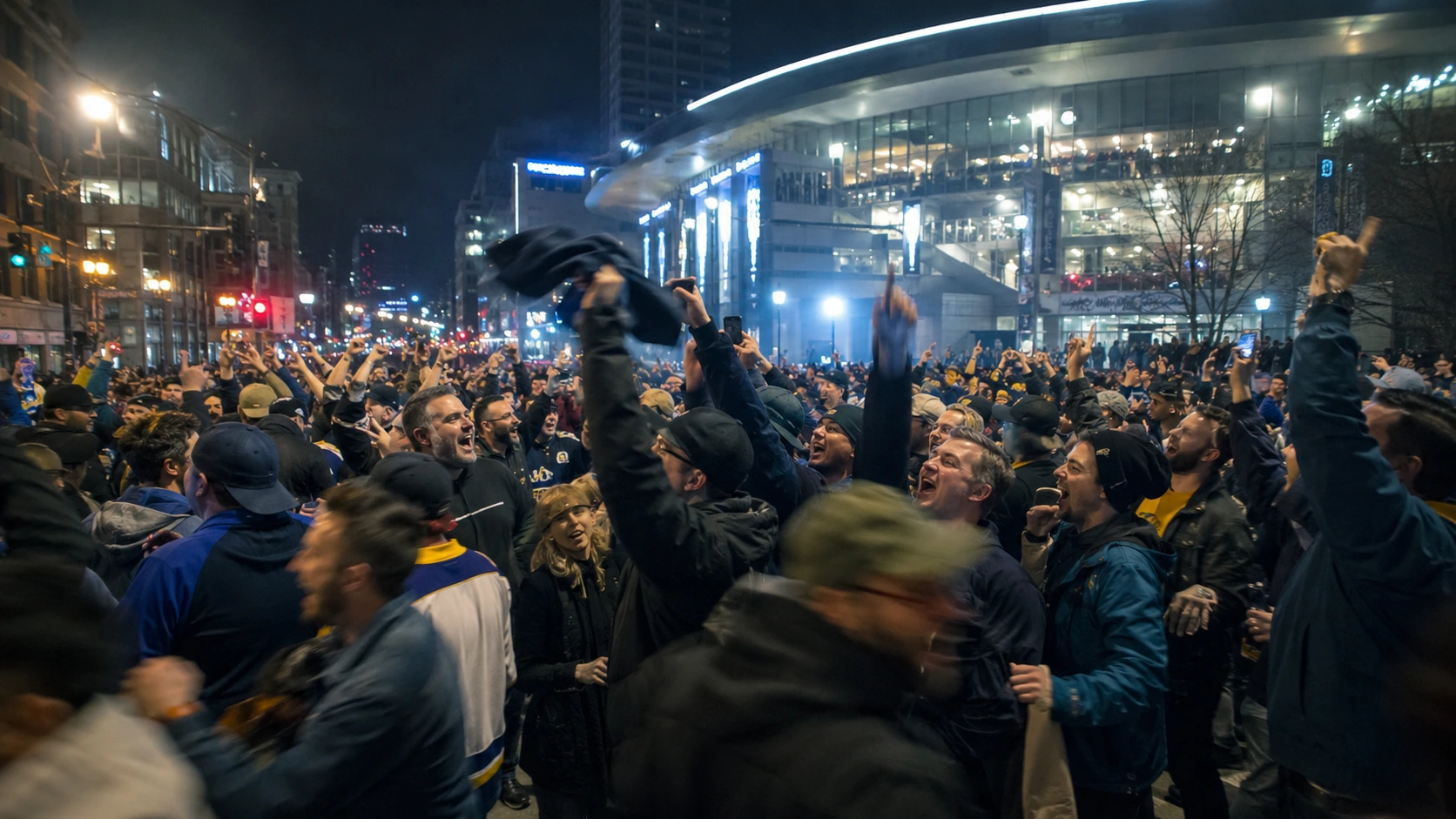
It was the kind of night people will describe to their grandchildren. Down 29 points, staring at a blowout, the Knicks clawed all the way back to win Game 4 by a single point on an OG Anunoby tip-in with 1.2 seconds left, the largest comeback in NBA Finals history. Inside Madison Square Garden, strangers hugged like family. Outside, the city emptied into the streets. For a few electric hours, a region that had waited since 1973 felt like one living, breathing organism.
And then, in pockets of that joy, something curdled. An NYPD van was left with a shattered windshield as crowds climbed onto trucks in Midtown. Later that night, a mob reportedly gathered to meet the visiting Spurs and threw objects at the team, with at least two projectiles aimed at Victor Wembanyama. It was not a one-night aberration. Two nights earlier, after a Game 3 loss, a watch party near Bryant Park unraveled into what police called pandemonium: 21 people arrested, officers injured, light poles and scaffolding climbed, cars jumped on, and a man in a Spurs jersey surrounded and attacked simply for wearing the wrong colors.
Here is the uncomfortable truth underneath the highlight reel. This is not really a sports story. It is a parenting story, a community story, and ultimately a question about whether we are teaching our kids to hold enormous feelings without putting their hands on someone else's property or someone else's body.
Let us be precise, because precision is fairness. The overwhelming majority of fans celebrated the way you are supposed to: loud, ecstatic, and harmless. The damage was done by a faction, and by many accounts a young one. Reports from the scene repeatedly described "young members of the fanbase" as the ones turning a party into a problem. Naming that honestly is not an attack on young people as a whole. It is the only way to talk seriously about youth behavior without smearing the thousands of teenagers and twenty-somethings who danced, chanted, and went home.
But a faction is still a signal. When a slice of a crowd treats a win as permission to destroy, and treats a stranger in an opposing jersey as a target, that behavior did not appear out of nowhere on a Wednesday night. It was rehearsed, or never corrected, somewhere long before the final buzzer.
The most important thing a child can learn is also the least visible: that you can feel something at full volume and still control what your body does next. Psychologists call this emotional regulation, and it is not a personality trait you are born with. It is a skill, built rep by rep, the way a jump shot is. A toddler who is furious learns, slowly, that throwing a toy is not the same as expressing anger. A nine-year-old learns that losing a game does not entitle him to flip the board. By adolescence, that wiring is supposed to be strong enough to survive a crowd, a rush of adrenaline, and the cover of anonymity.
When you watch footage of someone climbing a traffic sign or hurling a bottle at a police officer in the middle of a celebration, you are not watching evil. You are usually watching a gap. Somewhere along the line, the lesson that respect for property and respect for people does not switch off when you are excited never fully landed. Even the athletes at the center of it understood the difference. Wembanyama, asked about objects being thrown his way, said he is all for passion but, out of respect for one another, called it "unacceptable." Knicks center Karl-Anthony Towns pleaded the same way, urging fans to leave the physicality to the players on the court.
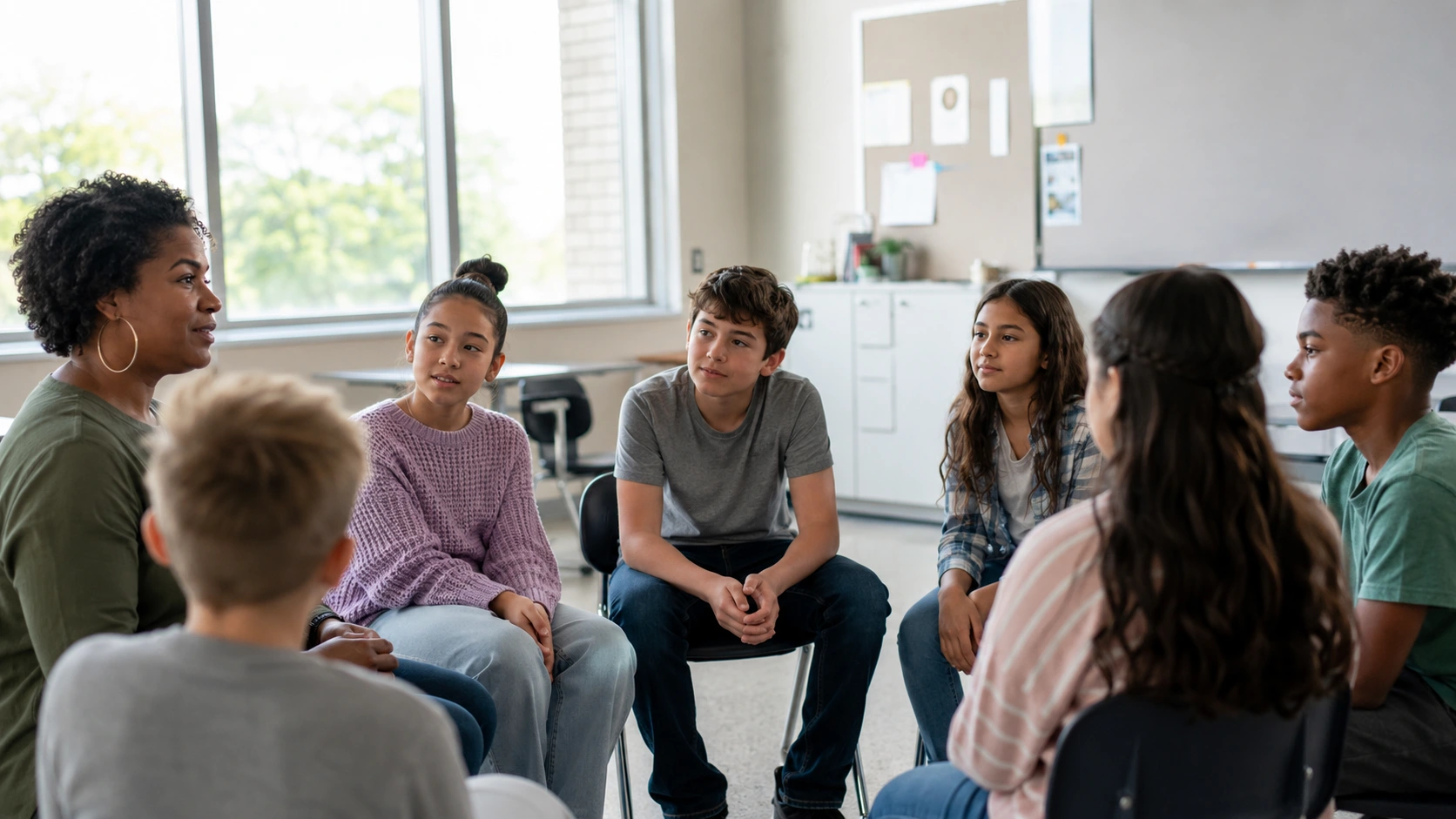
It Starts Earlier Than the Playoffs
If we want fewer scenes like this in a decade, the work begins about fifteen years before the next deciding game. Decades of research on early childhood education point to the same conclusion: the years before kindergarten are when children build the foundation for impulse control, empathy, and frustration tolerance. The famous studies on delayed gratification were never really about candy. They were about whether a child has been given the tools to pause between a feeling and an action.
This is where social-emotional learning earns its keep, and where it is too often dismissed as soft. Teaching a five-year-old to name an emotion, to wait his turn, to repair a friendship after a fight, is not a distraction from "real" academics. It is the operating system everything else runs on. A child who never develops genuine self-regulation can still ace a spelling test, but he is far more likely, years later, to be the one on top of the car. We notice the absence only when it shows up in a crowd of thousands.
Home plants the seed, but it cannot be the only gardener. This is the part of the conversation that should land squarely with educators, coaches, and community programs, because continued education in how to be a person does not end in first grade. It runs through middle school advisories, high school civics, locker rooms, youth groups, and every adult who bothers to correct a kid in a low-stakes moment so the high-stakes moment never arrives.
Strong character education and real civic responsibility instruction teach something a scoreboard never will: that you live among other people, that a city is shared property, and that your team winning does not suspend the rules for everyone around you. When schools and programs quietly cut those pieces to chase test scores, they are not saving time. They are deferring a bill that, every so often, comes due on a Wednesday night in Midtown. The lesson that struggle and frustration never justify destructive choices is one we have argued before in these pages, and it applies just as cleanly to a celebration as to a tragedy.
Home Training Is Not a Punchline
There is an old phrase that has fallen out of fashion in polite circles: home training. It gets used as a joke now, but the idea behind it is serious and worth defending. It is the everyday, unglamorous work of teaching a child how to move through the world with regard for other people. Say thank you. Do not take what is not yours. Do not put your hands on someone because you are angry or because the crowd is doing it too.
That work depends less on lectures than on parental modeling. Children absorb what they watch the adults around them tolerate and excuse. If a kid grows up hearing that property damage is just "part of the celebration," or that a stranger in the wrong jersey somehow deserved it, the message is received long before he is old enough to act on it. The good news hidden inside that hard truth is that the same channel works in reverse. The parent who treats a referee with respect, who returns the shopping cart, who refuses to laugh off cruelty as passion, is teaching a curriculum no school can replace.
None of this is a reason to police joy. A historic comeback should make a city lose its mind a little. The goal is not quieter fans. It is fans, especially young ones, who can feel everything and still choose not to harm anyone. City Hall, in condemning the violence after the team's losses, called the assaults and destruction "unacceptable and will not be tolerated." That is the right line for officials to draw, but enforcement is the last and weakest tool. By the time a kid is on a squad car, every earlier system has already failed him.
The stronger tools are upstream and unglamorous. Sit with a young person and talk through what they saw on those videos, and ask them where the line is and why. Defend social-emotional and civic instruction in your school district as fiercely as you would defend math. Notice the small moments, the spilled-over anger at a youth game or the casual disrespect at the dinner table, and correct them while the stakes are still tiny. A championship is a wonderful thing for a community to share. The deeper test is not whether we can win. It is whether we have raised a generation that knows how to celebrate without leaving the city a little more broken than they found it.

Comments (0)
No comments yet — be the first to share your thoughts.
Leave a comment