

The track meet outside Dallas where Austin Metcalf died is a long way from most of our children's schools, but the questions it left behind do not respect state lines. They belong in every home raising a teenager who will someday stand in a crowd, feel humiliated or cornered, and have to decide in a single second what kind of person they are going to be. That is why so many families watched this case the way they did. The setting was Texas. The story was everyone's.
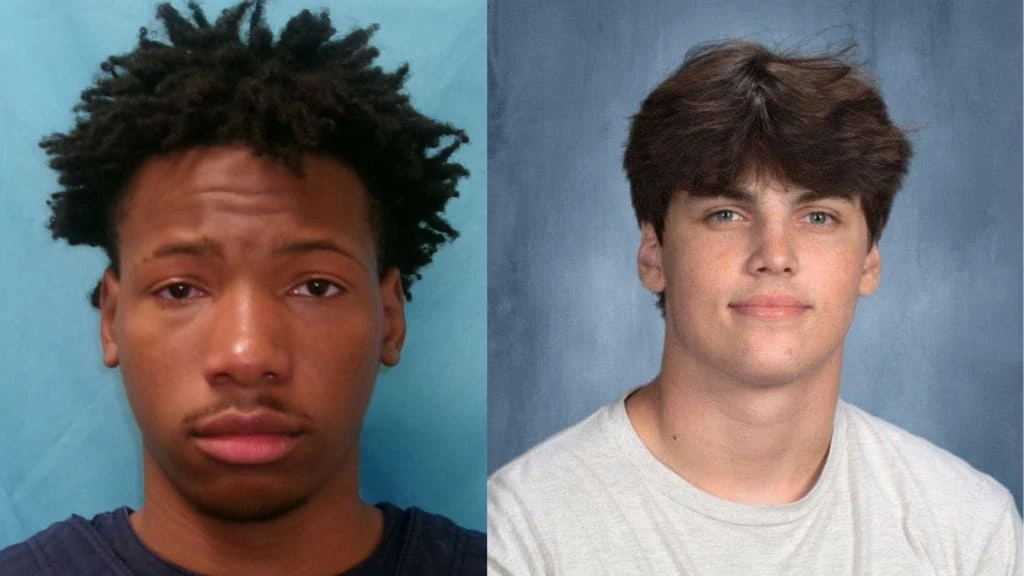
On June 9, 2026, a Collin County jury found Karmelo Anthony guilty of murder in the stabbing death of seventeen-year-old Austin Metcalf at a Frisco ISD track meet in April 2025. Anthony, also seventeen at the time and now nineteen, was tried as an adult, and the jury reached its verdict in less than three hours. The same jury then sentenced him to thirty-five years in prison, rejecting the "sudden passion" argument that could have capped his punishment, and he will not be eligible for parole until he has served at least half of that term. The trial reopened national arguments about race, fairness, and self-defense. But beneath those arguments runs a quieter and more universal story, one that is fundamentally about teaching kids about consequences before a single moment makes the lesson permanent.
It would be easier to make sense of this if it were a story about a young person with no chances. We carry a ready-made script for those, the one that says youth violence grows out of broken homes and streets with no exits, and that fixing the conditions fixes the outcomes. There is real truth in part of that, and we will come back to it. But the public record refuses to cooperate with the script. Karmelo Anthony was an honor-roll student carrying a 3.7 grade point average, a captain of two teams, and an employee at two jobs, with no prior record. He had, by every account, the kind of life parents work themselves to exhaustion trying to build for their own children.
That is the detail every parent should sit with, because it means the danger does not live only in the neighborhoods we are quick to worry about. School-safety data has a way of upending those assumptions; reported student drug incidents run highest across upstate New York districts, for instance, rather than the city most people picture. A busy, accomplished, well-supervised teenager can still walk into a confrontation he did not plan, reach for something he should never have brought, and make a choice that cannot be unmade. When we tell ourselves that violence only visits other families, the ones with fewer resources or a rougher zip code, we quietly stop preparing our own children for the ordinary, heated, unremarkable moment when everything is on the line and no adult is close enough to intervene.
Black families in this country, including across New York, navigate pressures that many other families never have to name, from uneven discipline in schools to the constant calculation of how a son will be read the instant he raises his voice. Those pressures are real, and pretending otherwise serves no one. A community can hold two truths at once. It can demand fairness from the systems around it, and it can refuse to let hardship become the story it hands its children about who they are allowed to become.
This is where the case turns from a courtroom debate into a kitchen-table lesson. Struggle, where it exists, explains a context. It does not author a choice. The most loving and the most demanding thing a parent can tell a child is that the difficulties they face, real as they are, do not lower the standard for their conduct. If anything, they raise it. Anthony's own life is the proof, because there was no deprivation here to point to. There was a disagreement over a seat under a team tent, a warning that escalated instead of cooling, and a weapon that turned an argument into a homicide. No honest conversation about raising sons in a demanding world should ever leave a boy with the quiet idea that the world owes him a violent answer.
The defense told jurors that Anthony acted to protect himself, and his attorney reminded them that Texas law does not require a person to wait until they are struck. Prosecutors rejected that frame outright. Collin County District Attorney Bill Wirskye told the jury, "This is not self-defense, folks," arguing that Anthony provoked the confrontation and then answered a shove with a fatal stab. He reduced the entire proceeding to a single word: "Ultimately, this case is about accountability."
That word is the one for parents to carry home. The legal fight over self-defense matters enormously inside a courtroom, but the version that belongs in a living room at the end of a long day is simpler and more urgent. Children need to understand, well before they are ever tested, that the law does not grade on intentions, and that a jury can look at a frightened teenager and still hold him fully responsible for a life he ended. Twelve people needed about three hours to decide. The decision that brought them there took a fraction of a second.
Most of us teach our kids to stand up for themselves, and that instinct is not wrong. But somewhere between confidence and catastrophe sits a skill we rarely name out loud, which is the ability to lose the moment in order to keep the life. Walking away from a confrontation is not weakness, and families who raise children to believe it is are setting them up to mistake pride for survival. The teenager who leaves the argument, who lets the other person have the last word, who finds an adult instead of a weapon, is not the loser of that exchange. He is the one who still gets to grow up.
The science quietly supports the parenting here. The adolescent brain is still building the circuitry that governs impulse and long-range consequence, and the regions responsible for measured judgment are not fully mature until the mid-twenties. That is not an excuse, and no court treats it as one, but it is a reason. It tells us that emotional regulation is a skill our children are still developing, which means they need us to rehearse the hard moments with them in advance, when no one is angry and nothing is at stake. Ask your teenager plainly: what would you do if someone put their hands on you in front of a crowd? Then walk through the version where they step away, and let them feel how much real courage that takes.
Good conflict resolution is not something children absorb by accident. It is taught, modeled, and practiced at home. Talk about the difference between defending your body and defending your ego, because most fights are about the second one wearing the costume of the first. Talk about how fast a knife or a single punch turns an ordinary school day into a funeral and a trial. And keep the line open, so that the next time your child is humiliated or cornered or furious, your voice lives closer to them in that instant than the worst idea in their head. Talking to your teen about violence is uncomfortable precisely because it is necessary.
It is worth holding both families in view, because the grief did not stop at one household. Austin Metcalf died in the arms of his twin brother, Hunter, who had tried to stop the bleeding at the meet that day. At sentencing, Austin's father, Jeff Metcalf, told the court that the killing finally came down to "how you were raised with values and character," said plainly that the case was never about race, and announced a scholarship in his son's name. The Anthony family lost a child to this as well, in the slower and more public way that a thirty-five-year sentence pulls a young person away from everyone who loves him. There are no winners standing at the end of this case. There is one family planning a life around a grave and another planning a life around a visitation schedule.
That is the weight we are asking our children to carry, and it is far too heavy for them to hold alone, which is why we have to carry it alongside them. We tell them the whole truth, that the world can be unfair, that their feelings in a confrontation are valid, and that none of it, not the unfairness and not the fury, is worth a human life or their own freedom. This is not about frightening our kids. It is about loving them enough to make accountability real to them now, while the lesson still costs nothing. Two boys went to a track meet. The choices made there are why one family and one school community are learning this lesson the hardest way there is. The rest of us, wherever we are raising children, still have the chance to teach it the easy way, tonight, before the moment ever finds our children.


Comments (0)
No comments yet — be the first to share your thoughts.
Leave a comment