

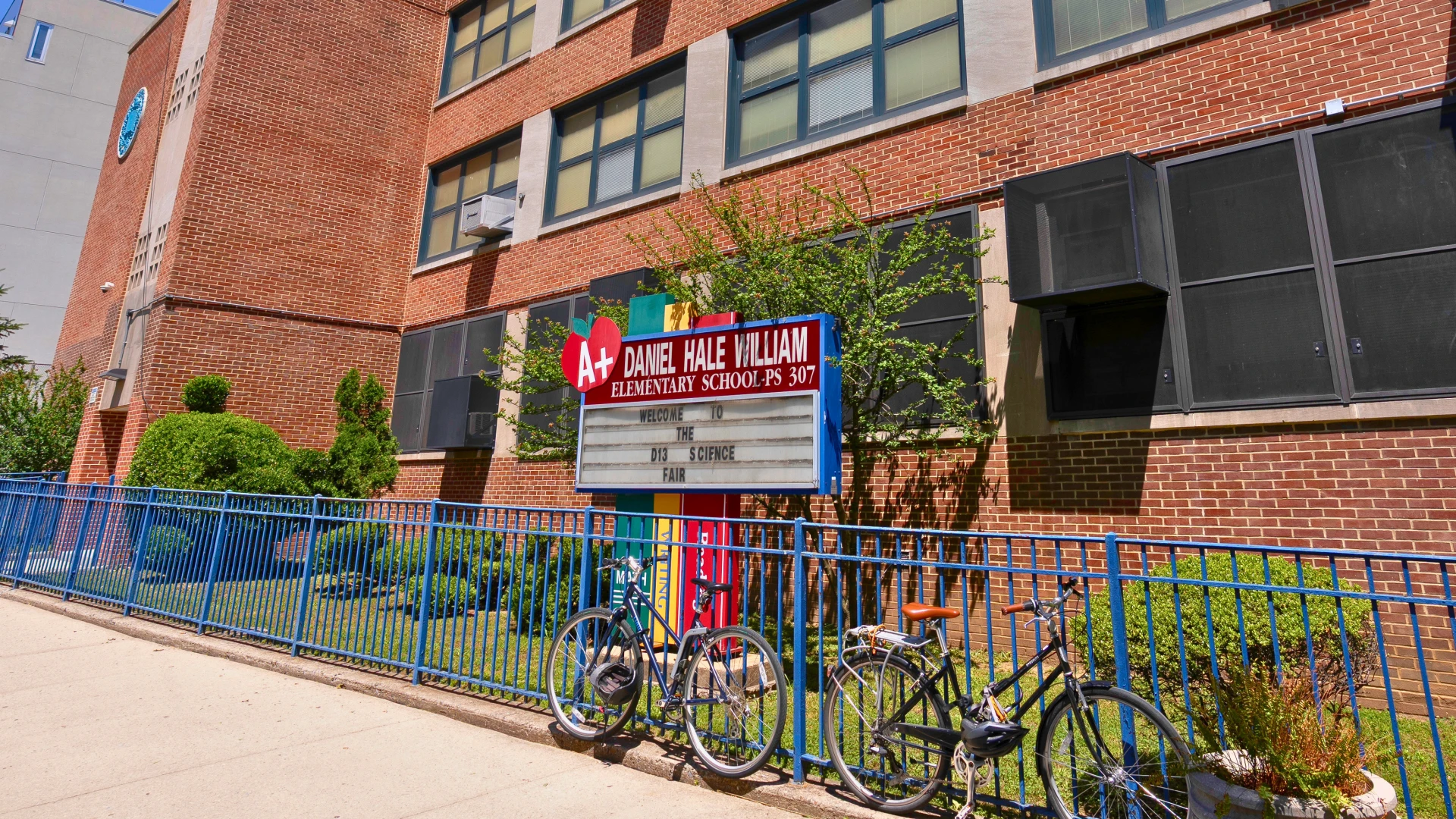
Najya Hannah-Jones spent her elementary years at P.S. 307 in Brooklyn because her mother chose it on purpose, and a decade later she told her mother what that choice had cost. "Sometimes I wish instead of always thinking about other kids, you would have thought about me," she said, in a line Nikole Hannah-Jones put into print in The New York Times last month. "I never really got the education I wanted."
The essay set off a fight that has mostly been staged as a referendum on one mayor. Zohran Mamdani called it "a devastating piece" on WNYC, and his schools chancellor has convened integration working groups in five of the city's 32 districts. Critics from a former chancellor to a Brooklyn parent leader spent last week asking when a real plan will arrive.
New York's school segregation is a statewide condition that the state itself has measured, named and then set down, and a year ago the state's highest court made clear that the remedy belongs to elected officials. Albany is the elected official with authority over district lines.
The Court Already Gave the Problem Back
On Oct 23, 2025, the New York Court of Appeals ruled in IntegrateNYC, Inc. v State of New York. The student group IntegrateNYC and others had sued the state and the city over the racial and economic sorting of city schools. The Appellate Division had let the claims proceed under the Education Article, the Equal Protection Clause and, against the city, the State Human Rights Law. Judge Michael Garcia, writing for the majority, dismissed them, holding that "the Education Article does not permit judges to micromanage matters of educational policy, which are broadly entrusted to local control."
The same opinion did not pretend the disparities were imaginary. "We share the concerns of the lower courts and the parties over the issues raised by plaintiffs' complaint," the majority wrote, "and we acknowledge the ongoing efforts in other settings involving elected officials, school boards, parents, and students, among others, to address the disparities that plaintiffs identify."
The judiciary declined to order integration and pointed at the officials and boards who can. In New York, that means the Legislature that draws district boundaries, the Board of Regents that sets education policy, and the State Education Department that administers both.
Albany Wrote the Diagnosis in 2017
The Regents did not need an essay to learn the scale of this. In an item prepared for the full board on April 4, 2017, the department put it in one sentence: "More than 60 years after Brown v. Board New York State is the most segregated school system in the country." The same document reported that the average white student attended a school where 80 percent of peers were white and 30 percent were low-income. For the average Black and Latino student, 70 percent of schoolmates were low-income. Those figures rested on 2010 data, which is itself a measure of how long the state has been sitting on the finding.
The numbers that should unsettle readers outside the five boroughs come from the UCLA Civil Rights Project report that first ranked New York last, released in March 2014. In Buffalo, the typical white student attended a school where 30 percent of classmates were poor, against 73 percent for the typical Black student. In the Albany metro, 97 percent of multigroup segregation occurred between districts rather than within them, and the report described Long Island as "one of the most segregated and fragmented suburban rings in the country."
That 97 percent figure is the heart of the matter for a statewide reader. Segregation in the Capital Region is not mostly a problem of which school a child is zoned to inside one district, the kind of question a city chancellor can address with admissions rules. It is a problem of where district lines fall, and no mayor, superintendent or working group has the power to move them.
What the State Started and Stopped
In June 2017 the department sent the Regents a draft policy statement on promoting diversity that named the tools directly, including "creating partnerships or regional districts or consolidating with nearby districts to address socioeconomic or racial isolation across districts." The following winter it opened the New York State Integration Project grant to 27 eligible districts, with allocations between $50,000 and $68,000 each and a grant period running from Feb 15 to Aug 31, 2018.
Six and a half months of planning money for the most segregated school system in the country was a start. When the Board returned to the subject on May 6, 2021, it approved a broader policy statement on diversity, equity and inclusion. Its operative sentence moved the work outward: "The Board expects that all school districts and institutions of higher education will develop and implement policies and practices that advance diversity, equity and inclusion." A district can write a policy for its own buildings. It cannot write one for the district next door.
The Skeptics Have a Point Worth Hearing
Any honest case for integration has to meet the parents who think it has been used as a substitute for teaching. Hannah-Jones's own account is the strongest evidence they have. P.S. 307 receives roughly $43,800 per student, according to city data, and more than a quarter of its students are homeless while 43 percent have disabilities, yet her daughter still left feeling shortchanged. A diverse enrollment did not, on its own, produce the education Najya wanted.
Parents defending selective programs make that argument from the other direction. A PLACE NYC survey in February found 68 percent of its 521 respondents opposed ending kindergarten entry to gifted and talented programs, and 20 percent said they would leave the city if it happened. "If Mayor Mamdani and Chancellor Samuels are serious about stabilizing enrollment, they need to offer high quality accelerated programs, and maintain the kindergarten entry point for G&T," said Debbie Kross, the group's co-recording secretary.
Those concerns deserve weight, and they point toward a plan that pairs integration with demanding instruction rather than trading one for the other. They are not an argument for the current arrangement, in which roughly 3.5 percent of about 4,000 specialized high school offers went to Black students this year. Black students make up 19.3 percent of city enrollment, and one of nearly 300 offers at Staten Island Technical High School went to a Black student.
What Albany Should Put on the Calendar
The mayor has promised a plan without a date, and Hannah-Jones has said publicly that working groups "can also be a way of studying an issue perpetually or in perpetuity." Her challenge to him applies with more force to the state. "We already know what the solutions are. We just don't have the political will to enact them," she told Gothamist. "So I would like the mayor to answer, when are we going to actually see a real and substantial plan."
The Regents could answer a version of that question at their next monthly meeting by bringing the 2017 draft back as an action item, with a fresh statewide data report built on current enrollment rather than 2010 figures. The department's own 2024-25 data counts 2,421,491 students across the state, 60 percent of them economically disadvantaged, and it has the tools to show district by district how isolated they are.
The Legislature has a harder job and the only one that reaches the Capital Region's 97 percent. Funded incentives for cross-district magnet programs, transfer agreements between neighboring districts, and planning grants that last longer than one school semester are all within its power, and none of them requires a court order. Albany's education attention this fall has gone to school choice instead, with the governor weighing whether to opt New York into the federal Education Freedom Tax Credit before its Jan 1 deadline. Every candidate on the Nov 3 ballot can be asked where integration ranks beside it.
NeQuan McLean, who leads the community education council for District 16 in Bedford-Stuyvesant, put the timeline problem in terms any parent in Buffalo or Albany would recognize. "Our children get one childhood," he told Gothamist. "They cannot keep waiting while administration after administration promises better."
Mamdani's own line on WNYC was that every school should be the right school. In most of New York, the boundary that decides which school is the right one was drawn in Albany, and the state's integration planning grants that were meant to help cross it closed on Aug 31, 2018.


Comments (0)
No comments yet — be the first to share your thoughts.
Leave a comment