
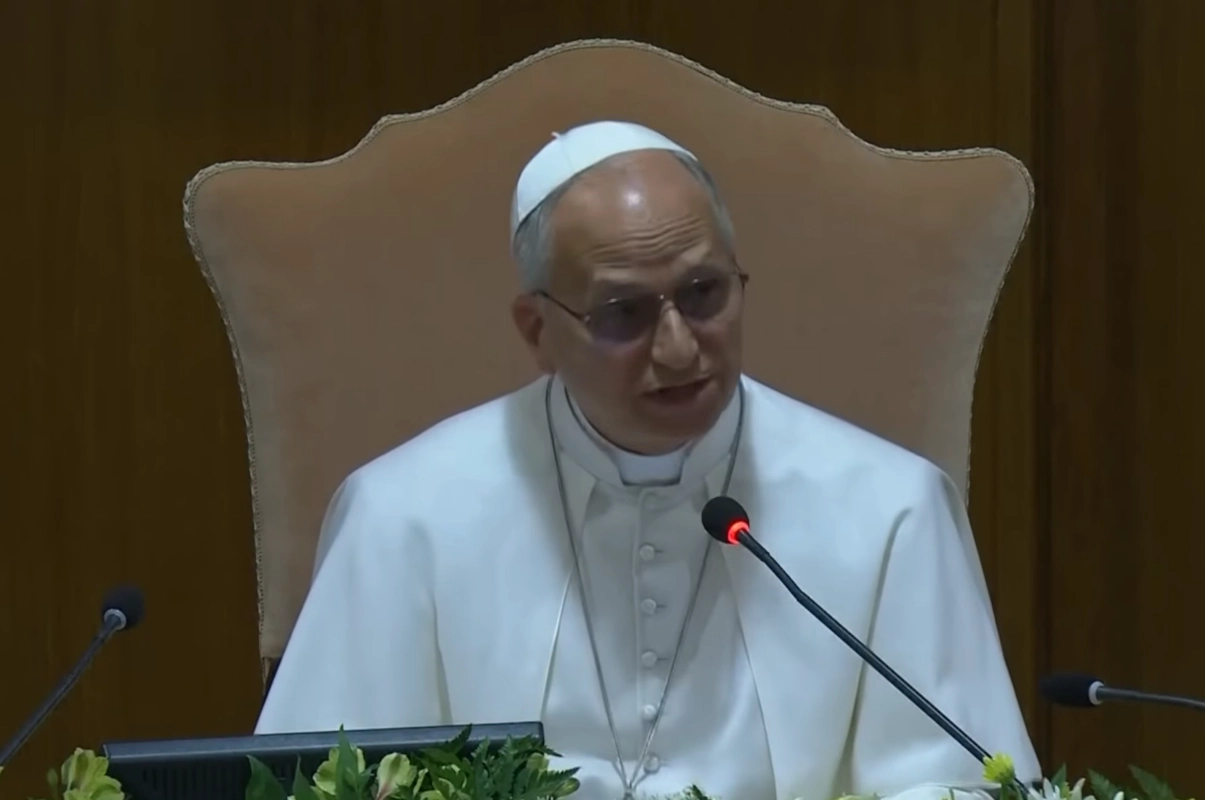
On May 25, 2026, Pope Leo XIV stood before an audience of Vatican officials, theologians, and Silicon Valley executives in Rome's Synod Hall and delivered what may be the most consequential statement on artificial intelligence and education yet made by a major world leader. "When technology weakens our critical sense," he said, "peace itself is at risk." He was not speaking in metaphor. He meant it for classrooms, homes, and every screen a child reaches for when a question gets too hard to sit with.
His 82-page encyclical, Magnifica Humanitas, meaning "Magnificent Humanity," is the first major papal teaching document of his pontificate. It calls for AI to be "disarmed," a word the Pope said he chose deliberately, "because this moment needs words capable of attracting attention, awakening consciences and indicating paths forward for humanity." While much of the global response has focused on the document's stance on autonomous weapons and Big Tech regulation, the message most relevant to New York families and educators sits closer to home. The Pope is raising an alarm about what AI is quietly doing to the minds of the next generation, and right now, New York State schools do not have a consistent answer for it.
Whatever your relationship to the Catholic Church, Magnifica Humanitas is worth taking seriously as a policy document. Pope Leo wrote it after consulting with scientists, engineers, political leaders, parents, and teachers. He is not arguing against technology. He is arguing that technology, when left to its own commercial logic, crowds out the very capacities that make human beings capable of learning, reasoning, and connecting with one another.
"Every person is unique and irreplaceable," the Pope said during the encyclical's presentation. "We bring a wisdom concerning the human that our present time desperately needs." That framing, that no data profile or AI simulation can substitute for a human mind fully engaged with the world, is precisely the argument that educators and parents across New York have been struggling to articulate as AI tools in the classroom spread faster than any policy can keep up with.
Classrooms Are at a Crossroads: NYC Schools, AI Policy, Federal Cuts & More
Even Chris Olah, co-founder of Anthropic, one of the leading artificial intelligence companies in the world, was present in Rome for the encyclical's unveiling. He acknowledged that AI developers alone are not equipped to draw the ethical lines around their own technology. "We need informed critics who will tell the labs when we are failing," Olah said. "We need moral voices that the incentives cannot bend." That is not a statement you expect from a tech founder at a Vatican event. It signals how seriously even the industry is beginning to take the concerns the Pope put in writing.
The history of New York City's AI education policy over the past three years reads like a case study in institutional whiplash. In January 2023, the NYC Department of Education banned ChatGPT on school networks and devices, stating plainly that it "does not build critical-thinking and problem-solving skills, which are essential for academic and lifelong success." By May of that same year, the department reversed course, pledging to become a national leader in AI adoption in schools. Then came years of school-by-school improvisation, district-level confusion, and a long-delayed citywide policy that, when it finally arrived in early 2026, struck many parents as incomplete.
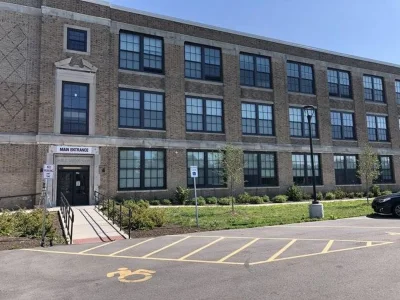
Kelly Clancy, who holds a doctorate in political science and founded the advocacy group Parents for AI Caution, put it bluntly after reviewing the city's preliminary AI guidance: "The guidance document leaves NYC students uniquely vulnerable to AI being unleashed in the classrooms." At a listening tour held by Schools Chancellor Kamar Samuels at John Dewey High School in Brooklyn, students themselves echoed the worry. Senior Nekena Randrianrison told the chancellor directly: "As we move into the future, it's more than just taking a test and doing well."
Navigating the New Crosswalks: A Playbook for NY School Leaders
That student's instinct aligns almost exactly with what Pope Leo put in his encyclical. The concern is not that students will use AI to cheat on one assignment. The concern is that consistent reliance on AI for cognitive tasks gradually atrophies the skills that define an educated person: the ability to sit with a hard question, construct an argument from incomplete information, and think independently under pressure.
A RAND survey released in early 2026 found that 67 percent of students between the ages of 12 and 29 said using AI for schoolwork had harmed their critical thinking skills, up from 54 percent the prior year. Roughly 71 percent of those same students reported using at least one AI tool for school-related activities, and most said their schools had no formal rules governing AI use for homework. Research from Microsoft and Carnegie Mellon found that higher confidence in an AI system directly correlates with lower self-reported effort to think critically. The smarter the tool feels, the less the user tries.
A Brookings Institution analysis framed it even more starkly, concluding that at the current stage of AI development, the risks to children's learning, social-emotional health, safety, and privacy can outweigh the benefits. That is not a fringe position. That is a mainstream research institution saying what the Pope said in Rome, in different language but with the same urgency.
Outside New York City, across the 700 school districts that make up New York State, the picture is even more fragmented. Some districts have developed their own AI acceptable-use policies. Many have not. Some teachers have embraced AI tools for lesson planning and student feedback. Others have quietly banned devices from their classrooms entirely. There is no state-level mandate that creates consistency, because New York is a non-adoption state where curriculum and instructional decisions remain local.
At East Side Community High School in Manhattan, educators made a deliberate choice to prioritize human cognitive development over AI integration. As one administrator there explained: "If we send them out in the world with all of these other really strong skills that we believe in, critical reading and strong writing, they'll be able to learn AI if they need to." That approach, building the human foundation first, is exactly what the Pope's encyclical argues for. But it is an individual school's philosophy, not a systemic standard.
In upstate districts, the resource gap adds another layer of complexity. Schools in rural areas often lack the technology infrastructure to even engage with AI tools meaningfully, which means their students may be underprepared for an AI-saturated workforce. Meanwhile, schools in wealthier suburban districts may have AI embedded in everything from tutoring platforms to grading systems, with no unified framework for teaching students how to think critically about what those tools are and are not doing for them.
Pope Leo is not calling for a ban on AI. He is calling for what he describes as "broad participation" in shaping AI's role in human life, meaning governments, educators, parents, and communities need to be active voices in decisions that are currently being made almost entirely by a small number of technology corporations. "Disarming is not enough," he said in Rome. "We must build."
Applied to New York education policy, that argument translates directly. Parents cannot wait for the New York City Department of Education or NYSED to produce a definitive AI framework before asking hard questions at the school level. School boards across the state, from Buffalo to Albany to the North Country, need to be actively discussing what role AI plays in their students' learning and what guardrails exist to protect student cognitive development. Teachers need support, not just permission, to structure AI use in ways that require students to do the thinking, not outsource it.
Cardinal Michael Czerny, speaking at the encyclical's Vatican presentation, offered a framing that should resonate with anyone who has ever sat in a parent-teacher conference: "Human beings always transcend the sum of their achievements, their data profiles and any possible technical simulation." A student's transcript, their test scores, their AI-assisted essays, none of that is the student. The question New York schools need to be asking is whether their current approach to AI helps students become more fully themselves, or less.
The most actionable takeaway from Magnifica Humanitas for New York parents is not theological. It is civic. Ask your child's school whether it has a written AI policy for classroom and homework use. Ask whether teachers have received training on how to integrate AI in ways that build, rather than bypass, critical thinking. Ask your school board whether AI ethics is part of any curriculum conversation at the district level. These are not technical questions. They are the kind of questions that have always defined engaged school communities, and they are exactly the questions the Pope is urging everyone, not just Catholics, not just the faithful, but governments, families, and anyone paying attention, to start asking before the technology moves further ahead of the humanity it is supposed to serve.
Pope Leo XIV chose a word carefully when he released Magnifica Humanitas: disarm. He knew it would land hard. He meant it to. New York's schools, still scrambling to catch up with a technology that entered classrooms faster than any policy could manage, might consider taking the word seriously too.

Comments (0)
No comments yet — be the first to share your thoughts.
Leave a comment