

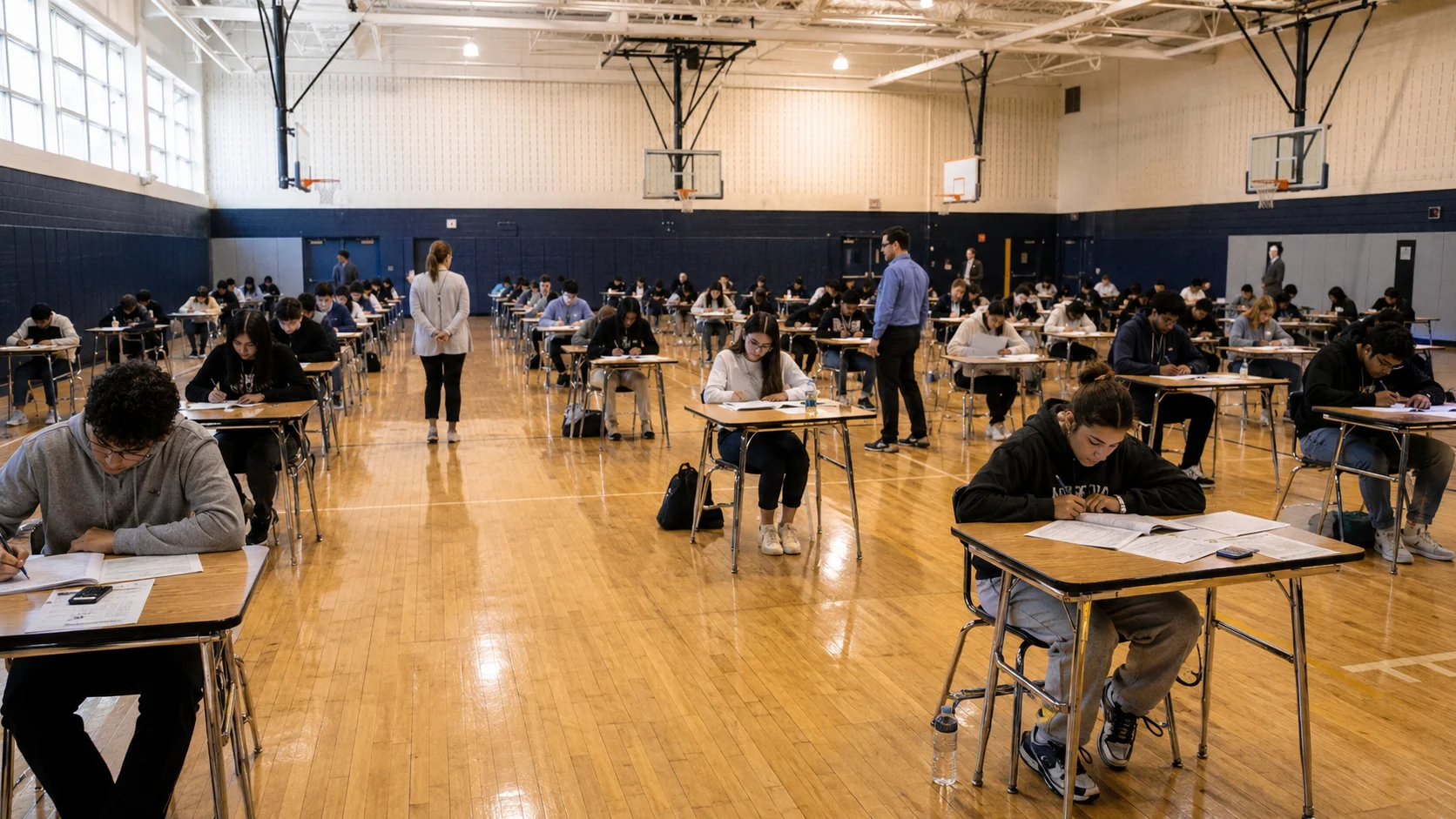
If you are a parent in New York State right now, you have probably heard some version of the same rumor in a group chat or at a school board meeting: the Regents exams are going away. A neighbor swears their high schooler will not have to take them. A relative read online that the diploma is changing. And somewhere in the middle of all that noise sits a perfectly reasonable question that nobody seems to answer cleanly. Does my kid still have to sit for the test in June, or not?
The honest answer is yes, for now, and the reasons why reveal one of the biggest shifts in New York education in a generation. The state is genuinely rebuilding what it means to earn a high school diploma. But that rebuild is happening in slow, deliberate stages, and almost none of it is final yet. Confusing the long-term vision with today's rules is exactly how families end up making decisions based on a future that has not arrived.
Until the Board of Regents formally votes to approve new regulations, the current system stands. That means the existing graduation requirements, including the diploma assessment requirements tied to Regents exams, remain in effect for every public school student in New York State. The State Education Department has been blunt about this on its own guidance pages: if a student is scheduled to take a Regents exam this year, they must take it. That applies whether they are a senior racing toward graduation or an eighth or ninth grader years away from it.
So the change is real, the timeline is published, and the test is still on the calendar. All three of those things are true at the same time, which is precisely why the topic feels so slippery.
The transformation has a name. It is called NY Inspires, a plan the State Education Department introduced to carry out the recommendations of the Blue Ribbon Commission on Graduation Measures. At its core, the plan rests on four big moves: adopting a statewide Portrait of a Graduate, redefining how students earn credits, phasing out the requirement to pass specific exams to graduate, and collapsing the state's three diploma types into a single New York State High School Diploma.
That last point is worth pausing on, because it is the part most people only half understand. For decades, New York has offered a local diploma, a Regents diploma, and a Regents diploma with advanced designation. The new vision moves the state toward one diploma for everyone, with optional seals and endorsements layered on top for students who want to demonstrate advanced work. The goal, according to the department, is to reduce the assessment hurdles that have historically blocked some students, particularly students with disabilities and English language learners, from earning a diploma at all.
This is a philosophical shift as much as a procedural one. It reflects a broader move in education toward valuing durable skills and demonstrated proficiency over a single high-stakes test score, a debate that has been heating up across New York classrooms as schools wrestle with everything from artificial intelligence to critical thinking. Our earlier reporting on how New York schools are trying to teach critical thinking in the AI era sits squarely in the same conversation about what a diploma should actually certify.
Here is the distinction that gets lost almost every time this comes up. The state is not eliminating the Regents exams. It is proposing to eliminate the requirement that students pass them in order to graduate. Those are two very different things.
The exams survive for a practical reason: federal law requires them. Under the federal Every Student Succeeds Act, all students must be assessed in math and reading at least once in grades nine through twelve, and in science once in grades ten through twelve. Specific Regents exams are how New York satisfies those federal assessment requirements. Pull the diploma mandate out, and the exams still have a federal job to do. On top of that, the state plans to keep developing new Regents exams aligned to its updated math, science, and ELA learning standards, on a timeline that has not changed.
In other words, your child may eventually take a Regents exam without it being a graduation gatekeeper, much the way they take state assessments in earlier grades. The test becomes one signal of proficiency among several, rather than the single locked door it has been for generations.
The timeline that actually matters
New York is rolling these changes out by cohort, and a cohort is simply defined as all students who entered ninth grade in a given school year. Figuring out which cohort your child belongs to is the fastest way to cut through the confusion, so here is the map the state has laid out, with the heavy caveat that nothing is final until the Board of Regents approves each piece.
Students who entered grade 9 in 2023 or earlier
Nothing changes. These students follow the current rules and graduate with one of the three existing diplomas: local, Regents, or Regents with advanced designation. The current credit and exam requirements apply in full.
Students who entered grade 9 in 2024, 2025, or 2026
This is the transition group, and it is the one most likely to cause whiplash. Under the proposed timeline, these students keep the current credit requirements, but the requirement to pass diploma assessments is slated to sunset around fall 2027. Practically speaking, that means these students will still take Regents exams, but they may not be required to pass them to earn a diploma. They are expected to graduate with the single New York State High School Diploma and can still take Regents exams to earn endorsements, including advanced designation.
Students who enter grade 9 in 2027 or 2028
A new credit requirement kicks in, and there are no separate diploma assessment requirements. Notably, the proposal would require these students to earn at least one credit in career and technical education, which can be satisfied through disciplines ranging from business and computer science to health sciences, financial literacy, or work-based learning.
Students who enter grade 9 in 2029
The fully redesigned system arrives. These students will need to demonstrate proficiency in both the high school learning standards and the Portrait of a Graduate, and a statewide transcript becomes required for all of them.
That career and technical education credit is a quiet but meaningful signal of where New York thinks opportunity is heading. The state is openly tying the value of a diploma to readiness for college, careers, and civic life, not just to test performance. For families weighing whether a four-year degree is the only smart path, the growing landscape of skilled and technical careers covered by our partners at SonicBoom New York offers a useful look at where these credits can actually lead after graduation.
Not everything is still hypothetical. A few pieces have already been formally adopted by the Board of Regents and are moving forward regardless of how the diploma debate resolves.
The first is the New York State Portrait of a Graduate, adopted in July 2025, which defines the skills and attributes the state wants every graduate to leave high school with. The second is a pair of new instructional requirements: personal finance education and climate education. Personal finance instruction is required to begin in the 2026 to 2027 school year for grades five through twelve, with climate education following in 2027 to 2028 for the same grade band. These are instructional mandates, meaning they shape what gets taught, not new exams students must pass.
This matters because it shows the overhaul is not vaporware. The curriculum side is already in motion even as the assessment side works its way through the regulatory process. Districts statewide, from Long Island and the Hudson Valley to Buffalo, Rochester, and rural upstate communities, are already adjusting course offerings to fit. Modernizing what students learn also carries real budget implications, and our breakdown of where New York's school dollars actually go explains why new mandates land differently depending on a district's resources.
What parents and students should do right now
The single most useful thing any family can do is ignore the rumor mill and confirm two facts: which cohort your child is in, and what their school is telling them about exams this year. If a Regents exam is on the schedule, it counts, and skipping it on the assumption that the rules have already changed would be a costly mistake.
It is also worth knowing that you have a voice in this. Each time the state proposes a regulatory change, it opens a sixty-day public comment period, and the department has actively solicited feedback on the Portrait of a Graduate. Parents who want to weigh in on how these diploma requirements take shape can do exactly that. For families thinking through how all of this fits into the bigger picture of raising and supporting kids through a system in flux, Family Symposium regularly unpacks the parenting and planning side of education changes like these.
Curriculum shifts often arrive in clusters, and New York districts have been busy reshaping core subjects in recent years. The ongoing work to standardize and strengthen math instruction, including the high-profile push to overhaul math curriculum in New York City schools, is a reminder that what students are tested on is changing alongside how, and whether, they are tested at all.
New York is in the middle of a multi-year reinvention of the high school diploma, and the direction of travel is clear: fewer high-stakes gatekeeping exams, more emphasis on demonstrated skills, and a single diploma meant to open doors for more students. But the operative phrase remains in the middle. The current rules govern today's students, the Regents exams are still required where scheduled, and every proposed change must still clear a formal Board of Regents vote before it becomes real.
The smartest posture for any New York family is to understand the future without acting as if it has already arrived. The Standard will continue tracking the Graduation Measures initiative as each regulatory piece moves through the approval process, so families across the state know not just where this is heading, but exactly when it changes.



Comments (0)
No comments yet — be the first to share your thoughts.
Leave a comment